
Lieferung heute & morgen

Qualitätsgarantie

Willkommens-Angebote freischalten: KOSTENLOSE Lieferung | Bis zu 80 % RABATT | Kostenlose 30-Tage-JoyPlus-Testphase
App herunterladen
Men’s running shoes need to suit the surface, distance and shape of your feet. A pair that feels comfortable on tarmac may struggle on wet woodland paths. On the other hand, a trail shoe with a deep tread can feel unnecessarily heavy for everyday wear. Before you buy, it’s worth looking at measurable features rather than eye-catching marketing claims.
Lightweight running shoes can feel comfortable during training. What matters, though, is whether the midsole provides enough support and cushioning for your weight, pace and intended use. A low shoe weight can’t make up for a poor fit or an unsuitable outsole.
Cushioned running shoes soften the feel of hard surfaces, but that doesn’t automatically mean they offer stable support. A softer midsole can be a good choice for longer road runs. If you need more support around the sides of your foot, or often run on uneven ground, also look for a wide platform, a firm heel counter and controlled twisting through the sole.
Men’s trainers such as the adidas Samba OG or Nike Dunk Low are designed for everyday wear, leisure and urban routes. Their flat rubber soles and leather or suede construction set them apart from technical running shoes. They may be suitable for short everyday walks, but don’t choose them for regular running training based on looks alone.
Check the material and height of the midsole. EVA foam is often used for cushioning and energy return. Extra cushioning can feel comfortable on long runs on tarmac, but it changes the feel underfoot and can add weight.
For daily training, men’s running shoes with a balanced mix of cushioning and ground feel are often more practical than a particularly soft design. Models with a full-length foam layer, such as the Li-Ning YUEYING 6 with its Tempo-Bounce midsole, spread pressure across a larger area. Even so, whether a shoe is right for you depends on your running style and the fit.
Breathable running shoes are often made from mesh or woven textiles. These materials let heat and moisture escape more easily than closed uppers, which can be useful for summer road runs or longer training sessions.
Men’s trail running shoes should also have an abrasion-resistant upper. TPU reinforcements or robust woven fabrics can help protect your feet from branches and stones. They may, however, be less flexible than a very lightweight road-running upper.
The outsole should suit where you’ll be running most:
All-terrain running shoes can cover several types of route. They’re a practical choice if you switch between tarmac, park paths and easy woodland trails. For technical mountain trails, though, choose a model designed specifically for that terrain, with a suitable tread.
For the best results, measure both feet in the evening while wearing the running socks you plan to use. Choose your size based on the longer foot. There should be a little room between your longest toe and the front of the shoe, without your foot slipping inside.
For running shoes for wide feet, look for a wider toe box and a front that doesn’t taper too sharply. The Li-Ning YUEYING 6 is listed as having a wider toe box; according to the product information, going up half a size may be a good idea if you have wider feet or wear thicker socks. Always check the size guide for the specific model.
A secure heel shouldn’t lift when you walk or run. At the same time, the laces and upper shouldn’t press on the top of your foot. If you’re unsure, ordering two sizes or different widths is only worth considering after checking the returns policy.
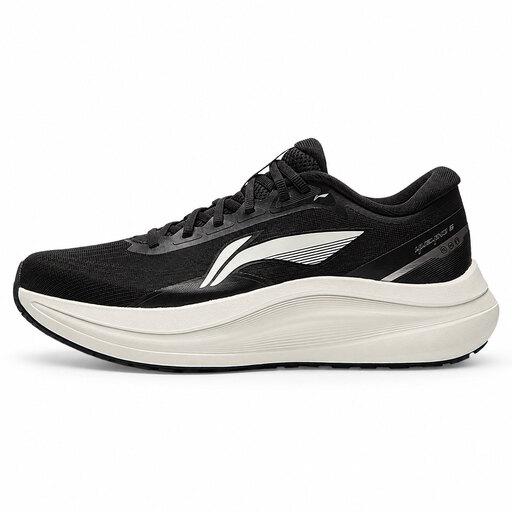
Why this product suits this type of runner: With a full-length Tempo-Bounce midsole and a wider toe box, this versatile training shoe is a good option for beginners looking for a pair for roads and firm paths.
The choice isn’t based on weight alone: the toe box, heel width, midsole and treaded rubber outsole are all specified.
Textile and polyurethane upper, Tempo-Bounce midsole and zoned rubber outsole; according to the product information, there’s extra room in the forefoot.
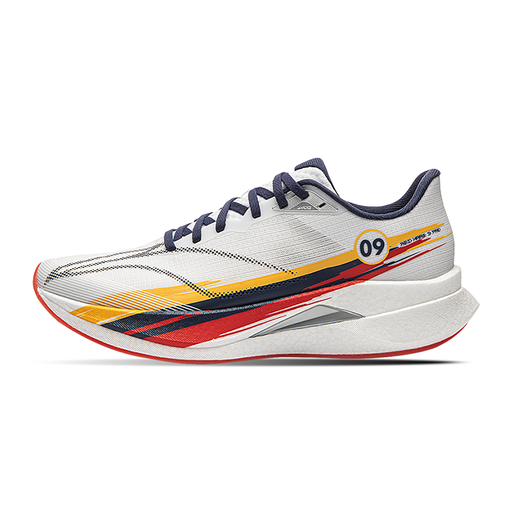
Why this product suits this type of runner: The wider platform, dual-layer BOOM midsole and woven upper are designed for runners who want a more stable shoe for both training and faster runs.
The design isn’t described in terms of soft cushioning alone: platform width, torsional control and the GCR rubber outsole are also covered.
Woven upper with ventilation zones, two layers of BOOM foam and a treaded GCR rubber outsole for training on firm surfaces.

Why this product suits this type of runner: Designed for switching between city routes and easy trails, this model combines mesh, an EVA midsole and a ROCKYTEC outsole to suit frequent runners covering different types of terrain.
Its intended uses and limitations are clear from the upper, midsole and tread, rather than relying on the term “all-terrain” alone.
Sandwich mesh, a highly resilient EVA midsole and ROCKYTEC rubber; standard and slim fits are listed as available in the product information.
We’ve put together a complete, regularly updated list of products that meet these strict selection criteria and the safety regulations in force in the EU.
How long they last depends on your mileage, body weight, running surface, care and storage. Check the tread regularly, along with any visible cracks, permanently compressed foam or loss of support around the heel. If you train frequently, it may be worth replacing your shoes before the outsole is completely worn down.
Look for a wide toe box, enough room in the forefoot and a size guide that gives foot-length measurements. The Li-Ning YUEYING 6 is listed as having a wider toe box. PELLIOT models are listed with standard and slim fits, depending on the version. The fit depends not just on shoe size but also on the actual internal width.
Price alone doesn’t tell you whether a shoe is suitable. Start by comparing the midsole, upper, tread, fit and care instructions. A technical model suited to the surface you run on may be better value than a stylish trainer that quickly loses comfort or support during regular running.