
Lieferung heute & morgen

Qualitätsgarantie

Willkommens-Angebote freischalten: KOSTENLOSE Lieferung | Bis zu 80 % RABATT | Kostenlose 30-Tage-JoyPlus-Testphase
App herunterladen
Anyone looking for men’s running shoes will find numerous models described as “lightweight”, “stable” or “highly cushioned”. These details can help narrow down your options, but they do not replace a closer look at the actual construction. A shoe designed for tarmac needs different properties from a model intended for woodland paths, gravel or wet rocks.
The following criteria can help you assess marketing claims and choose men’s sports shoes based on objective features.
Lightweight running shoes can feel pleasant during training. However, using less material does not automatically mean suitable cushioning or sufficient stability. The midsole deserves particular attention when running longer distances or carrying more body weight. Important factors include the material used, the sole height and the shape of the contact area.
A larger EU size makes the shoe longer, but does not always make the forefoot noticeably wider. With running shoes with a wide toe box, the shape of the last and the amount of room above the toes are key. Your feet should be able to expand naturally as you roll through your stride, without your toes being permanently pressed against the sides or top of the shoe.
Road running shoes with a shallower tread are suitable for tarmac and paved paths. On damp woodland floors, loose sand or rocky sections, however, trail running shoes need a lugged rubber outsole. A versatile shoe can handle several surfaces, but that does not automatically make it equally suitable for every route.
An EVA or comparable foam midsole affects your foot roll, the shoe’s weight and how you perceive impact. Cushioned running shoes are often suitable for longer training sessions, provided the cushioning matches your personal preferences and running style. A very soft construction can feel comfortable, while a firmer midsole provides a more direct connection with the ground.
When reviewing product details, look for specific information such as EVA foam, a full-length midsole or a multi-layer construction. Claims about rebound and shock absorption generally come from the manufacturer and should be understood as product characteristics, not medical effects.
Stable running shoes can provide greater support through a wider platform, a reinforced heel construction or torsion-control elements. That does not necessarily mean every runner needs a highly supportive model. What matters is a secure heel fit, a midfoot that does not slip and enough freedom of movement in the forefoot.
If you switch between road running and outdoor activities, you should also check whether the stability is maintained on uneven ground. A broad sole base may be more practical than a design focused solely on speed.
A mesh or woven upper can support air circulation. Breathable running shoes are particularly comfortable during longer sessions and in warmer temperatures. At the same time, the upper should be made abrasion-resistant at typical contact points.
For wet paths, non-slip running shoes with a rubber outsole and a tread suited to the surface are a sensible choice. Check the specific sole description: terms such as zoned grip or abrasion-resistant rubber describe the construction, but do not guarantee secure traction on every surface.

Why this product suits this profile: According to the product details, this unisex model combines a lightweight sandwich-mesh upper with an EVA midsole and is suitable for roads as well as transitions to lighter outdoor routes. The standard fit is designed for a range of foot shapes, while a Slim version is available for narrower feet.
The product description specifies the materials and includes a size chart in millimetres. This makes it easier to assess the fit instead of choosing a shoe based solely on the word “lightweight”.
Mesh and woven upper, EVA foam and ROCKYTEC rubber outsole; the specified foot length for EU 44 is 270 mm.
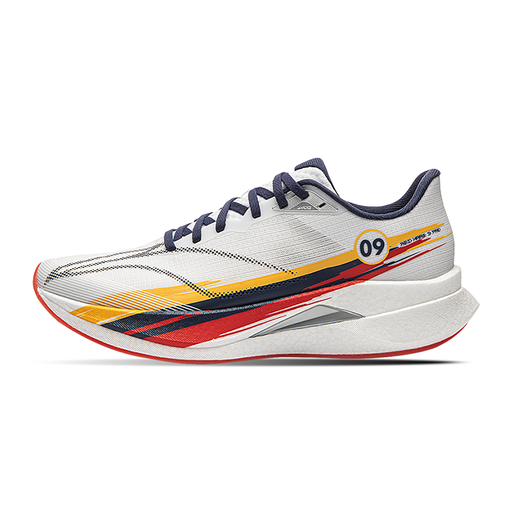
Why this product suits this profile: This model is designed for training, higher mileages and a roomier feel. The product details describe a widened platform, a dual-layer BOOM midsole and a breathable woven upper.
The description specifies the platform width, midsole construction and outsole material. These details make the choice more straightforward than broad claims about speed or comfort.
Widened last, dual-layer BOOM midsole, GCR rubber outsole and reflective features according to the product description.
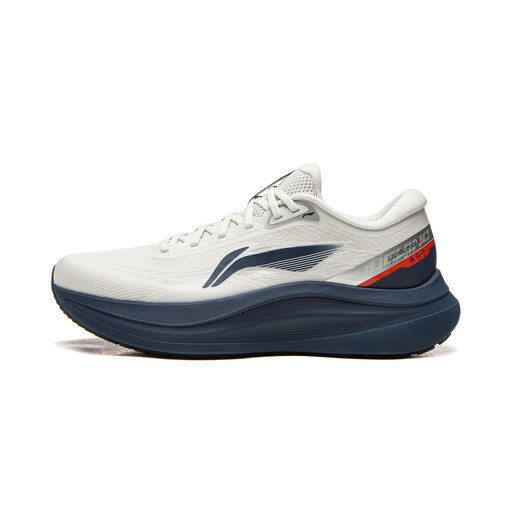
Why this product suits this profile: The optimised last and heel area, which is 2 mm wider according to the product details, are designed for runners who want to combine extra room with a secure fit. The zoned rubber outsole is suitable for training on a range of paved surfaces.
The choice is not based on EU size alone: for wider feet or thicker socks, the product information recommends considering half a size larger. This reduces the risk of a toe area that feels too tight.
Full-length Tempo-Bounce midsole, wider toe area, PROBAR-LOC support and zoned rubber grip according to the manufacturer’s information.
Ideally, measure both feet in the evening while wearing the socks you plan to use for running. Use the larger foot as the basis for choosing your size. When standing, there should be a small amount of space between your longest toe and the front of the shoe. Your heel should not slip out noticeably when walking, while your toes should not feel restricted.
For example, the PELLIOT models specify foot lengths ranging from 245 mm for EU 39 to 275 mm for EU 45. For the models mentioned, Li-Ning generally recommends choosing your usual European size, or possibly half a size larger for wider feet. Check the product page against the size chart before buying.
We have put together a complete, regularly updated list of products that fully meet these strict selection criteria and the safety regulations applicable in the EU.
There is no single mileage figure that can be reliably applied to every model. Wear depends on your body weight, running style, surface, training volume and care routine. Check the tread, visible cracks in the midsole and any noticeably uneven wear on the sole regularly. If the materials show clear signs of fatigue, consider replacing the shoes.
That depends on the route, running technique and personal comfort preferences. For regular runs on hard surfaces, a noticeably cushioned midsole can feel comfortable. Beginners should focus primarily on a secure heel fit, the right width and a smooth, straightforward foot roll rather than simply choosing the softest construction.
For routes consisting mainly of tarmac and paved paths, road running shoes are usually sufficient. In mud, on gravel, roots or wet rocks, trail running shoes offer a more suitable contact area through their tread and grippy rubber outsole. For mixed routes, a road-to-trail model such as the PELLIOT selection may be a sensible choice, provided the tread matches the terrain you actually plan to cover.