
Lieferung heute & morgen

Qualitätsgarantie

Willkommens-Angebote freischalten: KOSTENLOSE Lieferung | Bis zu 80 % RABATT | Kostenlose 30-Tage-JoyPlus-Testphase
App herunterladen
When buying men's trainers and running shoes online, shoppers often focus first on the design, brand name or eye-catching technology terms. This can lead to the wrong purchase: a fashionable trainer is not automatically suitable for long runs, and a technically advanced running shoe will not necessarily work well for everyday wear. The key factors are intended use, fit, materials and the shoe's actual construction.
Terms such as energy return, response time or a particular plate construction describe technical properties. However, they do not automatically mean that a shoe will suit every running style or foot shape. A stiff carbon running shoe may be designed for fast road runs and competitions, but can feel unnecessarily direct or inflexible for everyday use.
Lightweight breathable trainers can improve ventilation. Even so, the toe box, heel hold and last shape remain crucial. A close-fitting racing shoe may feel stable on narrow feet, while men with a broader forefoot may need more room. So do not just look at mesh or textile materials; also check the size recommendation for the specific model.
A model such as the adidas Samba OG Men's is designed for leisure and city walking, with a suede upper, rubber sole and a lower-profile everyday silhouette. Marathon running and regular interval training have different requirements: cushioning, weight, outsole profile and movement pattern all need to suit the intended use. Men's sports shoes should therefore always be bought according to how you plan to use them.
For asphalt and paved paths, road-racing shoes with a relatively low-profile, responsive construction are common. For longer distances, it is also important to consider how stable the shoe remains when your running form starts to deteriorate. A competition model with a carbon or fibreglass plate is not automatically necessary for easy training runs.
For the gym, HIIT and short, intensive sessions, secure midfoot support can be more important than maximum long-distance cushioning. A grippy outsole is particularly useful when the surface changes between gym floors, asphalt and damp paths.
Compare your foot length in centimetres with the product's size chart. Running shoes often have a closer, performance-focused fit. This can be useful for precise foot hold, but should not cause pressure on your toes or the top of your foot.
For the Li-Ning models described, the usual running shoe size is recommended. According to the product information, those with wider feet or who want more room in the toe area may find half a size larger more suitable. Ideally, try shoes on with the socks you actually wear for training.
Suede trainers such as the adidas Samba OG require different care from textile running shoes. Clean the upper with a soft, slightly damp cloth and protect it from prolonged exposure to moisture. According to the product details, the Samba OG version has a suede upper, synthetic lining and rubber sole.
For performance models with technical mesh, wiping them with a damp cloth is usually sufficient. Allow the shoes to air-dry rather than placing them directly on a radiator. Machine washing or prolonged soaking can damage the upper, adhesives and shape.
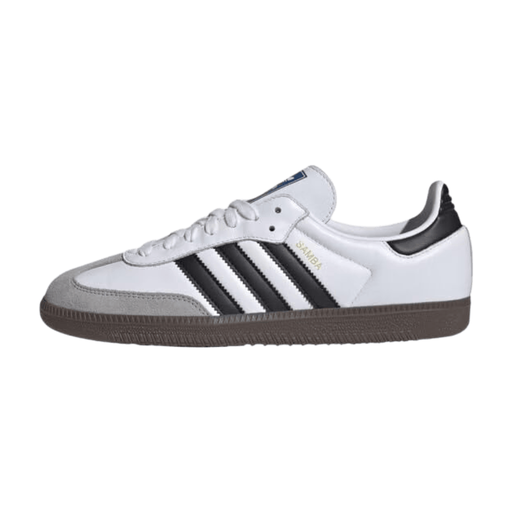
Why this product suits this profile: The low-profile everyday silhouette is ideal for city walking, leisure and combining with casual outfits. This model is designed for fashionable everyday wear rather than marathon training.
Its clear positioning as a leisure shoe helps prevent a lifestyle trainer from being used accidentally for marathons or HIIT. The material details make it clear that it has a suede upper and rubber sole.
Suede upper, natural rubber sole and an available size chart from EU 36 to EU 48.
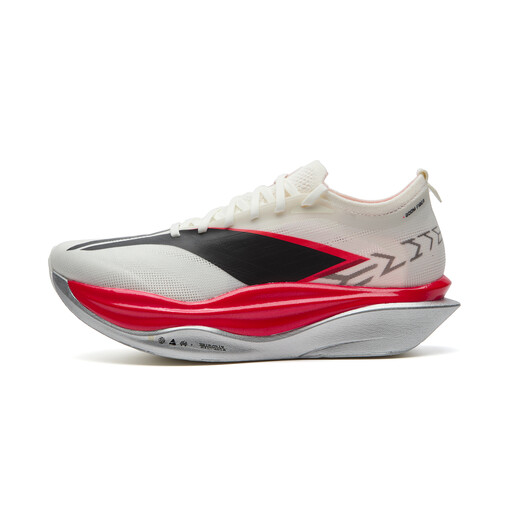
Why this product suits this profile: This model is aimed at runners looking for a shoe designed for road racing and longer distances, with a carbon-fibre plate and a secure fit.
The product description clearly identifies the plate, midsole, upper and outsole. According to Li-Ning's manufacturer information, the SUPER BOOM CAPSULE delivers 95 per cent energy return; this should be viewed as brand information, not a guarantee of personal performance.
T1000 carbon-fibre plate, BOOM-FIBER upper, bootie construction and GCU outsole for dry and changing surfaces.
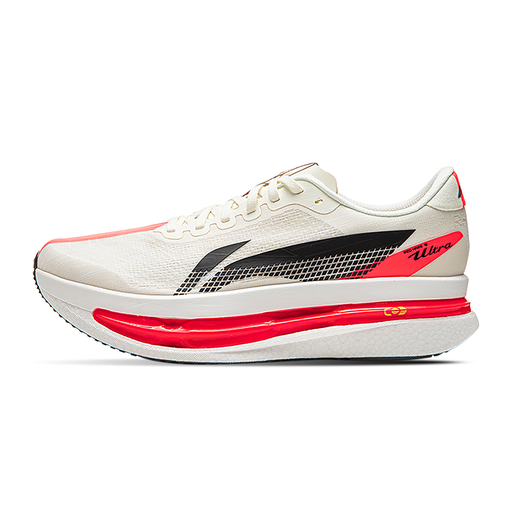
Why this product suits this profile: For HIIT, intensive training sessions and long-distance preparation, this model offers a close-fitting construction with a multi-layer midsole and fibreglass plate.
The description explicitly states that the shoe is intended for high-intensity use. This helps shoppers understand that the secure fit is not designed for every relaxed everyday walk.
Three-layer midsole, breathable BOOM-FIBER mesh and GCU outsole with details on wet- and dry-surface grip.
We have put together a complete, regularly updated list of products that fully meet these strict selection criteria and the safety regulations applicable in the EU.
Carbon running shoes are usually designed for fast road runs and competitive use. Their stiffer construction and close fit can take some getting used to. A flexible training shoe is often easier for beginners to assess. Running technique, fit and intended use are the decisive factors.
Lifespan depends on body weight, running surface, training volume, care and materials. Check the tread, midsole and upper regularly. Visible cracks, heavily uneven wear or reduced support indicate that the shoes should be replaced. There is no single mileage figure that can be applied reliably to every model.
Suede trainers are suitable for everyday wear and short walks, provided they are kept dry and cared for properly. For marathons, road running or HIIT, choose a model whose construction is explicitly designed for these demands. This helps ensure that the style, materials and intended use are properly matched.