
Lieferung heute & morgen

Qualitätsgarantie

Willkommens-Angebote freischalten: KOSTENLOSE Lieferung | Bis zu 80 % RABATT | Kostenlose 30-Tage-JoyPlus-Testphase
App herunterladen
There’s a wide choice of men’s running shoes. Terms such as “maximum cushioning”, “ultralight” and “for all terrains” sound convincing, but don’t tell you much on their own about how suitable a shoe really is. If you choose based only on looks or a single marketing claim, you could end up with a shoe that rubs after a few runs, offers little grip on wet ground or isn’t designed for your running style.
Lightweight running shoes can feel comfortable during speed sessions. But less material doesn’t automatically mean more comfort. For longer distances or frequent runs, consider the midsole construction, heel stability and fit as well as the weight.
Cushioned running shoes are primarily designed to reduce the impact of repeated foot strikes. But a soft foam midsole alone doesn’t make a shoe suitable for gravel, roots or wet paths. Trail running shoes also need an appropriate tread, rubber compound and lateral support.
A wide toe box can give your toes more room to move. But if the shoe is also too wide around the heel, your foot may slip as you roll through your stride. Conversely, a narrow-fitting shoe can cause pressure points around the toes. If possible, measure both feet in the afternoon and compare the measurements with the relevant manufacturer’s size chart.
Check the cushioning material and how far it extends along the sole. A full-length EVA or foam midsole can help provide a smooth, consistent ride. When choosing cushioned running shoes, also consider whether the sole is designed to feel soft or responsive.
For long-distance running shoes, a balanced combination of cushioning, energy return and secure heel hold is a good choice. Very soft shoes can feel comfortable at first, but some runners may find them less controlled.
Stable running shoes don’t have to feel stiff. Key features include:
If you have wider feet, look specifically for running shoes with a wide toe box. However, going up half a size is no substitute for a shoe that’s the right shape for your foot.
Breathable running shoes with mesh or a woven upper can help disperse heat and moisture. However, a very airy upper isn’t always the most practical choice in cold or wet conditions.
The outsole should suit where you plan to run. Road shoes usually have a flatter tread for tarmac and paved paths. Men’s trail running shoes need more pronounced lugs and a rubber compound that can provide grip on loose or damp ground. So, “non-slip” should always be considered in relation to the surface, tread and weather.
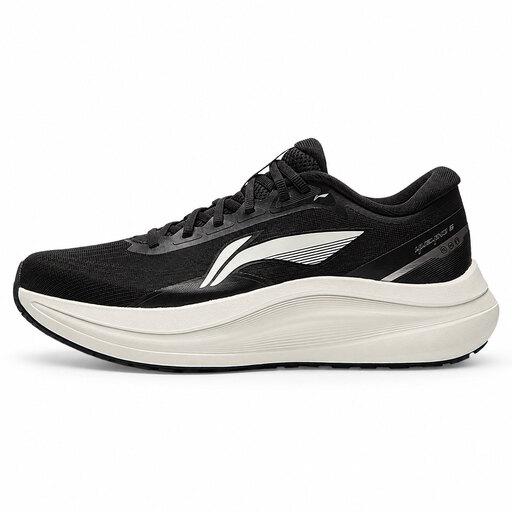
Why it suits this profile: This model combines a full-length Tempo-Bounce midsole with a wider heel, making it suitable for regular runs on paved paths and training sessions.
The product details mention both cushioning and a wider forefoot, so the focus isn’t just on a single marketing feature.
Full-length Tempo-Bounce midsole, rubber outsole and HEEL LOC+TUFF RB heel support, according to the product description.
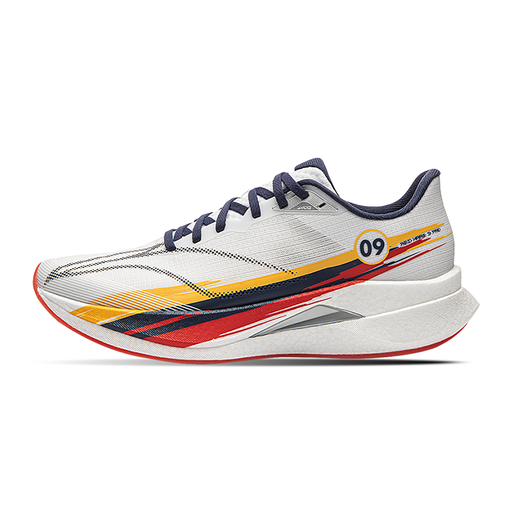
Why it suits this profile: According to the product description, this model is designed for runners looking for a wider base, a woven upper and a construction suited to training and longer distances.
The focus isn’t just on low weight: the platform width, BOOM midsole, rocker geometry and outsole are all specified.
Wide last, dual-layer BOOM foam sole, reflective details and GCR rubber outsole, according to LI-NING.

Why it suits this profile: This model is designed for switching between roads and paths with varied surfaces, making it a good option for runners looking for a versatile shoe.
As well as ventilation, the product description lists an EVA midsole and a treaded ROCKYTEC outsole, making it easier to assess what the shoe is designed for.
Sandwich mesh, highly elastic EVA midsole and ROCKYTEC rubber tread, according to the product details.
When trying on shoes, make sure your toes have a little room at the front while your heel stays secure. Try them on with the running socks you plan to wear. According to the product information for the Li-Ning YUEYING 6, going up half a size may be a good option if you have wider feet. The PELLIOT size chart lists foot lengths in millimetres, so check it before placing your order.
For many models, a damp cloth is all you need for cleaning. Let mesh shoes air-dry rather than placing them directly on a radiator. Check the tread, sole edges and seams regularly. There’s no fixed mileage limit for how long a pair will last, as wear depends on your body weight, running surface, training volume and how you store them.
We’ve put together a complete, regularly updated list of products that meet these strict selection criteria and fully comply with the safety regulations in force in the EU.
It depends on your running distance, the surface, your body weight and personal preference. Well-cushioned models can feel comfortable over longer distances. What matters most is that the shoe feels stable and doesn’t just feel soft.
Lifespan varies depending on how you use them. Check the tread, midsole compression and fit regularly. If the sole is wearing down noticeably unevenly or the shoe is losing its shape, it’s a good idea to replace it.
Short stretches on tarmac are usually fine. However, heavily treaded men’s trail running shoes may feel less responsive on long road runs and can wear out more quickly. For mostly paved routes, road shoes or marathon and training shoes are generally a better fit.