
Lieferung heute & morgen

Qualitätsgarantie

Willkommens-Angebote freischalten: KOSTENLOSE Lieferung | Bis zu 80 % RABATT | Kostenlose 30-Tage-JoyPlus-Testphase
App herunterladen
Anyone looking for men’s running shoes for road and trail will usually want a pair suitable for several situations: daily runs on tarmac, longer distances in the park and occasional detours onto woodland paths or uneven terrain. This is where unsuitable purchases often happen. A shoe that looks versatile in product images may have clear limitations when it comes to fit, cushioning or tread.
As a Joybuy Product Recommendation Officer, I therefore filter the most important information according to objective criteria. This makes it easier to assess whether a pair suits your route, foot shape and intended use.
Lightweight men’s running shoes can feel pleasantly responsive during a short road run. For longer distances, however, weight is not the only consideration. The construction of the midsole, energy return and stability around the heel and midfoot are also important. A highly pared-back shoe may feel less comfortable over longer periods if its cushioning does not suit your individual running style.
Slip-resistant running shoes need a suitable rubber compound, a functional tread pattern and enough surface contact with the ground. Mud, wet rocks and loose sand each present different demands. A trail tread may offer advantages on soft ground, but it may feel less fluid on smooth tarmac. For mixed terrain, check the actual outsole description rather than relying solely on the term “All-Terrain”.
Breathable running shoes benefit from mesh or woven panels. However, the lining, tongue, reinforcements and seam density also affect airflow. A fully reinforced toe box can improve durability but reduce ventilation. For warm training days and long runs, a balanced combination of airflow and protection is advisable.
EVA cushioning is widely used because the material combines relatively low weight with elastic properties. In practice, buyers should consider the following:
Soft cushioning is not automatically more comfortable for every runner. If you often run on tarmac, you may prefer greater comfort under the heel. On uneven terrain, however, a more stable and controlled feel may be more important. Material specifications alone do not indicate any medical or therapeutic benefits.
For shoes for road and off-road use, the outsole is particularly important. Look for:
The PELLIOT model is specified with a ROCKYTEC Rock Technology outsole offering anti-slip and abrasion-resistant properties. The product description lists wet rocks, muddy slopes and loose sand as possible areas of use. Vibram Megagrip is mentioned only for selected versions, so this should be checked against the specific listing.
The correct size depends on more than your usual shoe size. For longer runs, many runners need a little room around the toes without the heel slipping. For the model mentioned, the following size references are provided:
Measure both feet in the evening while wearing the running socks you intend to use. Use the measurement of the longer foot as your guide. When trying the shoes on, the forefoot should not feel cramped, while the heel should not lift noticeably when walking or jogging gently.
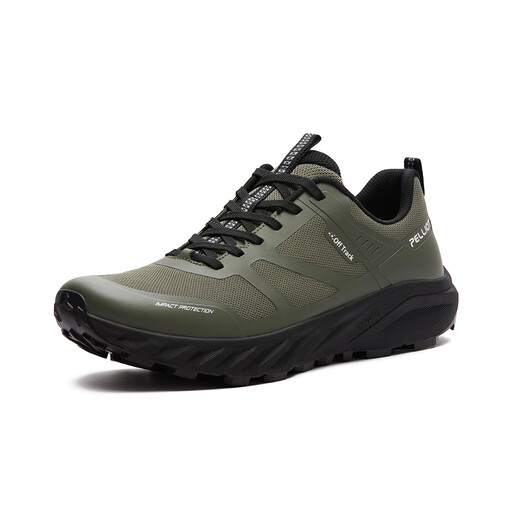
Why this product suits this profile: The combination of a mesh and woven upper, EVA midsole and profiled rubber outsole is designed for everyday road runs with occasional use on outdoor paths.
The specifications name specific materials and the foot length for EU 42, rather than relying solely on a general comfort claim.
Sandwich mesh for airflow and a highly elastic EVA midsole; standard fit according to the product information.
Why this product suits this profile: The EU 43 version provides a clearly defined size option for a 265 mm foot length and is aimed at runners who pay close attention to material specifications and care instructions when covering longer distances.
The fit is differentiated into standard and slim versions. This makes it easier to match the shoe to your foot width than with a one-shape-fits-all construction.
Abrasion-resistant upper with TPU reinforcement on selected versions; hand washing and air drying are recommended for care.
Why this product suits this profile: If you switch between tarmac, park paths and easy trails, this design combines a mesh upper, EVA midsole and ROCKYTEC rubber outsole.
The outsole is described for specific surfaces such as wet rocks, mud and sand. For technical high-altitude terrain, a dedicated trail-running category remains the more suitable choice.
Designed for road-to-trail transitions; the upper and outsole are engineered for airflow and abrasion resistance respectively.
The lifespan of running shoes depends on your body weight, running style, surface, training volume and storage conditions. It is therefore not possible to give a reliable fixed mileage figure for every pair. Check regularly:
According to the product information, the PELLIOT model should be cleaned by hand with mild soap and cold water. Direct heat, ironing and machine drying may damage the materials and adhesive bonds.
We have put together a complete, regularly updated list of products that fully meet these strict selection criteria and the safety regulations applicable in the EU.
That depends on the fit, cushioning, outsole construction and your individual running technique. For longer distances, test the shoes during shorter sessions first. Look out for pressure points, heel hold and sufficient room in front of your toes.
Age alone is not the deciding factor. Replacing your shoes becomes advisable when the tread, cushioning or upper has noticeably deteriorated and the way they feel while running has changed. With heavy daily use, this point may be reached sooner than with occasional runs.
Models designed for mixed terrain can be used on paved paths. However, a very deep tread may feel noisier on tarmac and less responsive underfoot. If you mainly run on hard surfaces, the outsole should therefore not be designed exclusively for deep mud or soft trails.