
Lieferung heute & morgen

Qualitätsgarantie

Willkommens-Angebote freischalten: KOSTENLOSE Lieferung | Bis zu 80 % RABATT | Kostenlose 30-Tage-JoyPlus-Testphase
App herunterladen
Anyone looking to buy men’s running shoes will find countless models described as “lightweight”, “stable” or “energised”. These terms alone say little about whether a shoe suits your running style, the surface you run on and your feet. What matters is reliable product information, choosing the right size and matching the shoe to how you plan to use it.
Lightweight men’s running shoes can feel pleasantly responsive during faster training sessions. However, using less material does not automatically mean greater comfort or sufficient stability. On longer runs, well-balanced cushioning may be more important than the lowest possible weight.
That is why you should consider the shoe as a whole: the midsole, heel hold, upper and outsole all need to suit the intended use. A highly minimalist model is not necessarily suitable for daily training runs or long stretches of tarmac.
Stable running shoes often feature a broader platform, reinforced areas or firmer guidance through the midfoot. This can feel more secure for certain running habits. However, it does not provide a general indication of your individual foot position or any health-related effects.
In practical terms, the shoe should hold your foot securely without restricting your toes. If you regularly experience pressure points, numbness or pain, check the fit and seek medical advice if the symptoms persist.
Manufacturers use different lasts. Even if you choose your usual EU size, the length, width and heel volume may vary. Always check the size chart for the specific model and, where possible, try running shoes on with the socks you wear for training.
For longer runs, it is also advisable to leave some room for movement in front of your toes. Too much space, however, can reduce support. With running shoes with a wide toe box, you should therefore assess not only the width but also how securely the heel and midfoot are held.
Men’s cushioned running shoes are particularly appealing to users who prefer a softer, more comfortable ride during everyday training. Check the following:
Soft cushioning does not feel the same to every runner. A slightly more responsive construction may be better suited to faster sessions, while longer training runs often benefit from a comfort-focused midsole.
A widened platform can provide a larger base of support. However, additional features such as a TPU plate, reinforced overlays or pronounced heel support should not be considered in isolation. What matters is whether the shoe feels secure when walking and running.
For wider feet, a generous forefoot area and sufficiently flexible toe section are important criteria. At the same time, the lacing should hold the midfoot evenly. The product description for the Li-Ning YUEYING 6, for example, mentions a wide toe box, a heel widened by 2 mm and a PROBAR-LOC support element. These are specific construction features, but they do not replace trying the shoe on.
A textile mesh upper can help with ventilation. TPU or synthetic reinforcements can provide additional structure around the midfoot. For tarmac, treadmills and paved paths, the pattern on the rubber outsole is also relevant.
If you are looking for marathon running shoes or racing running shoes, pay particular attention to weight, a secure fit and the shoe’s roll-through. For daily training runs or changing surfaces, durability and traction are generally more important. Reflective elements can improve visibility when running at dusk, but they do not replace suitable lighting and safety equipment.
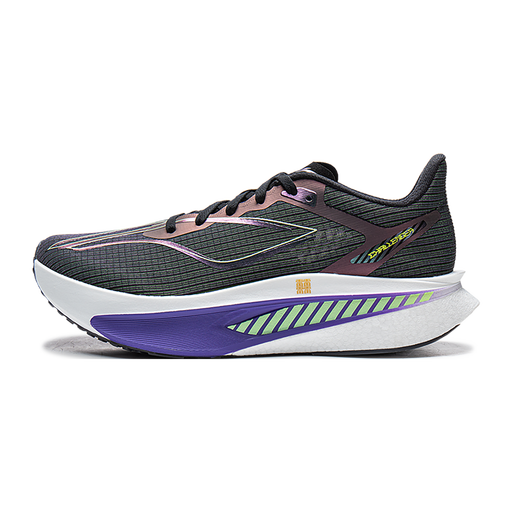
Why this product suits this profile: This model is described as a lightweight road-running shoe for training and faster-paced runs. Its standard width and textile upper make it a suitable starting point for runners without a particular need for an extra-wide fit.
The choice is based not only on the term “Racing”, but also takes into account the standard width, textile ventilation, TPU reinforcements and GCR rubber outsole.
Lightweight construction, breathable textile and GCR rubber tread for road running and everyday training.
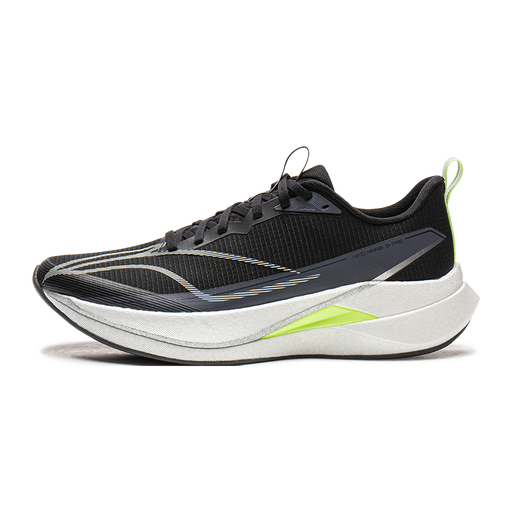
Why this product suits this profile: The construction combines a widened platform, a TPU plate in the midfoot, a two-layer BOOM midsole and a woven BOOM-FIBER upper.
The decision is based on the specified components rather than sweeping promises about speed or injury prevention. Nevertheless, you should try on the wider platform before buying.
Widened platform, BOOM midsole, reflective elements and abrasion-resistant GCR outsole according to the product details.
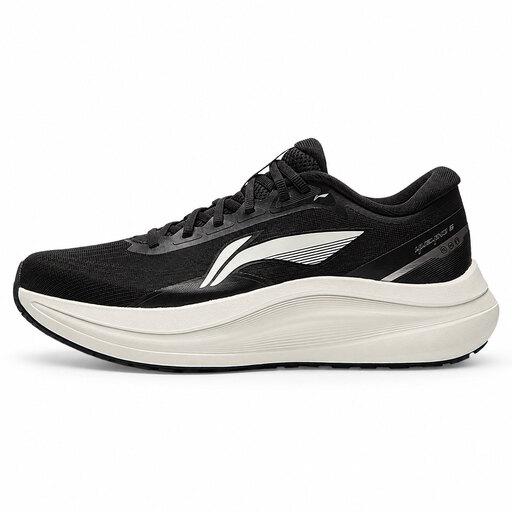
Why this product suits this profile: This model is aimed at users looking for a comfort-focused construction with a roomier forefoot, a stabilising heel area and a zoned rubber outsole.
The wide toe box is combined with heel support and a widened heel section. If you are between sizes, check the stated recommendation to choose the larger size.
Tempo-Bounce midsole, PROBAR LOC, HEEL LOC+TUFF RB and grippy rubber outsole according to the product description.
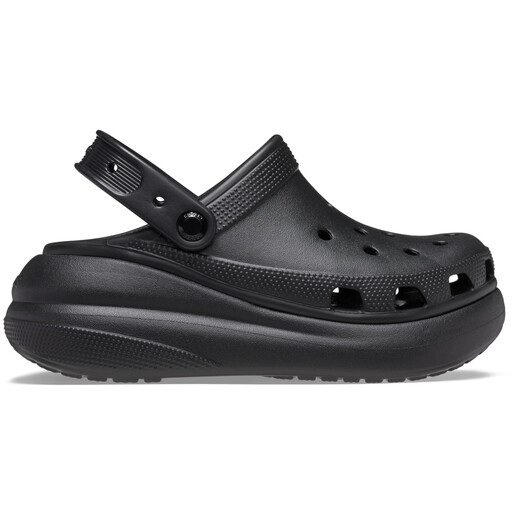
Why this product suits this profile: The clog is intended for leisure, the swimming pool, the garden and warm days, not for running training or races. Its distinctive platform look makes it an everyday alternative to black men’s sports shoes.
Clearly distinguishing it from a running shoe prevents this leisure clog from being used for running routes or faster sessions. According to the product details, this model comes up small.
Water-repellent, lightweight EVA construction, adjustable heel strap and personalisation through Jibbitz openings.
We have put together a complete, regularly updated list of products that fully meet these strict selection criteria and the safety regulations applicable in the EU.
The durability of men’s running shoes depends on body weight, running style, surface, training volume and materials. It is therefore not possible to give a reliable fixed mileage for every model. Check the following regularly:
Textile shoes should be cleaned with a damp cloth and left to air-dry. Direct heat, strong cleaning products and prolonged exposure to sunlight can damage materials and adhesives. Machine washing is not recommended for the Li-Ning models. For Crocs Crush Clogs, follow the care instructions provided with the product; check the label before cleaning.
For long distances, a secure fit, sufficient room in the forefoot, reliable outsole grip and cushioning that matches your personal preference are all important. A model with a wide toe box may be worth considering if you have wider feet. However, trying the shoes on with your own running socks remains essential.
Age is not the only deciding factor. Check the outsole, midsole, heel support and any visible material damage. If the ride feels noticeably different or the shoe is wearing unevenly, it is worth comparing it with a new pair.
Many black men’s sports shoes can be paired with jeans or casual clothing. However, a genuine running shoe has a construction designed for movement. It may be suitable for short journeys and everyday use, whereas a men’s Crocs Crush Clog is primarily a leisure model and is not designed as a running shoe.