
Lieferung heute & morgen

Qualitätsgarantie

Willkommens-Angebote freischalten: KOSTENLOSE Lieferung | Bis zu 80 % RABATT | Kostenlose 30-Tage-JoyPlus-Testphase
App herunterladen
If you’re looking for men’s socks, you’ll find plenty of options for the office, everyday wear, sport and outdoor activities. But the differences go beyond colour and length. The fabric blend, seam construction, cuff and sizing system all affect whether a pair feels comfortable in your shoes or starts to slip, rub or lose its shape after a short time.
Labels such as ‘breathable’, ‘bamboo’ or ‘moisture-wicking’ don’t tell you much on their own. What matters is the precise fabric blend. Cotton socks can feel soft, but they may dry differently from styles made with polyester, polyamide or elastane during intense activity. When choosing bamboo socks, check whether the product actually specifies a high proportion of bamboo-derived viscose, and which fibres have been added for durability and stretch.
Trainer socks or short socks work well with low-cut casual shoes, but may offer little protection in taller footwear. Tennis socks and quarter-length styles usually reach the ankle or sit slightly above it. Longer styles are a good choice for walking boots and ski boots, so the top of the boot doesn’t rub directly against your skin.
A 3-pack is handy for occasional wear or for trying out a style. If you change your socks every day, an 8-pack of socks is often more practical, as long as the size and material suit your daily routine. Always consider the number of pairs alongside the fabric quality, washability and how you expect to use them.
Cotton blends are a popular choice for the office and everyday wear. They can feel soft and are easy to care for. Synthetic fibres such as polyester or polyamide often help socks keep their shape and, depending on how they’re made, dry more quickly. Moisture-wicking socks are particularly useful for training, running or long working days.
Merino wool is often used in cooler conditions. The stated blend for the OutdoorMaster style includes 30% merino wool and other fibres. Before buying, check the exact composition against your personal sensitivities and the care instructions.
Socks shouldn’t bunch up or feel so tight that they dig into your skin. Check that:
Sizing can vary between brands. For example, ASICS quarter socks are available in size ranges from EU 35–38 to EU 47–49. Always refer to the size chart for the specific product.
Reinforced heels and toes are useful in running socks, walking socks and training styles. A cushioned sole can change how your foot sits in the shoe, so check that it works with the width of your footwear. For thin business socks, a discreet profile is usually the priority.
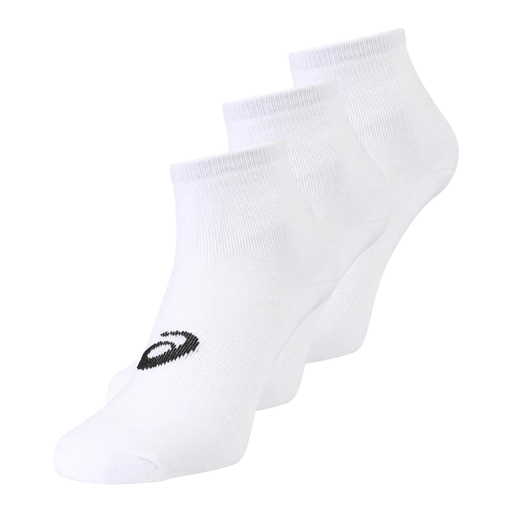
Why this product suits this profile: According to ASICS product details, the set contains three pairs made from 69% cotton, 24% polyester, 5% polyamide and 2% elastane. The quarter length works for everyday wear, training and short runs.
The fabric proportions and EU size ranges are listed, making it easier to compare these socks with other men's sports socks than with a product that gives no clear fibre information.
3-pack, quarter length and sizes from EU 35–49, according to the product details.
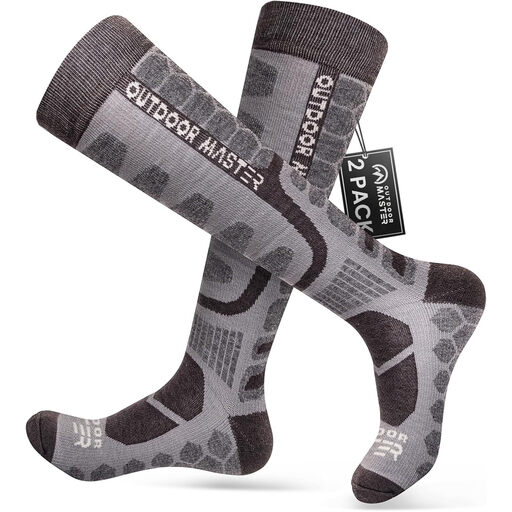
Why this product suits this profile: According to the product details, this knee-high ski sock features a 30% merino wool blend, compression zones and reinforced cushioning.
The length and targeted zones are clearly described. This reduces the risk of choosing a short everyday sock for ski boots or winter outdoor activities.
2 pairs, knee-high design, merino wool blend and reinforced cushioning zones.
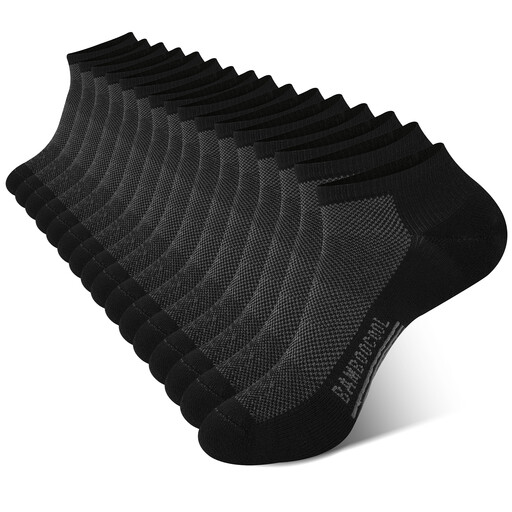
Why this product suits this profile: According to the product details, this 8-pack combines a low ankle length with mesh fabric, cushioned soles and reinforced heels and toes. It’s a good fit for regular rotation between everyday wear, training and running.
The product description specifies the reinforcements and pack size, helping you judge whether the socks are suitable for regular wear and frequent washing.
8-pack, low-cut design, cushioned soles and stated moisture-wicking properties.
We’ve put together a complete, regularly updated list of products that meet these strict selection criteria and the safety regulations in force in the EU.
For running, running socks with the right fit, a smooth toe area and a secure heel are a good choice. A cushioned sole can also help. Moisture-wicking fabrics may feel more comfortable on longer runs, but the socks shouldn’t be so thick that they make your running shoes feel tight.
Cotton socks are often a good choice for the office, leisure time and moderate activity. If you sweat heavily or exercise intensely, blends with polyester or polyamide may dry more quickly. The precise fabric composition and fit are what matter.
It depends on how often you do the washing and how you use your socks. A 3-pack may be enough for occasional wear or as an addition to your collection. For daily changes, 8-packs or several 3-packs are more practical. Having different lengths and materials for the office, sport and outdoor activities helps you avoid compromises for every occasion.