
Lieferung heute & morgen

Qualitätsgarantie

Willkommens-Angebote freischalten: KOSTENLOSE Lieferung | Bis zu 80 % RABATT | Kostenlose 30-Tage-JoyPlus-Testphase
App herunterladen
Men’s socks need to meet different requirements depending on how they are used. In the office, discreet colours and a comfortable fit matter most, while running calls for good moisture management and support. For hiking, warmth, cushioning and the material blend play a greater role. However, if you only pay attention to colour or pack size, you can easily end up buying socks that slip, lose their shape quickly or do not fit your shoes properly.
Descriptions such as “bamboo”, “breathable” or “antibacterial” do not automatically describe a model’s complete properties. Men’s bamboo socks are often not made from pure bamboo, but from viscose derived from bamboo pulp combined with polyamide and elastane. This blend can affect shape retention and durability.
Always check:
Short socks work well with trainers and casual shoes, while crew socks or mid-length styles offer more protection around the lower leg. Socks that are too high can look impractical with shorts; socks that are too short may slip when hiking or playing basketball and increase the risk of skin rubbing against the shoe.
Cushioning is also important: thick men’s sports socks can create pressure in tight-fitting shoes. Thin business socks, on the other hand, are generally better suited to leather shoes, although they provide less cushioning.
An elasticated sock can cover several shoe sizes, but your choice should still be based on your usual EU shoe size and foot length. For in-between sizes, it is important to consider whether you prefer a closer fit for sport or greater freedom of movement for everyday wear. Socks that are too small can pull around the toes and heel; styles that are too large can bunch up and rub inside the shoe.
Men’s cotton socks often feel familiar and are suitable for the office, leisure time and everyday wear. Depending on the weave, a 100% cotton style may absorb moisture, but it will not necessarily dry particularly quickly.
Men’s bamboo socks are often chosen for their soft feel and the breathability described by the manufacturer. In blended fabrics, polyamide and elastane provide greater resistance to abrasion and more stretch. The term “antibacterial socks” should be assessed using specific product details and care instructions, rather than relying solely on the marketing copy.
Merino socks are particularly suitable for changing temperatures and outdoor activities. The model featured here contains 30% merino wool. The rest of the material blend affects stretch, drying time and durability. For intense running, a thinner construction may be more suitable than a warm hiking sock.
Look out for:
These features cannot replace individual advice about choosing shoes. However, they can help you objectively match the construction to your intended use.
Buying socks in multipacks reduces the effort involved in replacing them and makes sorting easier. A 6- or 7-pair pack is practical for people who regularly wear socks to the office or every day. For specialist styles such as running or hiking socks, a smaller pack may make more sense if requirements for thickness and fit vary considerably.
Actual lifespan depends, among other things, on the shoe lining, washing temperature, drying method and frequency of use. Always follow the care instructions and avoid unnecessarily high temperatures if the manufacturer recommends a gentle wash.

Why this product suits this profile: The 6-pack combines a crew length with a cushioned sole and is suitable for everyday wear, the office, running and leisure activities.
The product details specify material features, pack size and reinforced heels and toes instead of making vague comfort claims.
6 pairs, moisture management according to the product description, arch support and reinforced high-stress areas.
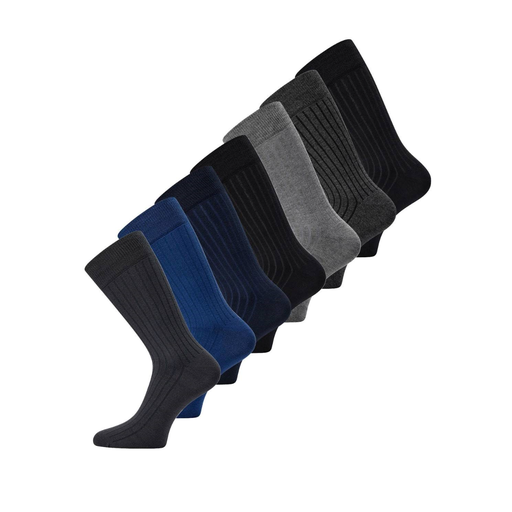
Why this product suits this profile: The documented composition of 75% viscose from bamboo, 23% polyamide and 2% elastane provides a clear basis for making an informed choice.
The proportions of each material are clearly stated. This makes it possible to distinguish “bamboo” from an unspecified fibre description.
7 pairs, ribbed design, EU size range 45–48 and care instructions allowing machine washing at 40 °C.
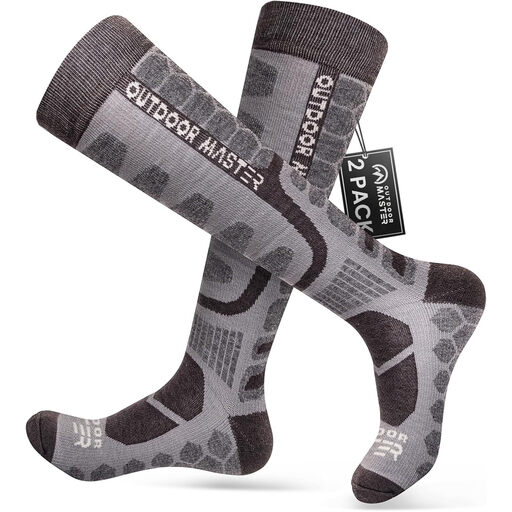
Why this product suits this profile: This model is designed for winter sports and outdoor use, with an over-the-ankle construction and targeted cushioning zones.
The intended use, material blend and size are specified. This helps prevent using a thin everyday sock with ski boots or for longer hikes.
30% merino wool, two pairs, compression zones, reinforced cushioning and an anti-slip cuff according to the product description.
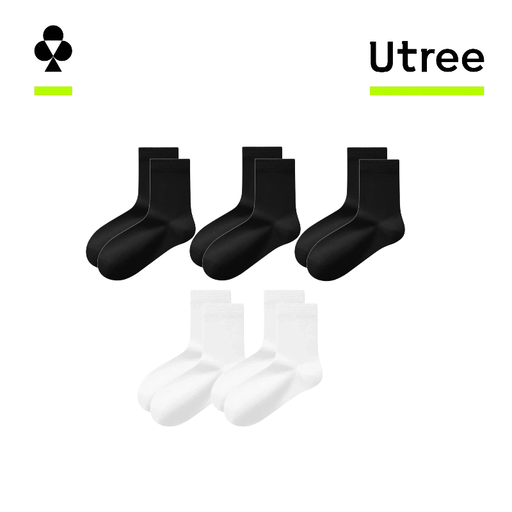
Why this product suits this profile: The thin, mid-length design in black and white is made for the office, commuting and leather shoes.
A seamless toe area, 3D heel and elasticated finish address common fit issues such as rubbing, slipping and pressure points.
Cotton fabric, thin mid-calf length, several colour options and a pack size of five pairs.
We have put together a complete, regularly updated list of products that fully meet these strict selection criteria and the safety regulations applicable in the EU.
For everyday wear, comfortable socks made from cotton, bamboo viscose or a blended fabric are suitable. The key factors are the right length, a cuff that does not dig in and a material blend that works well with your shoes. Thin business socks are generally more practical with leather shoes than heavily cushioned sports socks.
No. The term describes a promoted textile property and is not a blanket promise of odour-free wear. Check whether the manufacturer provides specific information about the treatment, the microorganisms tested and the care requirements. Regular washing, thorough drying and suitable footwear remain important regardless of the sock model.
It is not possible to give a reliable fixed lifespan. It depends on usage, footwear, washing programme and material. Reinforced heels and toes can help improve resistance to abrasion. Buying socks in multipacks and rotating them between wears distributes the strain across several pairs.