
Lieferung heute & morgen

Qualitätsgarantie

Willkommens-Angebote freischalten: KOSTENLOSE Lieferung | Bis zu 80 % RABATT | Kostenlose 30-Tage-JoyPlus-Testphase
App herunterladen
Sweaty feet, slipping cuffs or a hard seam around the toes: with men’s sports socks, differences in quality often only become apparent after wearing them for longer periods. A striking colour or the word “performance” alone says little about how suitable they are for everyday use. The key factors are the material, cut, reinforcements and suitability for the shoe in question.
This guide is aimed at men and sporty, active people in Germany looking for men’s trainer socks, men’s short socks, men’s running socks or practical multi-packs. The focus is on clear product information rather than blanket marketing claims.
The term breathable socks does not automatically describe a particular fibre or construction. So check the material composition and how the knit is made. Polyester can draw moisture away from the skin, while cotton feels comfortable and can absorb moisture. For intensive activity, however, it is important to consider how quickly the material dries again.
An exact percentage is more informative than general phrases such as “fresh” or “cool”. The ASICS Secret Socks, for example, specify a blend containing cotton and synthetic fibres. The exact composition varies from model to model.
Padded sports socks can feel comfortable during training or hiking. However, a fully padded sole takes up more room in the shoe than a lightweight construction. This can increase pressure in close-fitting running shoes. If you wear thin everyday shoes or trainers, it may be better to choose lightweight men’s ankle socks or no-show models.
Pay attention to how the padding zones are described: “light padding in impact areas” means something different from a fully reinforced sole.
International sizes can lead to the wrong purchase. A size such as US 7–9.5 does not automatically correspond to the same EU range for every manufacturer. Before buying, therefore, check the EU size, the size chart for the specific product and your usual shoe size.
A model that is too large may crease and slip. One that is too small may place unnecessary tension on the cuff and toe area. For half sizes, the size chart for the individual product is particularly important.
Moisture-wicking socks are particularly worth considering for running, fitness and long working days. Look for terms such as “moisture wicking” and check whether mesh panels or a lightweight knit are also mentioned. This information indicates how the sock is constructed, but it does not replace your own assessment of wearing comfort.
Men’s cotton socks often provide a soft feel against the skin. For intensive sports sessions, you should also check whether synthetic fibres are included to help with drying and shape retention. The term “antibacterial” should not be taken as a medical claim or a guarantee against odours.
A flat or low-seam toe construction can help reduce pressure points around the toes. Reinforced areas at the heel and toe can improve durability, while an elasticated zone around the arch can provide a more secure fit. Socks with arch support should not automatically be considered an orthopaedic product.
With non-slip socks, it is important to establish whether the product actually has a grip surface or simply an elasticated cuff. These two solutions work differently and are suitable for different types of footwear.
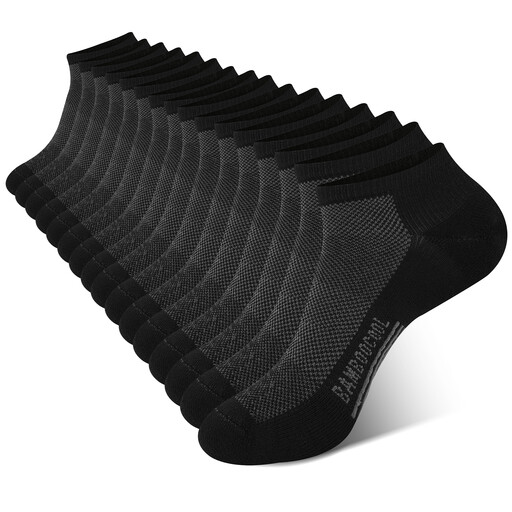
Why this product suits this profile: The 8-pack is ideal for shoppers who need several pairs for training, leisure and work. It is described as having a low leg, moisture-wicking fabric, arch support and a padded sole.
The description lists specific features instead of simply claiming “sports quality”: a reinforced heel and toe, padded sole and mesh panels. Size M should be checked against the product information.
8 pairs, padded sole, reinforced high-stress areas and specified arch support.
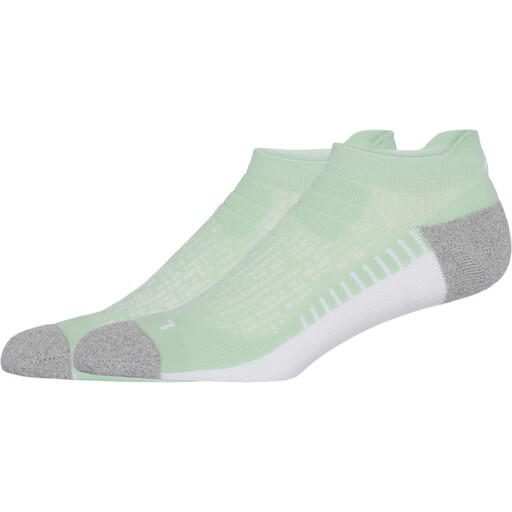
Why this product suits this profile: These running socks are designed for running and training sessions. They are described as lightweight, breathable and low-seam, with light padding in higher-stress areas and an elasticated ankle band.
The description distinguishes between light padding and a fully thick sole. This makes it easier to match the sock to a close-fitting running shoe.
Low-seam construction, elasticated leg, breathability information and care at 40 °C with air drying.
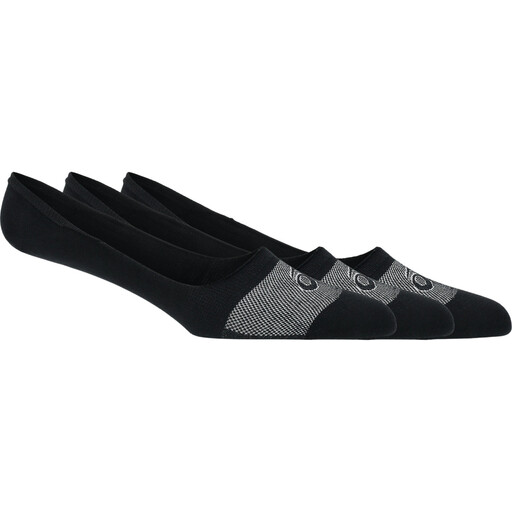
Why this product suits this profile: The short no-show socks are suitable for trainers, everyday wear and training when you want the leg to remain as discreet as possible inside the shoe. They are described as having a low-seam toe, moisture management and a 3-pack.
The product data specifies the cut, material blend and EU size ranges. This lets you check before buying whether the low profile and fit are suitable for your particular trainers.
Discreet short leg, 3-pack, specified low-seam toe and a cotton-containing material blend.
We have put together a complete, regularly updated list of products that fully meet these strict selection criteria and the safety regulations applicable in the EU.
The lifespan of sports socks depends on how often they are worn, the fit of the shoe, washing temperature and drying method. Friction at the heel or toes accelerates wear. Change your socks after training and allow them to dry completely before wearing them again.
Always follow the care label. Some models recommend air drying, while other versions allow a low tumble-dryer temperature. Fabric conditioner can affect the properties of elasticated or technical fibres. When buying a 3-pack or 8-pack, comparing the price per pair is more useful than simply looking at the total price.
Men’s trainer socks are usually shorter and designed to sit discreetly inside trainers. Men’s ankle socks reach slightly higher and partially cover the ankle. For running training or longer walks, the higher leg can provide additional contact with the skin and shoe.
There is no reliable fixed timeframe. Visible thinning, stretched cuffs, heels that continually slip or damaged seams are all signs that the socks should be replaced. If you wear them every day, a multi-pack is practical because each pair can dry completely between uses.
Cotton can feel soft and comfortable. When running, you should also check whether the model can wick away moisture, how quickly it dries and whether the seams are positioned appropriately for your shoe. For intensive sessions, blends containing synthetic fibres may be a suitable alternative; the right choice depends on fit, how much you sweat and your personal preference.