
Lieferung heute & morgen

Qualitätsgarantie

Willkommens-Angebote freischalten: KOSTENLOSE Lieferung | Bis zu 80 % RABATT | Kostenlose 30-Tage-JoyPlus-Testphase
App herunterladen
Men's sports socks should stay securely in place and keep up with the demands of the day, whether you're running, playing basketball, hiking or working out at the gym. At the same time, many styles are advertised with terms such as “breathable”, “antibacterial” or “comfort cushioning”. These claims are only useful, however, when it's clear how they are put into practice in the product.
This buying guide explains which features really matter, which common purchasing misconceptions can cost you money and which styles suit different usage profiles.
An airy knit can improve air circulation. On its own, however, it says nothing about how quickly moisture is transported away from the foot. For longer runs or intensive training sessions, moisture-wicking socks with a suitable material blend and ventilation zones are more useful than a style that only promotes an open-knit design.
Look for specific details such as “moisture wicking”, moisture management or mesh inserts. The fit also plays a role: if the sock is too loose, it can crease; if it is too tight, heat may build up.
Cushioned sports socks can provide extra comfort when walking, running or jumping. However, in a sports shoe that already fits snugly, a thick sole may cause pressure points. Check whether the cushioning is only under the foot or also around the toes, heel and instep.
Reinforced heel and toe areas are particularly important for durability. They reduce wear in areas that often rub against the inside of the shoe during sport and everyday activities.
Antibacterial treatments can be incorporated into the textile, but they should not be equated with a medical or therapeutic effect. Regular washing, thorough drying and changing your socks after training remain essential.
When brands provide information about germ-reduction rates, the specific testing method is important. Without transparent test conditions, it is not possible to make meaningful comparisons between the percentages given for different products. According to the brand's product information, the Li-Ning styles feature an integrated silver-ion treatment and refer to specific microorganisms. This information relates to the product's features, not to any health benefit.
Breathable socks are often made from polyester, polyamide, elastane or blended fabrics. Synthetic fibres can transport sweat away from the body to the outer surface of the fabric and usually dry faster than pure cotton. Elastane helps the socks retain their shape and prevents them from slipping during movement.
For everyday wear or shorter training sessions, a soft blended fabric may also be suitable. For long runs, hiking and indoor sports, you should also look for mesh panels and a textured inner surface.
An elastic zone around the midfoot can help stabilise the sock. Socks with arch support are not a substitute for orthopaedic care and do not correct foot misalignment. They can, however, help the fabric stay in place more effectively when walking or running.
The following features are also important:
Men's ankle socks work well with running shoes, trainers and many fitness shoes. They only partially cover the ankle and are suitable for anyone who prefers less fabric around the leg.
Men's crew socks typically reach the lower calf. They offer more coverage and work well with basketball shoes, hiking boots, work shoes or longer trousers. For basketball, mid-length styles with an elastic cuff and stable construction are often a practical choice.
The following selection is based on verifiable product information covering length, pack size, cushioning, material details and intended use. Colours and sizes may vary depending on the product page.
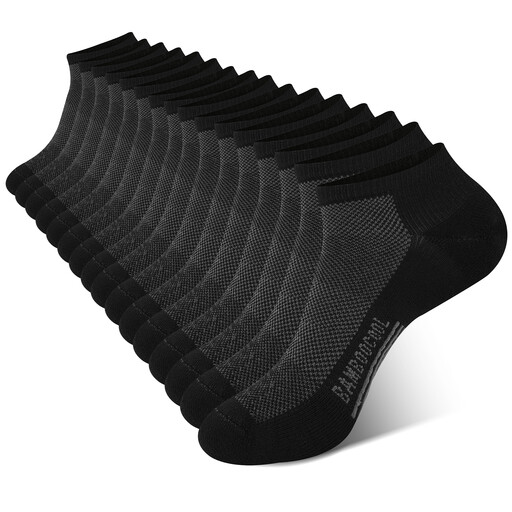
Why this product suits the profile: The eight-pair pack is ideal for regular training, work and everyday wear. The ankle-length design works with many trainers and running shoes.
The specifications mention moisture management, a cushioned sole and reinforced heel and toes, rather than relying on vague comfort claims.
Eight-pair pack, arch support, cushioned sole and reinforced wear zones.
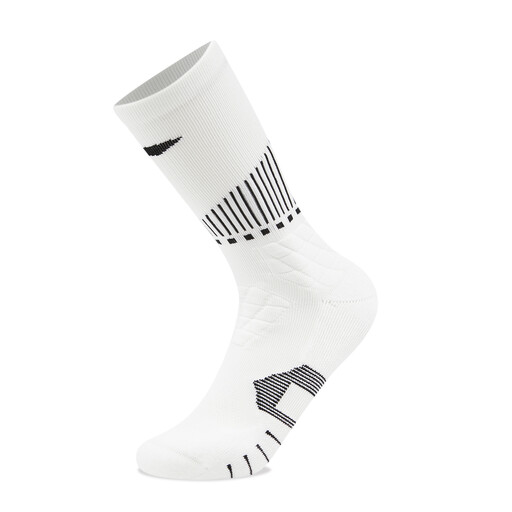
Why this product suits the profile: These mid-length basketball socks combine an elastic cuff with a soft, stretchy blended fabric, making them suitable for sport and everyday wear.
The fit is described through the cuff, stretch and a specific size chart. This makes choosing easier than with unclear one-size-fits-all products.
Mid-calf length, elastic cuff, jacquard pattern and, according to Li-Ning's product information, a silver-ion treatment.
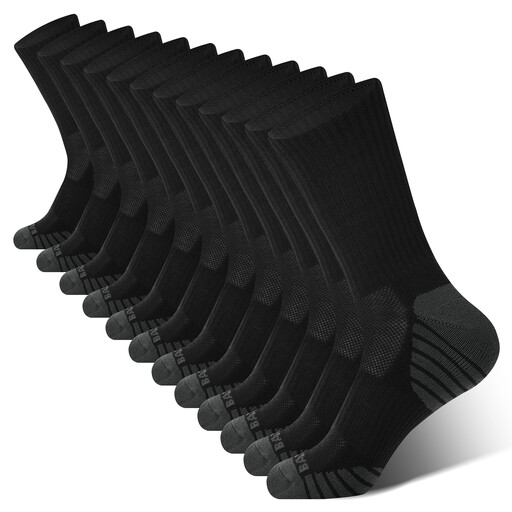
Why this product suits the profile: The crew length covers the lower calf and is designed for running, hiking, fitness, jobs that involve standing and everyday office wear.
The product description specifies a reinforced heel and toes as well as a cushioned sole. This clearly identifies key wear and pressure zones.
Six-pair pack, crew length, mesh fabric, moisture management and arch support.
We've put together a complete, regularly updated list of products that fully meet these strict selection criteria and the safety regulations applicable in the EU.
The lifespan of sports socks depends not only on the material, but also on how they are used and cared for. Wash your socks after particularly sweaty exercise according to the care label and allow them to dry completely. Excessively high temperatures, bleach and frequent tumble drying at high heat can put strain on elastane and fabric treatments.
Replace socks with a sole that has become thin, stretched-out cuffs or open seams. A value multi-pack can be economical if the individual pairs are worn in rotation. For different activities, it is worth choosing separate styles: ankle socks for lightweight running shoes, mid-length basketball socks for indoor sports and cushioned crew socks for hiking or work.
For running, lightweight, moisture-wicking styles with a flat toe area, a secure fit and targeted cushioning are a sensible choice. Men's ankle running socks often work well with low-cut running shoes. For longer distances, the heel and toes should be reinforced without making the shoe feel too tight.
There is no single lifespan that applies in every case. Training frequency, shoe fit, washing temperature and the material all affect wear. Clearly thinning areas, holes or a cuff that keeps slipping are signs that the socks should be replaced.
No, they are not essential. An antibacterial textile treatment can be an additional product feature, but it does not replace washing or drying. Above all, choose based on fit, moisture management, cushioning and the intended use.