
Lieferung heute & morgen

Qualitätsgarantie

Willkommens-Angebote freischalten: KOSTENLOSE Lieferung | Bis zu 80 % RABATT | Kostenlose 30-Tage-JoyPlus-Testphase
App herunterladen
Men’s sports socks need to do more than ordinary everyday socks. Running, basketball, hiking and fitness training generate heat, moisture and friction. At the same time, your socks should stay in place inside your shoes, avoid restricting your feet and retain their shape even after many washes.
However, some advertising claims can easily lead to the wrong purchase. It is not eye-catching patterns or blanket statements such as “high performance” that matter most, but tangible features such as the material, fit, reinforcements and pack size.
The term breathable sports socks alone says nothing about the quality of the material. Without details about mesh zones, the fabric blend or moisture management, it is unclear how the socks will perform during prolonged activity. For runners and fitness enthusiasts, moisture-wicking socks with breathable fabric are generally more practical than very tightly knitted models.
A cuff that barely seems noticeable when you try the socks on can become a problem during training. If it is too loose, the sock may move around inside your shoe. If it is too tight, it can create pressure around your lower leg. Elastic cuffs with sufficient stretch provide a useful indication of a good fit. With mid-length models, you should also make sure the height works well with your shoes and feels comfortable to wear.
Padded sports socks may have additional material around the heel, toes or sole. This can feel comfortable during longer activities, but it reduces the available space inside your shoes. If your running shoes or basketball shoes already fit snugly, check the thickness of the padding before buying. More material is not automatically better for every use.
Blends of polyester, elastane and, where applicable, other performance fibres are widely used for sportswear. Polyester can help with shape retention and moisture transfer, while elastane provides stretch. The construction is crucial: a breathable mesh section can improve air circulation, while a softly knitted inner surface makes contact with the skin more comfortable.
When choosing men’s running socks, look for:
The size chart for the individual product should take priority over general assumptions. The most relevant details are usually EU shoe size and foot length in millimetres. Stretchy sports socks can accommodate several foot shapes, but they should not bunch up around the toes.
The right length depends on how you plan to use them:
If you are between sizes or prefer a looser fit, follow the supplier’s guidance. For the Li-Ning models mentioned below, a larger size is recommended if you fall between two sizes.
Socks with arch support often feature a more elastic section around the midfoot arch. This can improve the fit of the sock, but it does not replace orthopaedic care and is not a medical claim. A secure fit is particularly important for sports involving frequent changes of direction, such as basketball.
You should also look for:
The term non-slip sports socks should not be taken to mean that they are guaranteed never to slip. The fit also depends on your shoe size, inner lining, perspiration and movement.
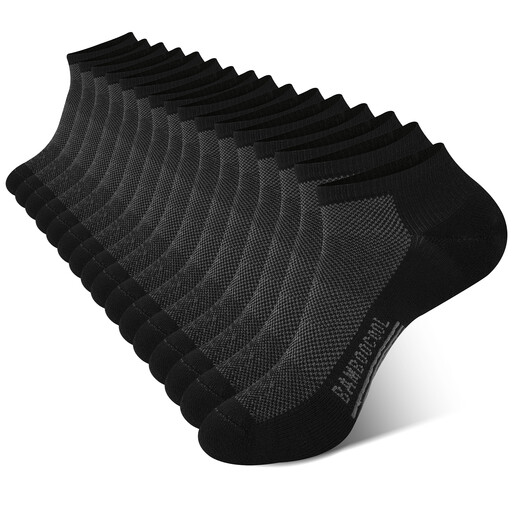
Why this product suits this profile: This multipack is ideal for beginners who need several pairs for running, fitness, everyday wear or work. The ankle-length design works well with many sports shoes.
The description specifies mesh fabric, moisture management and reinforced heels and toes rather than relying only on general performance claims.
Eight pairs, arch support, a cushioned sole and reinforced high-wear areas.
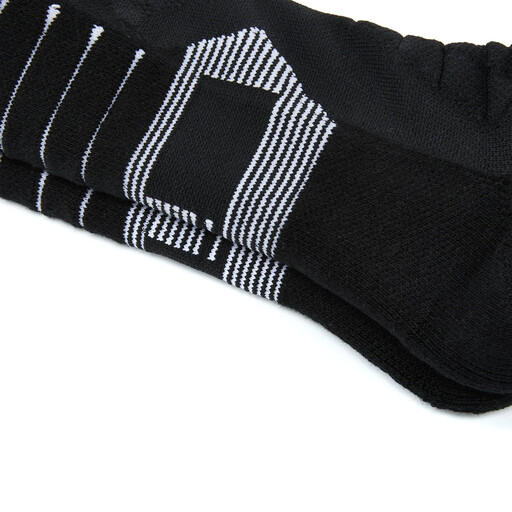
Why this product suits this profile: These mid-length Li-Ning basketball socks combine an elasticated fit, soft inner knit fabric and a jacquard pattern for training and everyday wear.
The product description gives sizing based on foot lengths from 220 to 310 mm, as well as a stretch construction and elasticated cuff.
Mid-calf height, a polyester-elastane blend and an elasticated cuff. The product description also highlights an integrated silver-ion treatment.

Why this product suits this profile: These crew socks are suitable for anyone looking for one model for running, hiking, training, standing work and everyday wear.
Reinforced heels and toes target common wear points. The specifications also mention a cushioned sole and breathable mesh.
Six pairs, arch support, a cushioned sole and moisture management for a range of activities.
We have put together a complete, regularly updated list of products that fully meet these strict selection criteria and the safety regulations applicable in the EU.
The lifespan of sports socks depends on how they are used, washing temperature, drying and the fit of your shoes. Wash the socks according to the care instructions, avoid bleach and check whether they are suitable for tumble drying. For the Li-Ning socks, cold machine washing, a low tumble-dryer temperature or air drying is recommended.
Look out for the first signs of wear:
A multipack of sports socks makes it easier to change pairs regularly and can be more practical for frequent users than buying individual pairs. When comparing prices per pair, consider the material, reinforcements and features included.
For running, lightweight or moderately padded models with moisture management, breathable zones, a secure fit and reinforced heels or toes are a sensible choice. Ankle sports socks often work well with running shoes, while crew socks provide more coverage.
Sports socks should sit smoothly against your foot without squeezing your toes or lower leg. The cuff needs to hold the sock in place without creating persistent, uncomfortable pressure. Choose your size based on the manufacturer’s size chart and your foot length, rather than your usual clothing size alone.
An antibacterial treatment is an additional textile feature, but it is not a substitute for regular washing, thorough drying and well-fitting shoes. For products with this feature, check the specific details about the treatment and care instructions. No medical effects can be inferred from this feature.