
Lieferung heute & morgen

Qualitätsgarantie

Willkommens-Angebote freischalten: KOSTENLOSE Lieferung | Bis zu 80 % RABATT | Kostenlose 30-Tage-JoyPlus-Testphase
App herunterladen
Men’s T-shirts are among the most versatile garments for everyday wear. They work as a basic layer under a shirt, a casual top with jeans, a band tee for concerts or a performance shirt for training. The selection ranges from men’s cotton T-shirts and men’s V-neck T-shirts to breathable styles made from moisture-wicking performance fabrics.
However, the product description alone does not always provide enough information for a sound purchasing decision. Certain details may appear meaningful but reveal little about the actual use case without the right context.
A men’s cotton T-shirt often feels soft and comfortable against the skin. Cotton can absorb moisture, but it dries more slowly during exercise than many performance fibres. It is often a practical choice for everyday wear, leisure and travel. For intensive training or long hikes, you should also consider fabric weight, cut and drying performance.
Fabric weight is relevant, too. A 160-g/m² T-shirt will generally feel lighter than a 200-g/m² model. The Merchcode Nirvana Lithium Tee, for example, is described as being made from 100% cotton with a weight of 200 g/m². This provides a useful indication of fabric weight, but it is not, by itself, proof of quality.
Terms such as “breathable”, “quick-drying” or “moisture-wicking shirt” describe a function, but they do not automatically indicate a standardised level of performance. The key factors are the material composition, care instructions and intended use.
According to its product description, the Nike Dry Park 20 T-shirt is made from 100% polyester and features moisture-wicking technology. This makes it a more plausible choice for training and active use than a heavyweight cotton T-shirt, but it does not replace checking the fit and overall comfort.
International sizing can vary. Some products provide chest, waist and body measurements, while others list only letter sizes from XS to XXL. A shirt that is too tight may pull across the shoulders and stomach; a model that is too loose may bunch up under a shirt.
Before buying, you should therefore compare your chest measurement, the desired cut and the size chart for the specific item. Anyone between two sizes or planning to wear a T-shirt as an undershirt will often need a different fit than someone looking for a relaxed casual streetwear style.
Fabric weight describes the weight of the material per square metre. Lighter fabrics are suitable for warm days and sports, while medium-weight materials often provide greater coverage. A 200-g/m² cotton T-shirt can feel more substantial than a lightweight sports shirt.
Three neckline styles are particularly common:
Care instructions influence how long the colour, shape and print remain in good condition. Black men’s T-shirts should ideally be washed with similar colours using a mild detergent. White men’s T-shirts should not be washed with dark garments.
Several of the featured models recommend machine washing at a low temperature, avoiding bleach and using a low tumble-dryer setting or air-drying. Printed band tees should not be ironed directly over the design at high heat. Actual service life also depends on washing frequency, friction, drying method and fit.
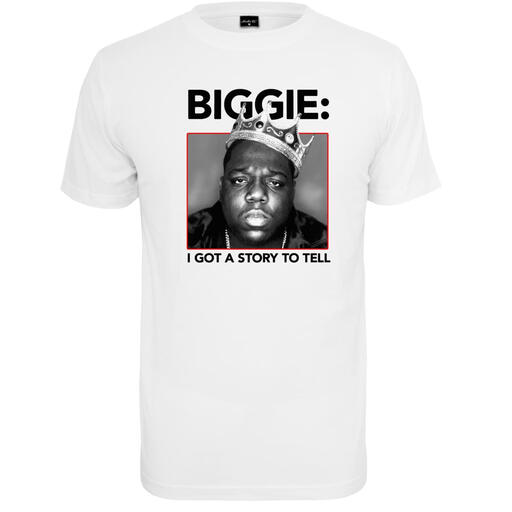
Why it suits this profile: A white cotton T-shirt with a crew neck for everyday wear, leisure and effortless combinations with jeans or shorts.
The material and care instructions are clearly specified: 100% cotton, machine washable at 30°C and no bleach.
100% cotton, white colourway and versatile crew neckline.
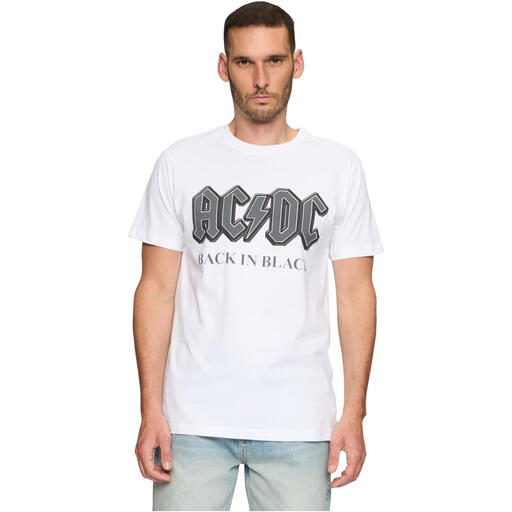
Why it suits this profile: A men’s band tee featuring an ACDC design for concerts, leisure and relaxed streetwear outfits.
The product description specifies the material, fabric weight and care instructions: 100% cotton, 160 g/m² and cold machine washing.
Classic cut, white background and official ACDC design according to the product description.
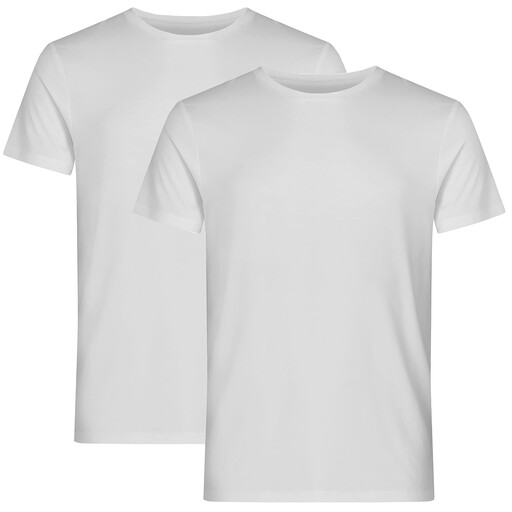
Why it suits this profile: Two slim-fit T-shirts for wearing under shirts, relaxing at home and everyday rotation. The fit is designed for a close-to-the-body silhouette.
The material composition and slim fit are clearly stated, making it easier to match the shirt to the intended use.
Two-pack, 65% bamboo viscose, 30% organic cotton and 5% elastane.

Why it suits this profile: A lightweight men’s sports shirt for training, team sports and active leisure.
The material is clearly identified as 100% polyester, while moisture-wicking performance is described as a product feature.
Lightweight polyester fabric, black colourway and machine washable.
Compare the complete selection of men’s shirts by style, material, colour, fit and intended use.
Measure your chest at its fullest point and compare the result with the size chart for the specific item. With slim-fit styles, you should also consider whether the shirt will be worn as an undershirt or as a visible top. If you fall between two sizes, the larger option may be preferable when you want greater freedom of movement or a more relaxed fit.
Cotton works well for light activities and everyday wear. During intensive training, it absorbs moisture but may release it more slowly. A men’s performance shirt made from polyester or a technical blend is often more practical for sweat-heavy workouts. The decisive factors remain the material, cut, care requirements and personal comfort.
Follow the care label, avoid unnecessarily high temperatures and do not use bleach unless it is explicitly permitted. Black shirts should be washed with similar colours. Printed styles will stay looking better for longer if they are washed inside out and never ironed directly over the design. Air-drying can also reduce the strain caused by high tumble-dryer temperatures.