
Lieferung heute & morgen

Qualitätsgarantie

Willkommens-Angebote freischalten: KOSTENLOSE Lieferung | Bis zu 80 % RABATT | Kostenlose 30-Tage-JoyPlus-Testphase
App herunterladen
Choosing the right hiking boots is crucial for safety and comfort on any trek. However, the market is saturated with models whose marketing promises often suggest more than their construction can deliver. An ill-fitting boot can not only ruin a trip but also lead to unnecessary expenses. This guide focuses on the objective features that truly matter and helps you sidestep common purchasing pitfalls.
Many hikers invest in boots that prove to be inadequate after a short time. This is often due to three widespread but avoidable flaws.
To avoid a poor purchase, you should focus your attention on three core technical features. These define the performance and durability of robust hiking boots.
A high-performance men's outdoor shoe must offer a balance between moisture protection and climate comfort. Look for the presence of an explicitly designated waterproof and breathable membrane. This microporous layer is engineered so that water droplets from the outside cannot penetrate, while sweat in the form of water vapour can escape from the inside. This keeps feet dry and prevents the formation of blisters. Breathable hiking boots are therefore not a luxury, but a functional necessity for longer tours.
The sole is the foundation of every men's trekking boot. For tours in the Alps or on unpaved trails, a torsionally rigid sole with a pronounced tread is essential.
A secure fit in the boot is essential to prevent chafing and pressure points. Modern hiking boots with a quick-lacing system offer a functional alternative to classic lacing. Systems like dial-based closures allow for micro-adjustable and even pressure distribution with just one hand. The closure does not loosen while walking and can be operated effortlessly even in adverse conditions. This is particularly advantageous for hiking boots for challenging terrain, where quick readjustment may be necessary.
Based on the objective criteria mentioned above, we have identified models that are suitable for specific requirement profiles.
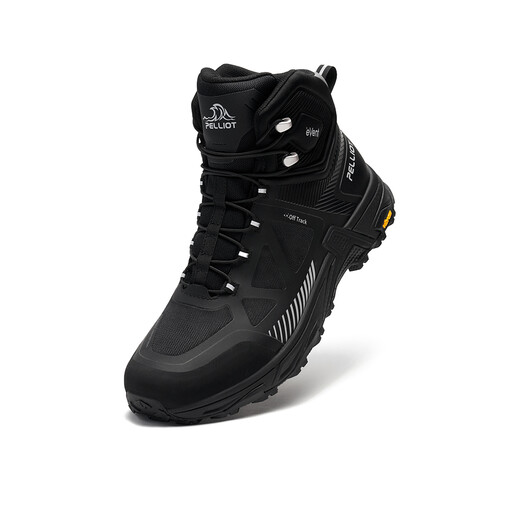
Why This Model Fits: Designed for demanding hikers and mountaineers who need gear for unpredictable terrain and weather. The construction targets stability, durability, and performance on everything from heavy trekking tours to technical ascents.
The integrated, reliable waterproof membrane protects against moisture, while the sole's aggressive lug pattern provides grip on slippery surfaces. The Fitgo quick-lacing system allows for precise, one-handed operation and prevents the laces from loosening.
Features a robust toe cap and an abrasion-resistant upper for protection in scree and undergrowth. The quick-lacing system is also operable with gloves.
We have compiled a complete, up-to-date list of products that meet these strict selection criteria and applicable regulations.
How long does the waterproof membrane in hiking boots last? The lifespan of a membrane heavily depends on the frequency of use and care. With regular use, you can expect a functional lifespan of one to three years. Proper care is crucial: Clean the boots regularly of dirt and let them air dry slowly, but never near direct heat sources like radiators.
Are hiking boots with a quick-lacing system better than traditional laces? This is a matter of personal preference, but quick-lacing systems offer objective advantages. They allow for a fast, uniform, and precise adjustment that does not loosen during a tour. One-handed operation is particularly practical in difficult situations or when wearing gloves. For technical and challenging terrain, they represent a highly functional solution.
Do I need to break in new waterproof hiking boots? Yes, any sturdy boot, especially robust trekking boots or mountain boots, should be broken in before the first major tour. Initially, wear the boots for shorter periods during everyday activities or on light walks. This allows the material to adapt to the shape of your foot and minimises the risk of pressure points or blisters.