
Lieferung heute & morgen

Qualitätsgarantie

Willkommens-Angebote freischalten: KOSTENLOSE Lieferung | Bis zu 80 % RABATT | Kostenlose 30-Tage-JoyPlus-Testphase
App herunterladen
Finding the right men's running shoes can seem straightforward at first. Many models promise low weight, maximum cushioning or particularly secure grip. In practice, however, a few less obvious details will determine whether a shoe suits your usual routes and the shape of your feet.
Lightweight running shoes can feel great on the road. A very low weight alone says nothing about fit, torsional stability or the outsole. If you regularly run on gravel, forest paths or wet ground, check whether the tread is designed for those surfaces.
A soft or springy midsole can feel comfortable on longer runs. For speed sessions or uneven terrain, ground feel and a controlled transition are also important. Cushioned running shoes are therefore not automatically suitable for every pace and every surface.
The label EU 42 can vary depending on the last shape. What matters is your actual foot length and the room at the forefoot and heel. For the models listed here, EU 42 corresponds, according to the product information, to a foot length of about 260 mm. Before buying, measure both feet while standing and compare with the relevant size chart.
For warm days and long training sessions, breathable running shoes with a mesh or woven upper are worth a look. Sandwich mesh and woven materials can aid airflow. Additional TPU reinforcement can improve abrasion resistance, but may affect flexibility in certain areas.
Also look at the interior. An unlined upper can improve airflow, while a textile lining can influence comfort over longer use. The material details should clearly state what the upper, lining, midsole and outsole are made of.
EVA foam is used as the midsole material in many running shoes. The models described here use highly elastic EVA foam. What matters is not just terms like “rebound” or “energy return”, but also your running style and the surfaces you run on.
For long-distance running shoes, choose a fit that won’t press on toes or heel even after several hours. Super-soft cushioning is no substitute for the right width. If you have a wider foot, look specifically for a broadened platform or a standard fit with enough forefoot room.
For road runs, a flatter rubber outsole is often enough. For trail running, by contrast, lug pattern, rubber compound and abrasion resistance matter more. Non-slip running shoes shouldn’t be advertised as universal for every surface: wet rock, mud, loose sand and tarmac all pose different demands.
On PELLIOT models, a ROCKYTEC outsole is specified. On the LI-NING model, a GCR rubber outsole with a specifically described tread is used. A version with Vibram Megagrip is, according to the product information, only available on selected variants. Buyers should therefore check before ordering which version has actually been selected.
The following selection groups the models by use case and verifiable product features. It does not replace an individual try-on.
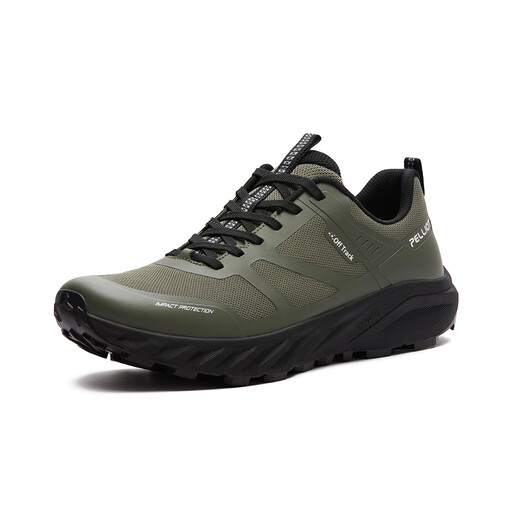
Why this product fits the profile: This model combines a light mesh and woven upper with an EVA midsole. It’s aimed at buyers looking for a shoe for road runs and occasional sections on paved or easy natural paths.
The product description specifies concrete materials, both a standard and a slimmer fit, plus a size chart. That makes it easier to match your choice to foot shape and foot length.
Lightweight sandwich mesh, EVA midsole and ROCKYTEC rubber outsole, according to the product information.
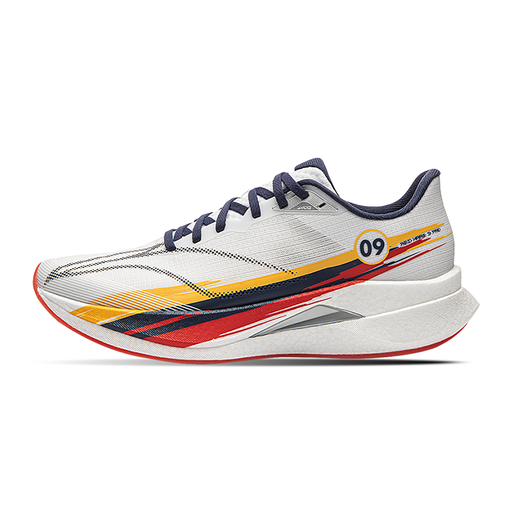
Why this product fits the profile: The broadened platform and the stated BOOM midsole appeal to runners who value forefoot space and a structured roll-through during training and longer runs.
The specifications explicitly mention a wider last shape and a GCR rubber outsole. This lets buyers match width, tread and intended use more precisely before purchase.
Two-layer BOOM foam, woven upper and GCR rubber outsole, according to the manufacturer.

Why this product fits the profile: This model suits users who want a shoe for switching between the city, paved paths and more demanding natural routes, and who need either a standard or slim fit.
The description differentiates between standard and slim versions and specifies an abrasion-resistant construction. That simplifies selection for different foot shapes and frequent use.
Breathable fabric, highly elastic EVA midsole and ROCKYTEC outsole, according to the product information.
We’ve put together a complete, continuously updated list of products that fully meet these strict selection criteria and the safety regulations in force in the EU.
A fixed lifespan cannot be stated reliably for every model. It depends on mileage, body weight, surface, care and storage. Signs of wear include visibly flattened tread, tears in the upper or a permanently compressed midsole. Even if the shoe still looks intact, the ride can have changed.
Men's trail running shoes can be used on tarmac provided the tread and roll-through are acceptable for this use. Aggressively lugged soles can feel different on smooth surfaces and wear faster. For frequent switches between road and natural paths, all-terrain running shoes with a balanced tread are a sensible option.
For the PELLIOT models mentioned, EU 42 corresponds, according to the size chart, to a foot length of 260 mm. For the LI-NING model, EU 42 1/3 is offered. However, what ultimately counts are the details on the respective product page, your preferred sock thickness and your personal forefoot room.