
Lieferung heute & morgen

Qualitätsgarantie

Willkommens-Angebote freischalten: KOSTENLOSE Lieferung | Bis zu 80 % RABATT | Kostenlose 30-Tage-JoyPlus-Testphase
App herunterladen
Finding a good Merlot wine pack can feel like searching for a needle in a haystack. The online selection is vast, labels are often confusing, and not every Merlot deal lives up to its promise. As your Joybuy Product Recommendation Officer, I'm here to help you navigate the typical pitfalls and make a choice that meets your expectations for both taste and value for money.
Many wine drinkers fall into two common traps: they are either dazzled by lofty-sounding descriptions that say little about the actual quality, or they overlook important details about ingredients that are crucial for their dietary needs. For instance, a wine described as "fruity and smooth" may have been clarified with fining agents like egg white or milk proteins—a deal-breaker for anyone looking for a vegan Merlot.
To ensure you get a pack that meets your standards, you should check three core features before you click "Buy Merlot." These objective criteria will help you distinguish marketing promises from genuine quality markers.
The designation of origin on the label is more than just a geographical reference; it's an indicator of defined quality standards.
A wine with a protected designation of origin provides a more reliable statement about its character than vague marketing terms.
The term "dry" is clearly defined in wine law and refers to the residual sugar content. A dry Merlot red wine can legally contain up to 9 grams of residual sugar per litre, provided the acidity is no more than 2 g/l below that. However, most dry red wines fall within a range of 0 to 4 g/l. This figure is a more objective measure of the wine's sweetness than flowery descriptions like "velvety" or "smooth." Those who prefer a truly dry style should look for wines with a low residual sugar content, if this information is provided by the producer.
For many buyers, the ingredients are crucial. Here are two points to consider:
Based on these objective criteria, we have identified several Merlot packs that are suitable for different profiles.
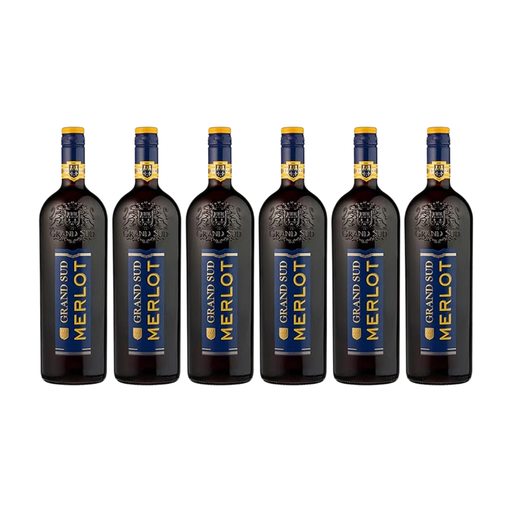
Why this wine is a great fit: Ideal for anyone looking for a straightforward and accessible everyday wine in a value-sized 1-litre bottle. Perfect for social gatherings or for stocking up for regular enjoyment without breaking the bank.
The IGP "Pays d'Oc" classification is an honest declaration of its origin as a French country wine and doesn't promise overstated exclusivity. You get a solid, varietally-correct wine.
The Merlot 6-pack with 1-litre bottles offers an excellent price-to-volume ratio. The wine is well-rounded, fruity, and features soft tannins.
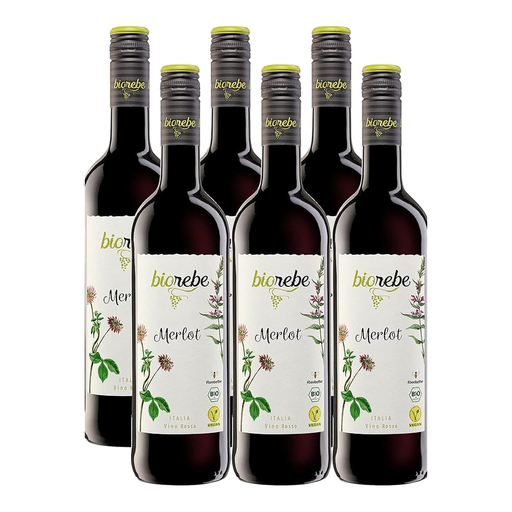
Why this wine is a great fit: For consumers who value sustainable agriculture and a plant-based lifestyle. This wine meets both criteria without compromising on taste.
The explicit "Organic" and "Vegan" certifications provide clarity and save you the tedious search for information on cultivation and production methods. You can be sure that no animal-based fining agents were used.
This Italian Merlot comes from organic farming and is guaranteed vegan. It is vinified dry and offers a clean, varietally-true aromatic profile.
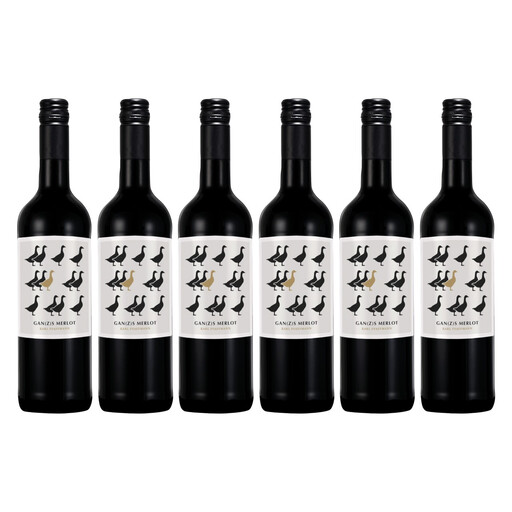
Why this wine is a great fit: An excellent choice for lovers of German quality wines who are looking for a characterful Merlot from the Palatinate region and value sustainable wine production.
The Pfaffmann winery is a member of Fair'n Green, a seal for sustainable viticulture. This guarantees transparent and responsible production standards that go beyond the usual requirements.
This wine is made using vegan methods and comes from a renowned family-run winery. It offers clear fruit and a harmonious structure, typical of a high-quality dry Merlot red wine from the Palatinate.
We have compiled a complete, up-to-date list of products that fully meet these strict selection criteria and German regulations.
A Merlot 6-pack should ideally be stored lying down in a cool, dark place with a stable temperature (approx. 12–15 °C or 54–59 °F). This keeps the cork moist and prevents air from entering the bottle. Wines with screw caps can also be stored upright. Avoid direct sunlight and major temperature fluctuations.
Once opened, a Merlot red wine should be tightly re-sealed and stored in the refrigerator. It will generally stay fresh for 2 to 3 days. After this time, the wine begins to oxidise from contact with oxygen, which negatively affects its taste.
A Merlot red wine declared as "dry" has a legally defined low residual sugar content. According to EU regulations, the residual sugar can be up to 4 g/l, or up to 9 g/l if the total acidity is no more than 2 g/l lower than the residual sugar content. In practice, these wines do not taste sweet and are distinguished by their fruit and tannin structure.