What should you look for when choosing?
First, check how the mesh nodes can connect to one another. Then consider the ports and how the system will work with your existing home network.
| Priority |
What to check |
Who is it important for? |
| Connection across three floors |
Check the router’s location, possible positions for intermediate nodes and whether the connection is stable at every planned node location. |
If I need Wi-Fi in several work areas on different floors, I want to be able to position the nodes appropriately. Around 34% of consumers put coverage across floors first. |
| Transferring files locally |
Check for LAN connections between floors and compare the port speeds on the mesh nodes, computer and storage device. |
If you regularly transfer large project files between devices or to storage, consider the entire route. Around 33% of consumers say local file transfers are their top buying priority. |
| Keeping your existing home network |
Check your router model, how the mesh connects and its operating mode. Test access to your file storage after setup. |
If I want to keep using my current router and local files, the network setup needs to support this. Around 20% of consumers put integration with their existing home network first. |
| Ongoing costs and file protection |
Check optional services, firmware updates and whether the guest Wi-Fi is separate from your private network. |
If you want to keep an eye on ongoing costs and store private project files on your home network, check any extra services and network access. Around 13% of consumers prioritise running costs and protecting their files. |
Mesh systems at Joybuy
The following Joybuy offers include mesh systems with two or three units. The number of units alone doesn’t tell you whether the connection will reach all three floors of a particular home. Before you buy, check the specific offer for the CE marking where the product is subject to the relevant EU harmonisation requirements. The German Federal Network Agency explains which products require the marking.
 No image available
TP-Link Deco BE22, 2-pack, Wi-Fi 7
An option to consider if you’re looking for a two-unit mesh system with wired ports.
Dual-band Wi-Fi 7; two Gigabit WAN/LAN ports per unit.
View at Joybuy
 No image available
TP-Link Deco S4, 3-pack, AC1200
An option to consider if you’re planning to use three mesh units and want to connect several wired devices.
Dual-band Wi-Fi 5; two Gigabit ports per unit. The number of units doesn’t guarantee a particular level of coverage in your home.
View at Joybuy
 No image available
MERCUSYS Halo H1200G, 3-pack, AC1200
An option to consider if you’re looking for a three-unit mesh set with Ethernet ports.
Dual-band; two Ethernet ports per unit. The actual connection across several floors also depends on where you place the nodes.
View at Joybuy
 No image available
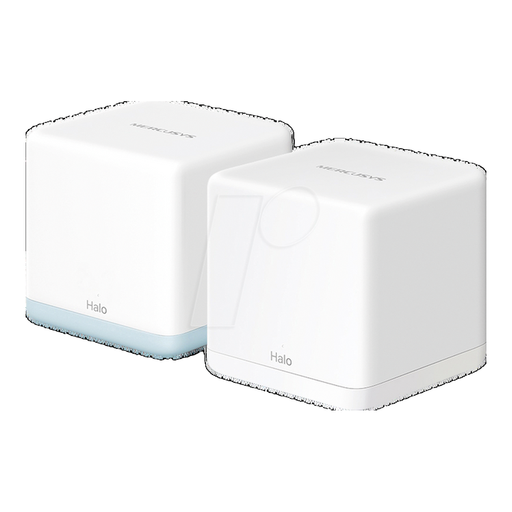
MERCUSYS Halo H1200G, 2-pack, AC1200
An option to consider if a two-unit mesh system suits your planned setup.
Dual-band AC1200; Gigabit Ethernet ports per unit. Check the locations and the connection to the rest of your network.
View at Joybuy
 No image available
MERCUSYS Halo H25BE, 2-pack, Wi-Fi 7
An option to consider if you’re looking for a two-unit Wi-Fi 7 set with several Gigabit ports per unit.
Dual-band BE3600; three Gigabit ports per unit. These figures don’t guarantee a particular file transfer speed in your home.
View at Joybuy
Frequently asked questions
How many mesh nodes do I need for three floors?
The number of floors alone doesn’t determine how many nodes you need. With a wireless connection, check that each node has a stable network connection from its planned location. A three-pack is one possible starting point, but it doesn’t guarantee coverage.
Will my file storage remain accessible if I keep my existing router?
That depends on how the system connects to your network. Before buying, check the operating mode, then test access from the floors where you need it once setup is complete. According to eero, in Bridge mode your existing router can continue to manage the network, but some eero features won’t be available.
What should I do after installation to keep project files secure?
The German Federal Office for Information Security recommends keeping your router’s firmware up to date and using secure login details. A separate guest Wi-Fi network keeps visitors away from your private home network. Devices that need access to project files should be connected to the designated private network.
Do I need an individual frequency allocation for home Wi-Fi in Germany?
The German Federal Network Agency has general allocations for Wi-Fi frequency bands, and their technical conditions must be followed. For 6 GHz Wi-Fi, the Agency’s Vfg. 76/2025 describes the 5945 to 6425 MHz band and repeals Vfg. 12/2025. This doesn’t mean that every device is automatically approved; you must check the relevant product compliance separately.
What extra costs and services should I check?
Check whether the features you need are included with the device or offered as an extra service. NETGEAR lists Armor Plus as an optional service with its German Orbi 770 offer, with a trial period followed by automatic renewal if selected. Check the terms of the specific offer before signing up.


