For access to a club archive across three floors, what matters is the connection at the actual workstation and between the mesh nodes – not just the advertised combined Wi-Fi speed. If there are usable network sockets between floors, consider a system with Ethernet backhaul. Without cabling, each wireless node needs a reliable connection to the rest of the mesh. If you want to keep your existing router, also check whether a compatible repeater or the access point mode of a standalone system offers the features you need.
Who should consider mesh Wi-Fi in this situation?
Archive users on different floors
If you need to open the archive at a particular workstation, check the signal there and the connection between the mesh nodes. F.A.Z. Kaufkompass also highlights the wireless connection at the point of use and the nodes’ backhaul as important factors when choosing a mesh system.
Homes with an existing router
If you want to keep your existing network and improve Wi-Fi coverage only in areas with a weak signal, you could consider a compatible mesh repeater or a standalone system in access point mode, depending on your router. TP-Link and AVM document these options for certain devices and configurations.
Clubs that welcome guests
If visitors need Wi-Fi while archive devices remain on the internal network, a separate guest network is another factor to consider. Germany’s Federal Office for Information Security describes guest Wi-Fi as access that is separate from the internal network.
What should you look for when choosing?
First, check the signal at the archive workstation and the possible routes between nodes. Then consider how the system works with your existing router, how it protects the internal network and how many devices you actually need.
| What matters |
What to check |
Who should consider this? |
| Signal at the archive workstation |
Check the signal at the workstation and at possible node locations; don’t put nodes in a Wi-Fi dead zone. |
If I use the archive at a particular spot on another floor, I need a reliable connection there. Around 29 % of consumers put signal strength at the archive workstation first. |
| Connection between floors |
Check for existing LAN sockets and whether they’re connected; alternatively, test the signal at possible intermediate locations. |
If the ceilings make a wireless connection difficult, I want to know whether the nodes will stay reliably connected. Around 23 % of consumers prioritise the connection between floors. |
| Protecting access to the archive |
Check that the guest network is separate and review the security settings available in your chosen operating mode; keep the firmware up to date. |
If visitors use Wi-Fi, giving them access shouldn’t also give them access to the internal network and its archive devices. Around 18 % of consumers put protecting access to the archive first. |
| Keeping your existing router |
Check your router model, connections and preferred operating mode. Some Deco router features aren’t available when using Deco in access point mode. |
If I want to keep using my router, I need a mesh system with a compatible operating mode. Around 18 % of consumers prioritise integration with their existing network. |
| How much equipment you need |
Match the pack size and number of access points you need to your existing router and cabling. |
If I only want to cover the rooms I need, I don’t want to plan for unnecessary devices. Around 12 % of consumers pay particular attention to the effort involved in finding the right configuration. |
Common buying mistakes
-
Assuming the advertised combined Wi-Fi speed is the speed you’ll get in the archive
The route to the archive may also involve the backhaul between mesh nodes and other network components. The wireless speed quoted for TP-Link’s Deco BE25 is a specification for that model, not a measurement for this particular building.
Check the signal and backhaul at the actual locations. If the archive is stored locally in the building, also consider how it connects to the network.
-
Putting a wireless node in a complete Wi-Fi dead zone
An additional node still needs a reliable connection to the rest of the mesh. A location without a backhaul connection won’t solve the lack of reception.
First, look for an intermediate location with a signal, or check whether Ethernet backhaul is possible.
-
Assuming access point mode works just like router mode
In access point mode, your existing router continues to handle network tasks. TP-Link notes that some router features aren’t available when using Deco in this mode.
Before you buy, decide which device will handle router functions and, if needed, provide the guest network.
-
Assuming Powerline is an interference-free alternative to cabling
Your electrical wiring affects the connection. devolo also describes possible interference with certain VDSL connections.
Test the sockets you plan to use and, if you have VDSL issues, compare the connection with and without Powerline.
Key brands at a glance
TP-Link
Deco includes standalone mesh systems. The BE25, documented for the German market, is a dual-band Wi-Fi 7 model operating on 2.4 and 5 GHz.
- TP-Link says Deco can be used with an existing router in access point mode.
- Some Deco router features aren’t available in this mode. The BE25’s quoted combined wireless speed isn’t a measurement for a three-storey home.
FRITZ!
FRITZ!Repeaters are an option if you already have a compatible FRITZ!Box as your mesh hub.
- AVM’s guide for the FRITZ!Repeater 2700 explains how to add it to a mesh and use it as a LAN bridge with a FRITZ!Box.
- The documented steps and options don’t necessarily apply to every router configuration or FRITZ!Repeater.
ASUS
The ZenWiFi XD5 is a documented Wi-Fi 6 alternative with access point and AiMesh node modes.
- ASUS lists Ethernet backhaul, Gigabit WAN/LAN and Gigabit LAN ports for the XD5.
- The manufacturer’s stated coverage area doesn’t guarantee coverage in your particular home.
devolo
Magic 2 WiFi 6 next combines Powerline with mesh Wi-Fi. It may be an option if neither network cabling nor a reliable wireless connection is practical.
- devolo offers Starter and Multiroom configurations, among others.
- Suitability depends on the sockets you plan to use and your electrical installation; devolo describes possible interference with certain VDSL connections.
Mesh systems at Joybuy
These mesh systems come with two or three units and are designed for homes where you want coverage across several rooms or floors. Before choosing, check how many nodes you actually need and whether the operating mode is compatible with your existing router.
 No image available
TP-Link Deco BE22 (2-Pack), Dual-Band Wi-Fi 7
This two-pack is worth considering if you plan to use two mesh units in the rooms you want to cover.
Dual-band Wi-Fi 7; two Gigabit WAN/LAN ports per unit.
View at Joybuy
 No image available
TP-Link Deco M4 AC1200 (3-Pack)
This three-pack is an option if you’re planning to use three mesh units to cover several areas.
Dual-band; Gigabit ports.
View at Joybuy
 No image available
TP-Link Deco S4 AC1200 (3-Pack)
If you plan to use three mesh units in the rooms you want to cover, this set is worth considering.
Dual-band; Gigabit ports.
View at Joybuy
 No image available
MERCUSYS Halo H1200G AC1200 (3-Pack)
This three-pack may suit you if you need three mesh units for the floors or rooms you want to cover.
Dual-band; two Ethernet ports per unit.
View at Joybuy
 No image available
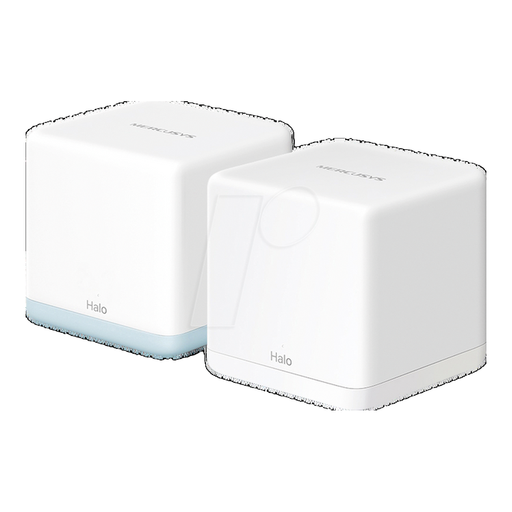
MERCUSYS Halo H1200G AC1200 (2-Pack)
This two-pack is an option if two mesh units are enough to cover the areas you need.
Dual-band; Gigabit Ethernet ports.
View at Joybuy
Frequently asked questions
How do I find the right place for a wireless node?
Check the signal both at the archive workstation and at the planned node location. F.A.Z. Kaufkompass recommends ensuring there’s a strong enough wireless backhaul. If you have usable LAN cabling, a wired connection between the nodes may be an option instead.
What should I do after setup to keep archive access secure?
Keep your router’s firmware up to date and use secure login details, as recommended by Germany’s Federal Office for Information Security. If you provide Wi-Fi for guests, a separate guest network can keep their access apart from your internal network. Check the setup again after making changes to your router or mesh system.
Is a new mesh system worth it if I already have a FRITZ!Box?
Not necessarily. A compatible FRITZ!Repeater can extend your existing FRITZ! mesh; AVM’s guide for the FRITZ!Repeater 2700 also explains how to use it as a LAN bridge. A standalone Deco system can work with your existing router in access point mode, although TP-Link says some Deco router features won’t be available. Check your specific router model and the features you need.
Can mesh alone let me access a local archive from outside the building?
No. Mesh extends local Wi-Fi coverage, but doesn’t provide secure remote access to the archive by itself. If you need remote access, Germany’s Federal Office for Information Security describes VPN as an encrypted connection to a local network. You’ll need to plan the setup and access permissions separately.


