Cookery class in a kitchen with weak Wi-Fi
If your router is in another room, you’ll need good reception in the kitchen and a reliable connection to the additional node. Bitkom e. V. highlights how the router’s position can affect Wi-Fi reception.


First, check your router and kitchen to see whether the bottleneck is your internet connection or your Wi-Fi. The Zoom Technical Library explains that video call bandwidth requirements depend on how the service is used, while Germany’s Federal Network Agency lets you compare your actual connection speed with the rate agreed in your contract. If your connection is fast enough, a repeater may be all you need for the kitchen if you have a compatible FRITZ!Box. If several rooms have poor coverage, a standalone mesh system is likely to be a better fit. A long Ethernet cable can replace the wireless link between nodes.
If your router is in another room, you’ll need good reception in the kitchen and a reliable connection to the additional node. Bitkom e. V. highlights how the router’s position can affect Wi-Fi reception.
If you’re making interactive calls while taking a cookery class, upload and download speeds at your connection and in the places you use it both matter. The Zoom Technical Library explains that bandwidth requirements depend on how the service is used.
If you want to keep your current router and improve coverage only in areas with weak reception, check the router model, mesh compatibility, operating mode and whether a LAN connection is possible.
| Buying priority | What to check before buying | Who it matters most to |
|---|---|---|
| Reception in the kitchen | Check reception in the kitchen and at the planned node location; consider a LAN connection and how many nodes you’ll need. | If my cookery class keeps buffering in the kitchen while the router is elsewhere, I want to know whether a node can still get a good connection there. Around 36% of consumers put kitchen reception first. |
| Simultaneous live applications | Check upload and download speeds at the router and where you use your devices; consider the applications running at the same time in your home. | I want to take a cookery class and make video calls at the same time, without mistaking a slow internet connection for a need for higher Wi-Fi speeds. Around 29% of consumers prioritise simultaneous live applications. |
| Keeping your existing router | Check the router model, mesh compatibility, available LAN port and intended operating mode. | If I want to keep my router, I’d like to check in advance whether a compatible repeater or standalone mesh system will work with it. Around 21% of consumers prioritise router integration. |
| A suitable upgrade, not an oversized one | First check the bottleneck and router location; then compare what’s included in the pack with the connections you can actually use. | I want to fix the actual bottleneck first, rather than buy more nodes than my rooms need. Around 14% of consumers prioritise keeping the upgrade to a minimum. |
According to TP-Link, actual coverage and data transfer depend on factors including obstacles, devices and network conditions. A node will only help if it has a usable connection itself and can reach the area you want to cover.
Check reception where you’ll actually use your devices and the connection between nodes, rather than assuming maximum advertised speeds reflect performance in your kitchen.
FRITZ!Repeaters can extend a mesh with a compatible FRITZ!Box. The FRITZ!Repeater 3000 AX is an example of tri-band Wi-Fi 6.
The Deco range includes standalone mesh systems. The German Deco BE25 is a dual-band Wi-Fi 7 example, available in different pack sizes.
The ZenWiFi BT8 is an example of a tri-band mesh system with 2.4, 5 and 6 GHz, plus the option of a wired backhaul.
The Orbi 770 range is another tri-band Wi-Fi 7 option for covering several rooms. The German product variant considered here is the three-pack RBE773.
This selection includes standalone dual-band mesh kits with two or three units for covering several areas. The right choice depends on the router mode, what’s included in the pack and where you place the units. In Germany, check the CE marking and conformity documents for the exact device version; the Federal Network Agency lists these among the points it checks as part of its market surveillance.
 No image available
An option if you’d like to set up a standalone mesh with two units to cover your kitchen and other areas.
Wi-Fi 7; dual-band; Gigabit Ethernet. Check whether router or access point mode is right for your existing router.
 No image available
For households looking to cover the kitchen and other rooms with two mesh units.
Wi-Fi 6; dual-band; Gigabit ports. If you want to connect the nodes by cable, check which ports you need and whether the cabling is practical.
 No image available
This 2-pack is designed for a mesh system that covers different parts of your home for cookery classes and video calls.
Wi-Fi 6; dual-band; three Gigabit ports per unit. Check the connection between nodes at your planned locations.
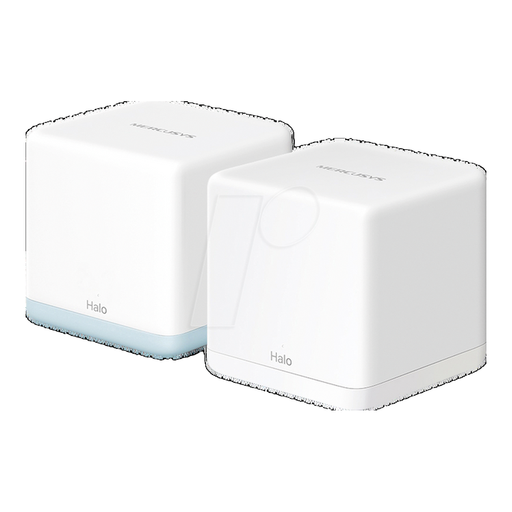 No image available
An option for covering several rooms if you’d like to set up a mesh system with two units.
AC1200; dual-band; Gigabit ports. Check that the devices and intended operating mode are compatible with your existing router.
 No image available
This 3-pack may suit you if you need to cover several areas and it works with your household’s router setup.
AC1200; dual-band; Gigabit ports. Three units may be more than you need for a single kitchen area; also check the intended router or access point mode.
No. First check where your router is and how fast your internet connection is. Extra mesh nodes won’t automatically fix a poorly positioned router or a bottleneck with your internet connection. Germany’s Federal Network Agency lets you compare your actual connection speed with the rate agreed in your contract.
Place it somewhere it can still get a good connection to your existing network while also reaching the kitchen. If you have a suitable LAN cable, check whether the specific model supports a wired connection between nodes.
Compare the connection at your router with performance in the kitchen and other places where you use your devices. Germany’s Federal Network Agency provides a broadband measurement tool that lets you compare your connection’s actual data transfer rate with the rate agreed in your contract.
That depends on your router model and the mesh or operating mode of the additional system. Before buying, check compatibility, available LAN ports and whether you can add a repeater or standalone mesh system.
Check the CE marking and conformity documents for the exact device version. As part of its market surveillance, Germany’s Federal Network Agency checks details including device identification, instructions for use and warnings, and declarations of conformity.