A mesh Wi-Fi system can improve the connection between rooms, but it won’t speed up a slow internet connection. First, check your download and upload speeds, and test the Wi-Fi where you’ll actually be using it. Then choose a system based on the rooms you need to cover, whether you can use a wired LAN backhaul, and how it will work with your existing router. Advertised peak Wi-Fi speeds don’t guarantee smooth performance when several devices are in use at once.
Who might need mesh Wi-Fi in this situation?
Households streaming and making calls at the same time
If someone is watching a theatre recording while others are making video calls, the connections in both locations matter. Consider the download speed needed for streaming as well as the upload speed needed for calls.
Viewers in rooms with poor coverage
If the router isn’t in the room where you watch the recording, both the signal at your screen and the connection between mesh units matter.
Households with an existing router
If you want to extend your coverage while keeping your current router, consider its model, the mesh operating mode and whether you can use LAN connections.
What should you look for when buying?
First, check your internet connection, then test the signal at your TV and the devices you use for calls. Choose a system based on your room layout, backhaul options and how it will work with your router.
| Consideration |
What to check before buying |
Who it matters most to |
| Using several devices at once |
Measure download speed, upload speed and latency at your internet connection, then check the connections on your devices. The Bundesnetzagentur’s broadband measurement tool measures these. |
If I’m streaming and making video calls at the same time, I want to know whether both my internet connection and Wi-Fi can handle traffic in both directions. Around 31% of consumers put simultaneous use first. |
| Signal where you use your devices |
Map out your rooms and possible locations for the units; check the pack size and connection options. |
If the picture keeps freezing in a distant room, I care about the signal at the screen, not just next to the router. Around 25% of consumers prioritise coverage where they use their devices. |
| Connection between units |
Check whether you have LAN connections and whether the system supports Ethernet backhaul; for a wireless connection, assess the signal at the planned location for each unit. |
If I need to connect several units across different rooms, I want to know whether I can use a cable or whether the wireless signal will be strong enough where I place them. Around 25% of consumers put backhaul first. |
| Router and features |
Check your router model, the operating mode, the features you need and the update options for the specific system. |
If I want to keep my existing router, I first check which features will be available in the chosen operating mode. Around 19% of consumers prioritise router integration and the features on offer. |
Common buying and set-up mistakes
-
Confusing advertised Wi-Fi speeds with your available internet speed
Your internet connection, the Wi-Fi link to your device and the backhaul between mesh units are separate parts of the overall connection.
First, measure your download and upload speeds at the internet connection, then check the signal where you’ll use your devices. Don’t treat manufacturers’ maximum speeds as a guarantee of performance in your home.
-
Putting an extra unit directly in a dead spot
A mesh unit also needs a strong enough connection to the rest of the network. Placing it where there’s no signal won’t automatically solve the problem.
Choose a location where it can connect to the existing network or, if possible and supported, use Ethernet backhaul.
-
Confusing a single unit with a multi-unit pack
The Deco BE25 is available in different pack sizes; the version listed by Joybuy is a 1-pack.
Before buying, check the pack size and how many units you’ll need for the rooms you want to cover.
-
Assuming the operating mode and included features
Depending on the system and router, the device that manages your home network and the features available may vary.
Check which features the specific system offers in the operating mode you plan to use before connecting your existing router.
Key mesh Wi-Fi brands at a glance
TP-Link
Deco systems such as the BE25, documented for the German market, are one option if you’re looking for a standalone mesh system with wired backhaul.
- TP-Link Germany lists two 2.5 Gbit/s ports per BE25 unit and dual-band Wi-Fi on 2.4 and 5 GHz.
- The German manufacturer specifications for the BE25 don’t list a 6 GHz band. Pack size matters when covering separate rooms.
FRITZ!
The FRITZ!Mesh Set 4200 is worth considering if you already use a FRITZ!Box; the manufacturer also describes using it behind routers from other brands.
- According to FRITZ!, the units can connect behind a FRITZ!Box as mesh repeaters over Wi-Fi or LAN.
- Behind a router from another brand, FRITZ! describes a separate mesh master with its own home network. This is a different operating mode.
ASUS
The ZenWiFi XD5 is a documented Wi-Fi 6 option for households that can use Ethernet backhaul.
- ASUS lists Ethernet backhaul, as well as router, access point and AiMesh node modes.
- The listed Wi-Fi speeds are theoretical manufacturer figures. The German specifications list 2.4 and 5 GHz bands.
NETGEAR
The Orbi RBK763S is a documented option for a wireless set-up with a router and two satellites.
- NETGEAR describes a dedicated connection between the router and satellites.
- According to NETGEAR, Orbi routers and satellites aren’t always compatible with one another. Check the exact model combination before expanding your system.
eero
eero may suit households looking for app-guided set-up or considering adding a system alongside an existing router.
- eero Support describes a bridge mode in which the existing router continues to manage the network.
- According to eero, some advanced network features may be unavailable in this mode. Check which features will remain available in your set-up.
Joybuy product selection
This selection includes mesh Wi-Fi systems designed to provide coverage across several rooms. Check the pack size, operating mode and connection options to make sure they suit your home.
 No image available
TP-Link Deco BE22 (2-pack) mesh Wi-Fi system, Wi-Fi 7, dual-band, Gigabit Ethernet
This 2-pack is worth considering if you use streaming and calling devices in separate rooms.
Wi-Fi 7; dual-band; Gigabit Ethernet ports.
View at Joybuy
 No image available
TP-Link Deco M4 (3-pack) mesh Wi-Fi system AC1200, dual-band, Gigabit ports
This 3-pack is worth considering if you need to cover several rooms that are separate from one another.
AC1200; dual-band; Gigabit ports.
View at Joybuy
 No image available
TP-Link Deco X1500 (2-pack) mesh Wi-Fi system, Wi-Fi 6, AX1500, dual-band
This 2-pack is one option to consider if you want to connect devices in different rooms to a mesh network.
Wi-Fi 6; AX1500; dual-band; Gigabit ports.
View at Joybuy
 No image available
TP-Link Deco S4 (3-pack) mesh Wi-Fi system AC1200, dual-band, Gigabit ports
This 3-pack may suit several separate areas where you use your devices; consider where to place the units in your home.
AC1200; dual-band; Gigabit ports.
View at Joybuy
 No image available
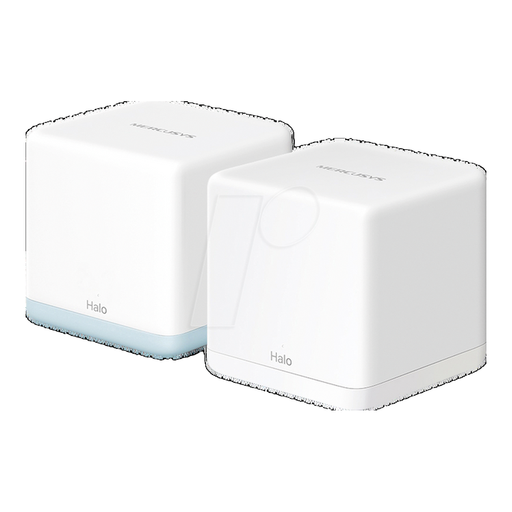
MERCUSYS Halo H1200G (2-pack) mesh Wi-Fi system AC1200, dual-band, Gigabit Ethernet
This 2-pack is worth considering if you want to cover two areas of your home with mesh units.
AC1200; dual-band; Gigabit Ethernet ports.
View at Joybuy
Frequently asked questions about mesh Wi-Fi for streaming and video calls
Can a mesh system make up for a slow internet connection?
No. A mesh system can improve Wi-Fi coverage in different rooms, but it can’t fix a bottleneck in your internet connection. Measure your download and upload speeds at the connection, then check the signal where you’ll use your devices; the Bundesnetzagentur’s broadband measurement tool also measures latency. Netflix recommends 15 Mbit/s or more for a UHD 4K stream. This figure applies to Netflix and isn’t a general minimum requirement for mesh systems.
What matters most when making a video call at the same time?
As well as download speed, check your upload speed and the Wi-Fi connection on the device you use for calls. For group video calls in 720p using the Zoom web app, Zoom recommends an upload speed of 2.6 Mbit/s and a download speed of 1.8 Mbit/s. These figures apply to the specified application and video quality.
Where should you place a wireless mesh unit?
Don’t put it only where your existing Wi-Fi signal drops out: the unit itself needs a strong enough connection to the rest of the mesh. If you have suitable LAN cables between locations and your system supports Ethernet backhaul, you can connect the units by cable.
What should I check if I want to keep my existing router?
Check which operating modes the mesh system supports with your router, and which device will manage your home network. FRITZ! describes using mesh repeaters with a FRITZ!Box over Wi-Fi or LAN. With routers from other brands, the FRITZ!Mesh Set 4200 can instead create its own home network with a mesh master, according to the manufacturer. These operating modes aren’t the same.


