What should you look for when buying?
First, work out whether the problem is with your broadband connection or the Wi-Fi in your study. Then choose where to place the nodes, how they’ll connect to each other and how the system will fit into your existing home network.
| What you need |
What to check before buying |
Who is it most relevant to? |
| Lessons and video calls at the same time |
Check the broadband connection using Ethernet and test upload speed where you’ll be using the system. Take into account the requirements of the services you actually use and their video quality settings. |
If I have lessons and calls running at the same time, I need to work out whether the broadband connection or Wi-Fi is slowing things down. Around 40% of consumers are likely to see simultaneous use as their main concern. |
| Wi-Fi coverage and backhaul in the study |
Check where to place the node and whether to use wireless or Ethernet backhaul. Don’t assume advertised coverage figures reflect performance in your own home. |
If my study is behind walls or on another floor, I need a usable connection there and a suitable place to put the node. Around 30% of consumers are likely to prioritise coverage in a room further away. |
| Connecting to your existing router |
Check your router model, mesh compatibility, connection type and whether the system supports router or access point mode. |
If I want to keep my existing router, I want to avoid choosing a system with an incompatible operating mode. Around 20% of consumers are likely to consider router integration their main concern. |
| Pack contents and extra features |
Compare the number of nodes you need, what’s included in the box and which software features come with the system. |
If I want to cover several areas, I need to know how many units are actually included and which features come with them. Around 10% of consumers are likely to prioritise pack contents and any additional costs or requirements. |
Joybuy products for multiple rooms
The mesh systems below are designed to provide Wi-Fi coverage across several rooms. Before buying, check the labelling and accompanying documents for the specific model: according to the Federal Network Agency, CE marking is required for products covered by the relevant EU harmonisation legislation and placed on the EU market. A CE mark isn’t a performance test for video calls.
 No image available
TP-Link Deco BE22 (2-pack)
Could be an option for creating a mesh network across several rooms. The product description mentions roaming and video conferencing as intended uses, not as a performance measurement for your own home.
Wi-Fi 7, dual-band connectivity and two Gigabit WAN/LAN ports per unit are listed.
View at Joybuy
 No image available
TP-Link Deco M4 AC1200 (3-pack)
The three-unit pack could be useful when planning where to place several nodes. Check that the units will work with your existing router configuration.
Dual-band AC1200 and two Gigabit ports per unit are listed. Router and access point modes are available for this system.
View at Joybuy
 No image available
TP-Link Deco S4 AC1200 (3-pack)
Three units give you several options for positioning a mesh network. Coverage will still depend on the connection between the nodes.
Dual-band AC1200 and Gigabit Ethernet ports are listed. Router and access point modes are available for connecting the system.
View at Joybuy
 No image available
MERCUSYS Halo H3000X (2-pack)
The two-unit pack could suit two locations. Choose positions where the nodes can maintain a good connection to each other.
Wi-Fi 6, dual-band AX3000 and three Gigabit ports per unit are listed.
View at Joybuy
 No image available
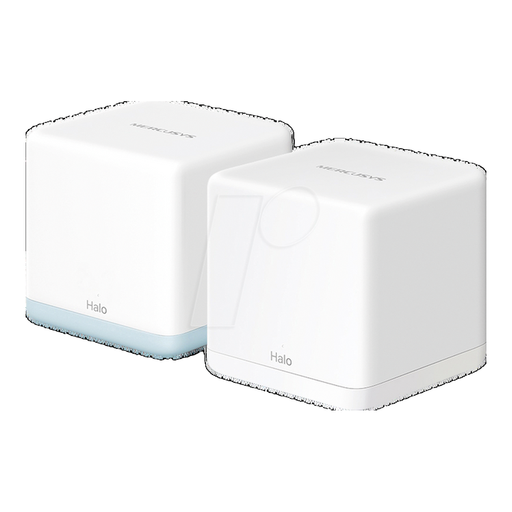
MERCUSYS Halo H1200G AC1200 (2-pack)
The two-unit pack is an option if you want to include several areas in your Wi-Fi plan. The connection between the nodes at their intended locations remains key.
Dual-band AC1200 and Gigabit Ethernet ports are listed.
View at Joybuy
Frequently asked questions
Will mesh help if video calls keep stalling even next to the router?
Not necessarily. First, compare the connection using Ethernet at the router with the Wi-Fi signal where you study. The Federal Network Agency requires a direct Ethernet connection for its measurement procedure, so Wi-Fi and other network equipment don’t affect the broadband measurement.
What upload speed do I need for simultaneous video calls?
It depends on the service, type of call and video quality. Zoom recommends 2.6 Mbit/s upload and 1.8 Mbit/s download for a 720p group call. These figures aren’t a general requirement for every language-learning platform, nor a one-size-fits-all total for several calls.
How should I connect and position additional mesh nodes?
First, check whether you can run a network cable between the locations. TP-Link describes optional Ethernet backhaul for the Deco X50. Without a cable, the additional node still needs a good wireless connection to the main unit.
What should I check when it comes to maintenance and extra features?
Check which software features are included with the specific model and which firmware updates are available. These can vary by product range and version.
What should I know about CE marking on a mesh Wi-Fi device?
According to the Federal Network Agency, CE marking is required for products covered by the relevant EU harmonisation legislation and placed on the EU market. Check the marking, the manufacturer’s information and the accompanying documents for the specific version. A CE mark isn’t an independent quality seal or a guarantee of video call performance.


