
Lieferung heute & morgen

Qualitätsgarantie

Willkommens-Angebote freischalten: KOSTENLOSE Lieferung | Bis zu 80 % RABATT | Kostenlose 30-Tage-JoyPlus-Testphase
App herunterladen
Anyone looking to buy metal baking tins will quickly find a wide range of cake tins, baking trays, loaf tins and oven dishes. Product images often look very similar, but in everyday use, details such as internal dimensions, rim height, coating and cleaning requirements determine how practical a tin really is. One tin may be suitable for a round cake, yet hardly appropriate for bread, lasagne or pizza.
From the perspective of the Joybuy Product Recommendation Officer, it is therefore worth taking a straightforward look at the specifications. Not every advertised non-stick solution is suitable for every recipe, and the external dimensions do not always correspond to the usable baking area.
A 26 cm baking tin may refer to the diameter, while the height and internal area are listed separately. For a baking tray or oven dish, the length, width and rim height are crucial. You should also check whether the dimensions refer to the outer edge or the usable internal space.
This is particularly important if the tin needs to fit on a particular oven shelf or tray. A 28 cm cake tin needs sufficient clearance from the oven walls to allow the heat to circulate.
A non-stick baking tin can make it easier to remove cakes or pizzas. However, you should not use metal utensils, as scratches can damage the coating. Several of the models described here specifically recommend hand washing, even though individual product descriptions mention easy cleaning or dishwasher suitability.
For care, use a soft sponge, warm water and a mild washing-up liquid. Avoid heavy scrubbing, aggressive cleaning products and prolonged soaking unless the manufacturer specifies otherwise.
Metal conducts heat differently from glass or ceramic. A shallow tin is suitable for pizza or biscuits, while a deep loaf tin is better for bread and sponge cakes. Specifications such as oven-safe, microwave-safe or dishwasher-safe must be considered separately.
For example, the 5five loaf tins are listed as oven-safe, not microwave-safe and not dishwasher-safe. Without an explicit statement from the manufacturer, a metal baking tin should not be used in a microwave.
Depending on the model, metal tins are made from metal or steel. Steel is listed as the body material for the 33 cm perforated pizza tray. According to the product specifications, its surface has an ILAG PTFE-based non-stick coating. Other tins are simply described as having a non-stick coating.
When buying, it is important to check:
In many cases, a coating makes it easier to remove baked goods, but it does not replace greasing the tin correctly when working with delicate mixtures.
The commonly searched-for sizes 26 cm baking tin, 28 cm baking tin, 30 cm baking tin and 32 cm baking tin are not directly interchangeable. Even a few centimetres can change the height of the mixture and therefore the baking time.
Capacity is also useful: the 30 cm 5five loaf tin is listed as having a capacity of 1.65 litres, while the 25 cm version has a capacity of 1.3 litres. For oven dishes, the listed capacities in this selection range from 2.4 to 3 litres.
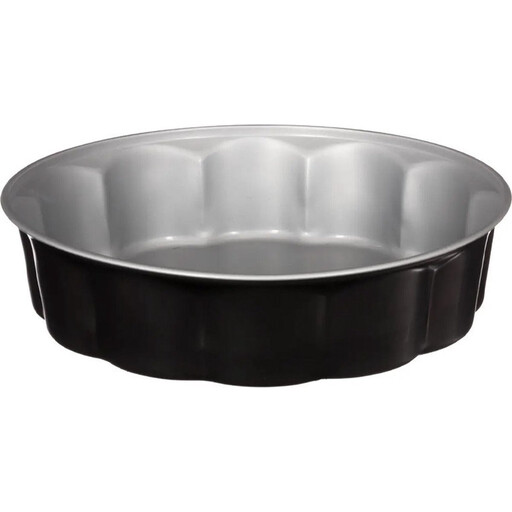
Why this product suits this profile: With a diameter of 26 cm and a height of 6.5 cm, this round cake tin covers typical household recipes while remaining relatively easy to handle at a product weight of 300 g.
The diameter and height are clearly specified. The non-stick coating is stated, while the care instructions make it clear that hand washing is recommended.
26 cm diameter, 6.5 cm height and coated metal construction.
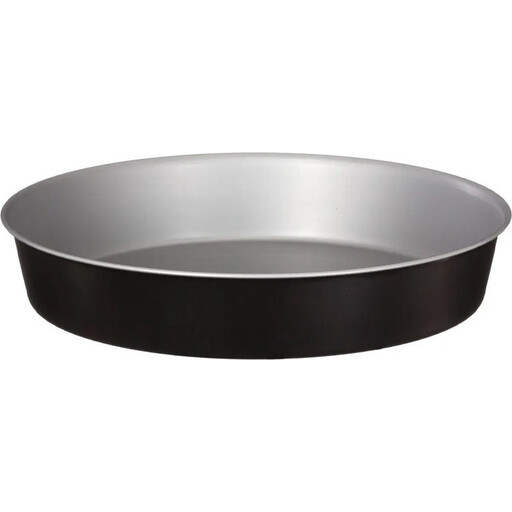
Why this product suits this profile: With a diameter of 28 cm and a height of 5 cm, this cake tin is designed for households that prefer a defined standard size and a coated surface.
The product details specify the diameter, height, material and non-stick coating. The recommended hand washing makes the care requirements clear.
28 cm diameter, 5 cm height and black metal with a non-stick coating.
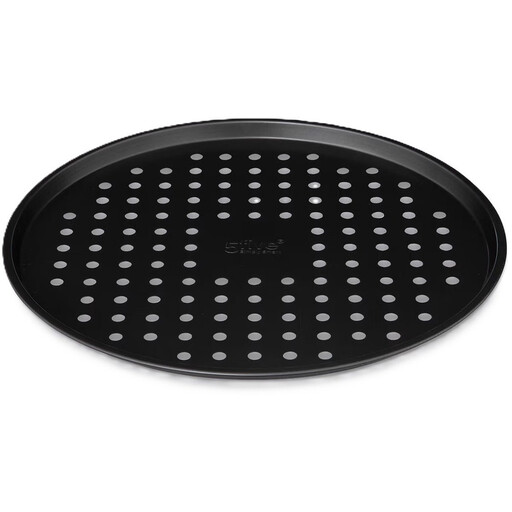
Why this product suits this profile: This round pizza tray has a diameter of 33 cm, a height of 1.2 cm and a perforated base designed for pizza.
Its intended use is clearly defined by its shape, diameter and perforated base. The ILAG coating and hand-washing recommendation are specified.
Steel body, 33 cm diameter, 1-litre usable capacity and perforated base.

Why this product suits this profile: According to the product specifications, this rectangular oven dish measures 36 x 27 x 4.7 cm and has a 3-litre capacity for larger portions.
The rectangular dimensions and capacity can be checked directly against your oven and the portions you plan to prepare. Hand washing is recommended.
3-litre capacity, metal construction and 4.7 cm height.
We have put together a complete, regularly updated list of products that fully meet these strict selection criteria and the safety regulations applicable in the EU.
Before using the tin for the first time, clean it with warm water and mild washing-up liquid. For coated metal baking tins, greasing them according to the recipe is recommended, particularly when working with sticky or very sugary mixtures. Do not cut cake directly in the tin with a sharp knife.
If you use a 30 cm baking tin or a larger baking tray, you should also take your own oven’s preheating and baking times into account. Heat distribution can vary depending on the thickness of the tin, the quantity of mixture and its position in the oven. For cleaning, the specific manufacturer’s instructions take priority. The products mentioned here generally recommend hand washing.
Not necessarily. Some product descriptions mention easy cleaning, but the care instructions for many models expressly recommend hand washing. Check the relevant manufacturer’s information before buying and after each use.
A round 26 or 28 cm cake tin is suitable for many standard recipes. However, the right size depends on the recipe, the amount of mixture and the desired cake height. The same quantity of mixture will spread more thinly in a 28 cm tin than in a 26 cm tin.
Their lifespan depends on the material, coating, exposure to heat and care. Scratches, severe deformation or a damaged coating are signs that the tin should no longer be used for coated applications. Hand washing, soft kitchen utensils and following the manufacturer’s instructions can help extend its service life.