
Lieferung heute & morgen

Qualitätsgarantie

Willkommens-Angebote freischalten: KOSTENLOSE Lieferung | Bis zu 80 % RABATT | Kostenlose 30-Tage-JoyPlus-Testphase
App herunterladen
As a Joybuy Product Recommendation Officer, I see countless products every day. My job is to help you make the right choices, without being swayed by marketing hype. Especially with creative accessories like metal cutting dies, a bad purchase can quickly dampen your crafting spirit. So, before you invest in new designs, let's look at the most common pitfalls and the key indicators of quality.
Many crafters know the problem: you order a beautiful-looking die, but the result is disappointing. The most common causes of frustration are:
To avoid these problems, it's crucial to look beyond the design and focus on the technical specifications.
Before you start your next DIY paper crafting project, check potential candidates against these three criteria. This will save you not only money but also valuable time.
The durability and cutting performance of a die depend directly on the material. Look for carbon steel. This material is significantly more robust and harder than simple, thin metal. It holds its shape even under higher pressure and ensures precise, sharp cutting edges over many projects. A well-made die also has no sharp burrs on its surface that could cause injury.
Most cutting dies for the Big Shot and other manual die-cutting machines are universally compatible. Nevertheless, it's wise to check the product description for compatibility notes. The key to success lies in the correct "sandwich"—the stacking order of the base plate, cutting plate, paper, die, and another cutting plate. For very intricate dies, it may be necessary to slightly increase the pressure by adding an extra sheet of paper (a shim). However, a good die works with your machine's standard setup without complex workarounds.
Consider what you primarily want to use the die for.
To make your choice easier, I have matched some products from our range to different user profiles. This selection is based on objective product features and typical use cases.
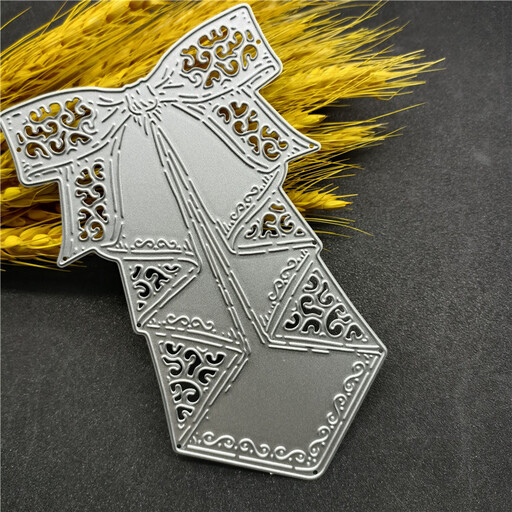
Why This Fits Their Persona: This set offers a geometric background pattern suitable for a wide range of projects—from birthday cards to scrapbook layouts. It isn't tied to a specific theme, making it a flexible addition to any starter collection.
The design isn't overly intricate, which minimises the risk of messy cuts for beginners. It's robust enough to produce good results with standard die-cutting machines and various types of paper.
Versatile background pattern. Ideal as a base for further decoration. Solid construction for repeated use.
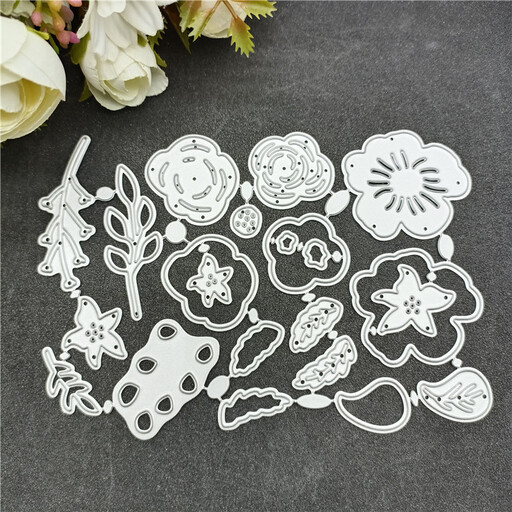
Why This Fits Their Persona: Anyone who loves creating cards with floral motifs needs precise shapes. This set includes various leaves and blossoms that can be used individually or combined to create custom floral arrangements.
Despite the fine leaf veins and petal shapes, the cutting edges are designed to separate the paper cleanly instead of tearing it. This avoids the pitfall of poor detail reproduction in complex natural designs.
Set of multiple combinable elements. Suitable for layering effects. Precise cuts even on delicate leaf structures.
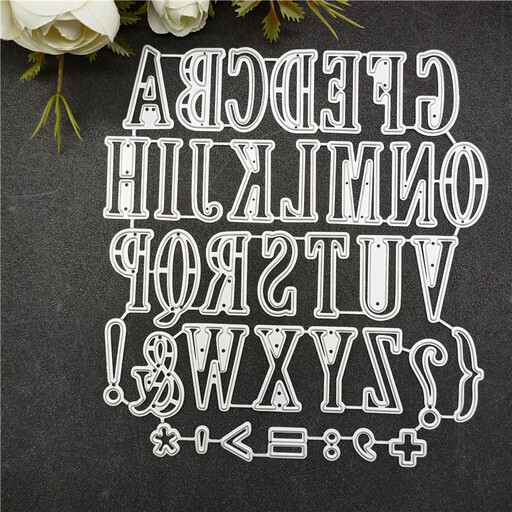
Why This Fits Their Persona: For anyone looking to create names, custom greetings, or monograms, a complete alphabet set is essential. This set provides all 26 capital letters in a clean, highly legible font for maximum flexibility.
This set bypasses the problem of inconsistent results, as all letters are made from the same material and in the same style. The clean lines, without overly fine serifs, ensure that every letter is cut out cleanly.
Complete alphabet for unlimited personalisation. Uniform size and font. Legible design suitable for various projects.
We have compiled a complete, real-time list of products that fully satisfy these strict selection criteria and UK safety regulations.
Most of the metal cutting dies featured here are compatible with popular manual die-cutting and embossing machines, including models from Sizzix (e.g., Big Shot, Big Shot Plus), Cuttlebug, or Spellbinders. However, it's always good practice to compare the maximum width of the die with the opening of your machine.
After cutting, small paper scraps often get stuck in the die. You can carefully remove them with a piercing tool or a stiff brush. To store the dies safely and keep them organised, magnetic sheets stored in binders or boxes are ideal. This keeps the dies flat, prevents them from bending, and makes them quickly accessible.
If a high-quality die isn't cutting properly, the issue is often the "sandwich." Check your machine's instructions. Sometimes, the cutting plates are heavily worn and need to be flipped or replaced. For very thick cardstock or intricate designs, it can help to place a thin sheet of paper (a "shim") between the die and the cutting plate to increase the pressure. The type of paper also plays a role; very fibrous paper is more prone to fraying.