
Lieferung heute & morgen

Qualitätsgarantie

Willkommens-Angebote freischalten: KOSTENLOSE Lieferung | Bis zu 80 % RABATT | Kostenlose 30-Tage-JoyPlus-Testphase
App herunterladen
As a Joybuy Product Recommendation Officer, I see the joy that creative hobbies bring every day. I'm here to help you find the right tools for your projects and explain important product features. However, when it comes to metal cutting dies, there are a few pitfalls that can quickly spoil the fun. Inferior materials or unclear product descriptions often lead to disappointment. This guide will show you what to look for to identify durable and precise cutting dies.
The most common problems when buying cutting dies are:
To avoid these problems, you should check three key features before buying. These objective criteria will help you assess the quality of a cutting die, regardless of advertising claims.
The longevity and cutting performance of a die depend directly on its material. Look for products made from carbon steel. This material offers high strength and hardness, ensuring the cutting edges stay sharp even with frequent use. Unlike softer metal alloys, carbon steel withstands the pressure of the die-cutting machine without bending. The result is consistently clean and precise cuts, even on thicker cardstock.
Most dies for card making and scrapbooking on the market are designed for standard manual die-cutting machines (e.g., from Sizzix, Cricut, or Vaessen Creative). Nevertheless, it's wise to check the product specifications. While universal compatibility is common, the thickness of the die—often referred to as "wafer-thin dies"—is crucial for the correct "sandwich" assembly in your machine. Dies that are too thick create too much pressure, while those that are too thin won't cut cleanly.
The more complex the design, the more important manufacturing precision becomes. For intricate floral cutting dies or fine lettering, the cutting lines must be particularly sharp and close together. A useful feature is the presence of small holes on the back of the die. These make it easier to "weed"—the process of removing the paper from the die—with a pointed tool without damaging the die-cut shape. Such details are an indicator of a well-thought-out design that also performs well in practice.
Based on these objective criteria, we have identified several products that are suitable for different creative needs.
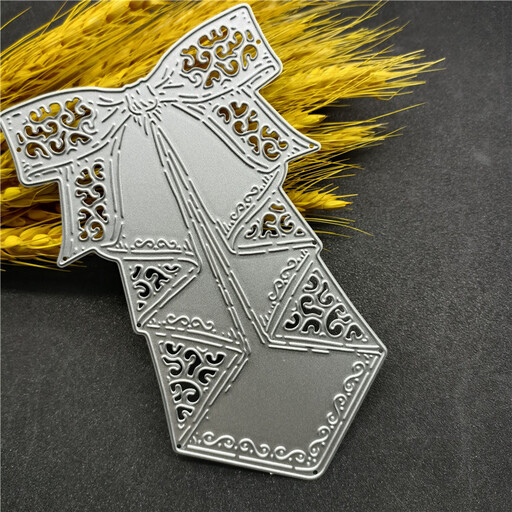
Why This Fits Their Persona: Ideal for crafters looking for a versatile starter set. This background die is suitable for cards, album pages, and other paper projects, providing a solid base for further embellishments.
Made from robust metal, it ensures a clean cut without bent edges, preventing the frustration typical of early crafting attempts.
Creates a large, decorative background in a single pass. Universally applicable as a versatile scrapbooking accessory.
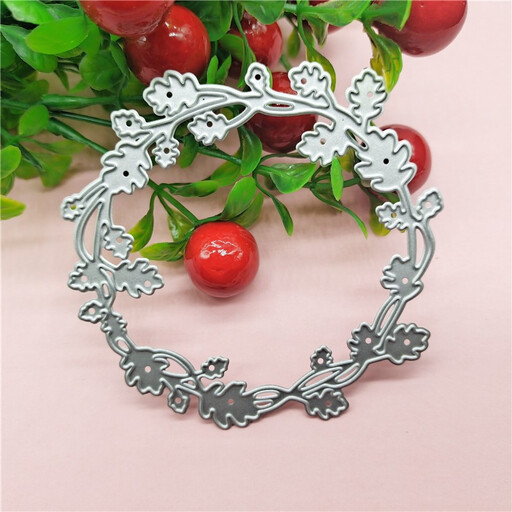
Why This Fits Their Persona: Perfect for crafters focusing on creating Christmas cards or festive decorations. This Christmas cutting die set allows for the creation of uniform and professional-looking projects.
The clear and well-defined wreath design ensures the die-cut result matches the image, avoiding disappointing, unrecognisable details.
Thematically focused for the holiday season. The shape is excellent as a central element on greeting cards or as a gift tag.
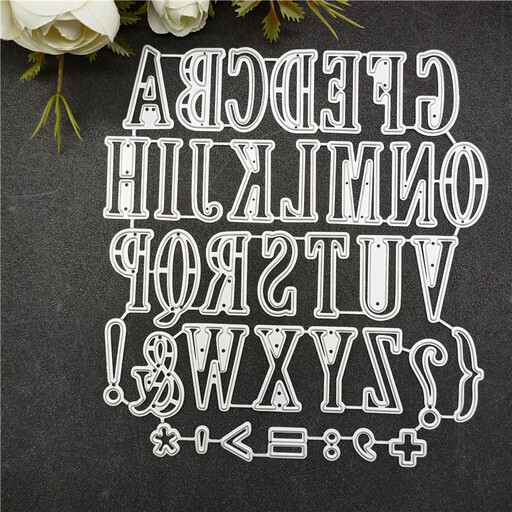
Why This Fits Their Persona: For anyone who wants to personalise their projects with names, initials, or custom messages. A complete alphabet set is a versatile tool for advanced and detail-oriented crafters.
This cutting die set is made from durable carbon steel. This ensures that every letter is cut cleanly and the dies do not lose their sharpness or bend, even with frequent use.
Allows for complete personalisation of cards, albums, and decorations. The individual letters can be combined again and again in new ways.
We've compiled a complete, up-to-date list of products that meet these strict selection criteria and quality standards.
After use, small paper scraps may remain in the die. These are most easily removed with a small brush or a special piercing tool. For storage, it is recommended to keep the dies flat to prevent bending. Magnetic storage sheets are a practical solution for this, as they hold the metal dies securely in place.
For most crafting dies, paper with a weight between 80 g/m? and 220 g/m? is suitable. For particularly intricate designs, a thinner cardstock (approx. 120–160 g/m?) can lead to better results, as the paper is easier to release from the die. It's always a good idea to do a test cut with a small piece of the intended paper.
Theoretically, it's possible to apply pressure to the die using tools like a rolling pin, but the result is rarely satisfactory. For precise and clean cuts, a die-cutting and embossing machine is essential. It ensures even pressure across the entire surface of the die, which is crucial for a professional result.