
Lieferung heute & morgen

Qualitätsgarantie

Willkommens-Angebote freischalten: KOSTENLOSE Lieferung | Bis zu 80 % RABATT | Kostenlose 30-Tage-JoyPlus-Testphase
App herunterladen
By a Joybuy Product Recommendation OfficerPublished July 28, 2026
Metal cutting dies have transformed the world of paper crafting, making it possible to cut precise and repeatable shapes that would be nearly impossible to achieve by hand. However, the vast selection of designs and suppliers can also lead to buyer's remorse. Before you invest in new tools for your creative projects, it's helpful to understand the common pitfalls that often hide behind appealing product images.
This guide focuses on the objective criteria that define a quality cutting die, helping you make informed decisions for your DIY paper crafting.
Many crafters invest in dies that fail to meet their expectations. This is often due to three recurring problems that can be avoided with a careful pre-purchase inspection.
To avoid the problems mentioned above, you should focus on three verifiable characteristics. These define the longevity and functionality of your metal dies for die-cutting machines.
The sharpness and durability of a cutting die depend directly on the material used. Dies made from carbon steel are often an excellent choice. This material is harder than simple steel and retains its sharp cutting edge for a longer period. A high-quality die should feel sturdy and not bend easily. This is especially important for cutting dies for scrapbooking, where thicker paper or cardstock is often used.
Don't rely solely on the claim "fits all common machines." Check two specific measurements:
The complexity of the design places different demands on manufacturing quality.
Here are a few recommendations tailored to different creative needs, all of which take the above criteria into account.
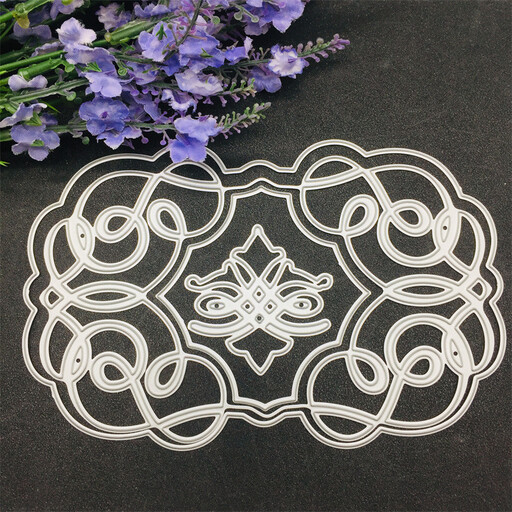
Why it fits the profile: This set offers a versatile, abstract pattern that works well for backgrounds, borders, or as a central element. It isn't tied to a specific theme, making it a flexible addition to any craft collection.
The design is detailed but not overly intricate, which minimises the risk of tearing on standard cardstock and ensures good compatibility with most machines.
Ideal for building a foundational collection of dies that can be reused for a wide variety of projects, from card making to scrapbooking.
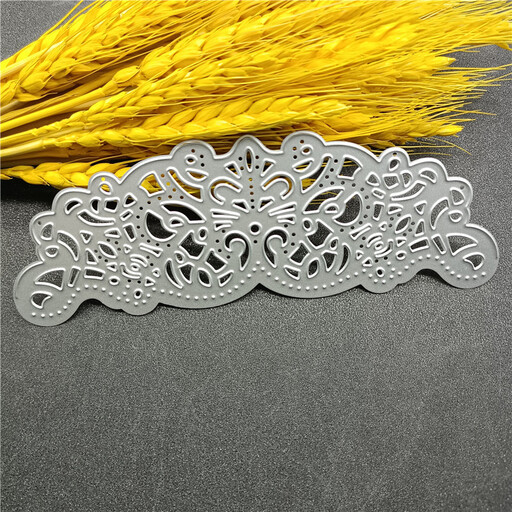
Why it fits the profile: Perfect for crafters creating elegant projects like wedding invitations or sophisticated greeting cards. This die is specifically designed to produce fine lace borders.
The design is engineered for intricate work, which requires high-precision manufacturing of the cutting edges to cleanly cut the fine details without fraying.
Creates highly detailed and professional-looking lace patterns that add a premium feel to any project.
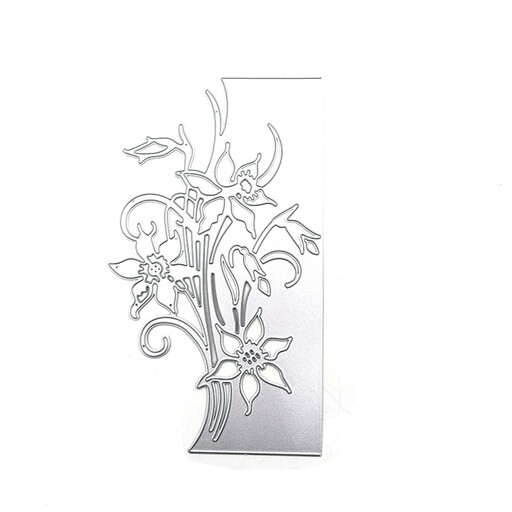
Why it fits the profile: Ideal for projects with a clear floral theme. This die delivers a single, recognisable rose motif that can serve as the focal point on cards or in scrapbook layouts.
A clearly defined single motif like this rose is optimised for a clean cut. The edge path is focused on one shape, which reduces the likelihood of cutting errors.
Excellent for layering techniques, where multiple die-cut elements are stacked to create depth and 3D effects.
We have compiled a full, up-to-date list of products that fully meet these strict selection criteria and current regulations.
To ensure the longevity of your dies, carefully remove paper scraps from the crevices after each use with a small brush or a die pick tool. For storage, magnetic sheets or special storage binders are ideal. Store the dies flat to prevent bending and keep them dry to prevent corrosion.
If a design isn't cutting completely, it's often due to insufficient pressure. Try adding an extra sheet of thin cardstock (a "shim") to your plate sandwich to increase the pressure. You can also rotate the die 90 degrees and run it through the machine again. If problems persist, it may be due to the combination of paper type and design complexity.
Not necessarily. Cutting dies are primarily designed for cutting. Embossing folders are typically thicker plastic folders that press paper into a three-dimensional shape. However, thin metal cutting dies can often be used for light embossing (debossing) by pairing them with a soft silicone or rubber mat instead of a cutting plate. The result is an indented contour of the design in the paper.