
Lieferung heute & morgen

Qualitätsgarantie

Willkommens-Angebote freischalten: KOSTENLOSE Lieferung | Bis zu 80 % RABATT | Kostenlose 30-Tage-JoyPlus-Testphase
App herunterladen
Metal cutting dies are ideal for a wide range of creative paper projects, from greeting cards and photo albums to gift packaging and decorative journal pages. Choosing one may seem straightforward at first, but some product details can be misleading. It is not just the design that matters, but also compatibility with your die-cutting machine, the size of the die and how you intend to use it.
Not every metal cutting die works with every machine. Many listings only mention terms such as “Cutting Die” or “Embossing Stencil”, without providing details about platform size, sandwich configuration or suitable materials. Before buying, check your machine’s instructions and compare the recommended plate and mat combinations.
A delicate design may look lovely on a small card but cover too little of a photo album page. Conversely, large dies can hide important areas of a picture. When choosing cutting dies for card making and cutting dies for photo albums, you should therefore consider the overall dimensions, the number of individual pieces and the paper size you want to use.
The material description is a starting point, but it is not a complete indication of quality. Important factors include shape stability, the precision of the cutting edge and the design of narrow internal areas. Very fine patterns may not cut cleanly with unsuitable paper or the wrong pressure. An unclear description of the included pieces can also make it harder to plan a craft project.
Many metal embossing stencils and cutting stencils are made from carbon steel. This material is shape-stable and suitable for typical paper projects. Even so, check the product description to confirm that metal or Carbon Steel is actually specified, and whether you are buying a single die or a set.
You should also look at:
The right die depends on your project. Flower dies, leaves and frames can often be used as recurring decorative elements. Alphabet dies and number dies are practical for names, headings, birthday cards and dates. For seasonal projects, designs such as snowflakes, spring motifs or themed symbols may be useful.
Before ordering, measure the available space on your card or album page. With multi-part designs, it is also important to check whether the individual pieces can be arranged separately.
Not every metal die is designed solely for cutting. Some products are also described as embossing dies or embossing stencils. Cutting and embossing often require different plates, mats or settings, however. Only use the materials specified in your machine’s instructions, and practise with a scrap of paper first.
Heavier card may require more pressure, while excessive pressure can put strain on the machine, plate or die. With very intricate designs, thinner paper, a correctly aligned sandwich and, where necessary, several even passes in line with the manufacturer’s instructions can help.

Why this product suits the profile: The four-piece set provides several designs for your first card-making and paper projects, so beginners do not have to choose numerous individual motifs straight away.
The set contents and Carbon Steel material are clearly stated. This makes it easier to compare the set with your own machine and planned project.
Four metal dies in one set; the product description states that they are designed for DIY card-making and paper projects.
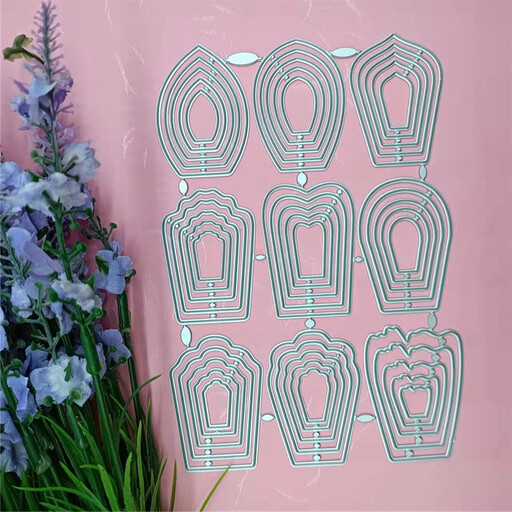
Why this product suits the profile: The description covers several uses and is aimed at crafters who want to combine cutting dies for albums, cards and decorative paper projects.
The product description identifies it as a metal cutting stencil rather than simply describing a general craft motif. You should still check the dimensions and machine compatibility before buying.
Suitable for album, card and paper decoration; described as a Metal Stencil Template.
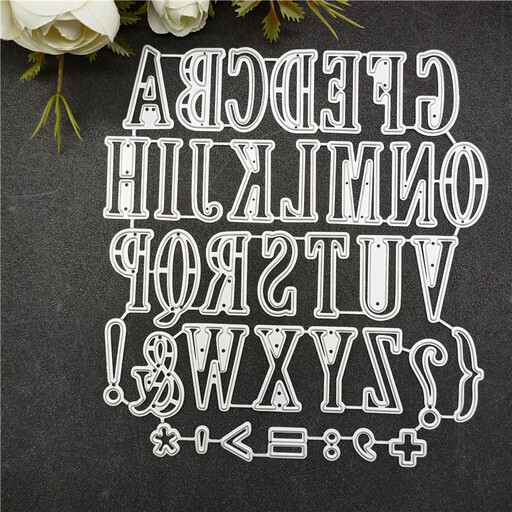
Why this product suits the profile: This set is designed for personalised cards, album titles, names and decorative words. It is therefore ideal for projects where letters are needed regularly.
The number of letters is clearly stated in the product name. Before ordering, check that the capital letters, font style and characters you need are suitable for your project.
26 individual capital letters; suitable for scrapbooking, cards, paper projects and albums.
We have put together a complete, regularly updated list of products that fully meet these strict selection criteria and the safety regulations applicable in the EU.
Carefully remove paper remnants from the internal areas after every project. Store metal dies in a dry place and, where possible, keep them flat. Storing them separately prevents delicate edges from being damaged by other tools. If you use them frequently, it is worth sorting the dies by design group, such as flower dies, frames, letters and seasonal motifs.
That depends on the die-cutting machine and the individual die. Thin scrapbooking paper is often easier to cut than very thick card. The instructions for the machine and product are the deciding factors. Test new dies with a scrap piece first.
No. Machines differ in opening size, plate configuration and pressure system. Before buying, check the permitted dimensions and recommended sandwich configuration. A die with a suitable outer diameter may still be unsuitable if the machine requires particular materials or mats.
There is no universal service life. It depends on the material, paper, pressure setting, cleaning and storage. Excessive pressure, unsuitable materials or misaligned plates can put greater strain on the edges. Correct use and dry storage help preserve the performance of paper cutting dies.