
Lieferung heute & morgen

Qualitätsgarantie

Willkommens-Angebote freischalten: KOSTENLOSE Lieferung | Bis zu 80 % RABATT | Kostenlose 30-Tage-JoyPlus-Testphase
App herunterladen
Metal cutting dies are ideal for a wide range of creative paper projects, including personalised greeting cards, decorated photo albums, gift packaging and seasonal designs. Choosing the right one may seem straightforward at first glance. In practice, however, unclear product details, incompatible die-cutting machines or overly intricate designs can quickly lead to disappointing purchases.
This buying guide from the Joybuy Product Recommendation Officer explains which details matter before you buy and which cutting dies suit different crafting needs.
A metal die on its own does not guarantee the right result. The key consideration is whether it is compatible with your manual or electric die-cutting machine. Always check:
If this information is missing, check compatibility with the retailer or product description before buying.
Product names do not always clearly distinguish between thin metal, carbon steel or a combined cutting and embossing die. Carbon steel craft dies are often promoted for their shape-retaining construction, but material thickness, cutting lines and design size are still important. Without specific information from the manufacturer, it is not possible to make a general statement about durability.
Very small details can be more difficult to release when using firm card, coated paper or multiple layers of material. When choosing decorative cutting dies, look for sufficiently wide bridges and a size suitable for your project. For beginners, simple outlines or frames are often easier to use than highly branched ornaments.
Check whether you are buying a cutting die, an embossing die or a combination set. Metal cutting dies separate the paper along a defined outline. Embossing dies for paper, by contrast, create a raised or recessed texture without necessarily cutting all the way through the material. Terms such as “embossing dies” and “cutting dies” should therefore not automatically be treated as interchangeable.
If carbon steel is stated in the description, this is a specific material detail. However, it does not replace the need to check the dimensions and machine compatibility.
For card making, smaller designs or border dies are practical. For photo albums, the outer dimensions must match the page format and your intended placement. Larger frames, numbers or floral elements can be useful for gift packaging.
Before buying, measure:
Not every die is designed for every material. Thin paper is generally processed differently from thicker craft card. With multi-layered projects, the cutting quality may also depend on the plate combination and the pressure applied by the machine.
For regular paper crafting, it is worth keeping a small selection of different paper weights to hand. Test a new design on a scrap piece first, before using valuable scrapbooking paper or pages that have already been decorated.
The following recommendations categorise the products by design type and intended use. The product names and material details reflect the available product information.
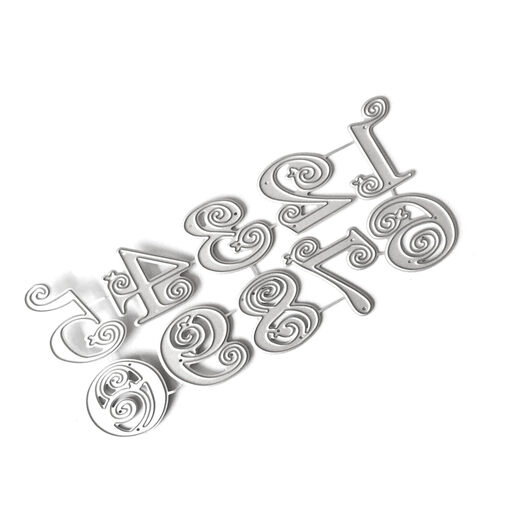
Why this product suits this crafting need: Number designs can be used for birthday cards, anniversaries, calendar pages and personalised packaging. The product name states that it is made from carbon steel and intended for cards, scrapbooking and paper decoration.
The clearly recognisable number design makes it easier to choose than multi-purpose shapes that are difficult to categorise. You should still check the machine format and exact dimensions before buying.
Carbon steel according to the product name; number design for personalised cards, albums and packaging.

Why this product suits this crafting need: The set contains four metal dies and, according to its name, is intended for DIY crafts and paper card making. It is a good choice for crafters planning to use several shapes for recurring projects.
The number of pieces is stated clearly, reducing uncertainty about the contents of the set. Check the full product details to confirm whether it is suitable for cutting, embossing or both.
Four-piece set; carbon steel according to the product name; suitable for card and paper projects.
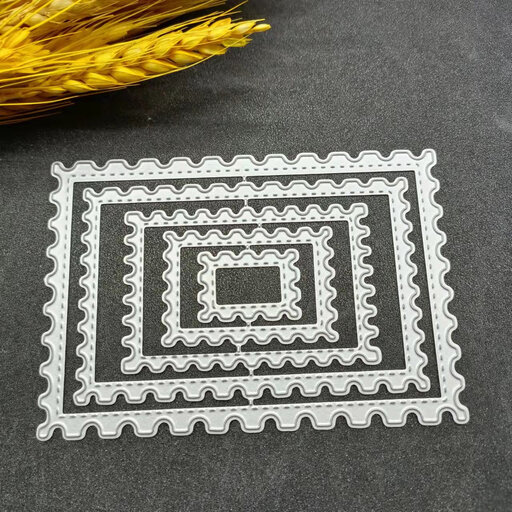
Why this product suits this crafting need: Wave-edge and postage-stamp frames are ideal for recurring card layouts, album pages and decorative borders. The design is specifically suited to framing projects.
The clearly named frame shapes make it easier to choose a die for a specific application. Before use, check that your machine can handle the required frame dimensions.
Wave-edge and postage-stamp frames according to the product name; suitable for framed layouts and decorative album designs.
We have compiled a complete, regularly updated list of products that fully meet these strict selection criteria and the safety regulations applicable in the EU.
A few simple measures can help keep metal cutting dies usable for as long as possible:
The actual service life depends on factors including the material, cutting complexity, paper thickness, pressure and frequency of use. It is therefore not possible to give a reliable fixed number of months or cuts.
For cutting dies for card making, numbers, floral designs, frames and border shapes are versatile choices. Pay attention to the card size and check whether the design is intended as an inner shape, outer frame or separate decorative element.
Many cutting dies require a compatible die-cutting machine to generate the necessary pressure. Using one manually without the appropriate equipment can result in uneven cuts or damage. Always check the product instructions and the operating guidance for your machine.
Cutting separates the paper along a shape. Embossing creates a texture or outline on the surface. Some products combine both functions, while others are intended for just one application. The precise product description is the deciding factor when distinguishing between them.