
Lieferung heute & morgen

Qualitätsgarantie

Willkommens-Angebote freischalten: KOSTENLOSE Lieferung | Bis zu 80 % RABATT | Kostenlose 30-Tage-JoyPlus-Testphase
App herunterladen
Metal cutting dies for scrapbooking create consistent paper designs for photo albums, greetings cards and decorative craft projects. At the same time, metal cutting dies vary considerably in motif size, compatibility and level of detail. An attractive product image alone reveals little about whether a die is suitable for your existing machine and the paper you plan to use.
This buying guide highlights common purchasing pitfalls, key points to check and suitable product types for different crafting needs.
Flower dies, butterfly dies and frame dies often look larger in product images than they really are. A very large design may be unsuitable for an A6 card. Before buying, check:
With letter dies and intricate borders in particular, the actual size determines whether the design can be used as the main feature or only as a small detail.
Not every metal die works with every machine in the same way. Important factors include the height of the die, the plates required and the material thickness supported by the machine. Some suppliers only state that a product is “suitable for scrapbooking machines” without providing specific compatibility information.
It is advisable to compare your machine manufacturer’s guidance with the product details. If you are unsure, a test cut using ordinary craft card can help. Do not use additional plates or unusually thick material stacks unless this is specified in the instructions.
The term metal cutting dies does not automatically describe the material thickness, construction quality or cutting performance. Thin, highly complex dies can bend if handled incorrectly. Similarly, tiny openings may not cut completely through thick card or several layers of material.
Look for a clear, verifiable product description and keep the dies dry and clean. After use, remove paper scraps from fine contours. Actual service life depends on the material, pressure, frequency of use and storage conditions.
For cutting dies for card making, choose designs that suit typical card formats. Small leaves, flowers and butterflies can be combined flexibly. Frame or background designs, on the other hand, need sufficient space and are particularly effective on larger cards, album pages or as photo album decorations.
Before ordering, consider:
Intricate embossing dies can add extra texture, but they are more demanding to use when the gaps are very small. Clearly defined outlines are often easier for beginners. Experienced scrapbookers can use delicate points, leafy vines or lace borders selectively to create layered designs.
It is important to distinguish between cutting and embossing: a cutting die separates the paper along the outline. An embossing die, by contrast, creates a raised or recessed texture. Some products are designed for both processes, but may require different plates or settings for each.
Paper dies are generally used for paper and craft card, but not every die is suitable for thick materials. Start with a paper weight that your machine is designed to handle according to its instructions. With complex designs, thinner paper may be easier to release from the die. For sturdy cards, you can then use suitable card thicknesses, provided your machine is approved for them.
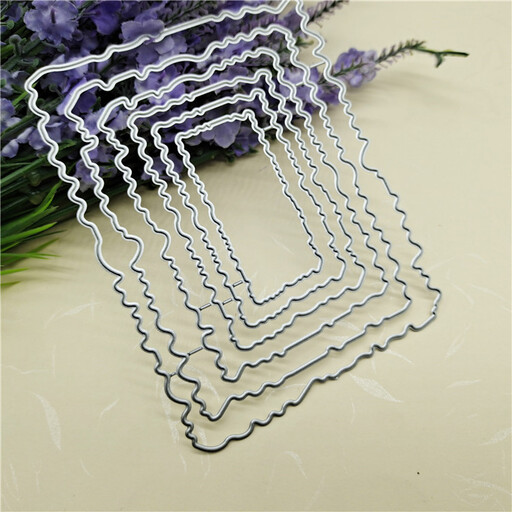
Why this product suits the profile: Rectangular frames can be used for cards, album pages and simple paper decorations. The design is not tied to a particular theme and can be combined with different colours and types of paper.
The clearly recognisable geometric design reduces the risk of buying a highly specialised motif that will rarely be used. The actual dimensions should be checked before ordering.
Rectangular frame design; intended for decorative paper crafts, scrapbooking and card making.
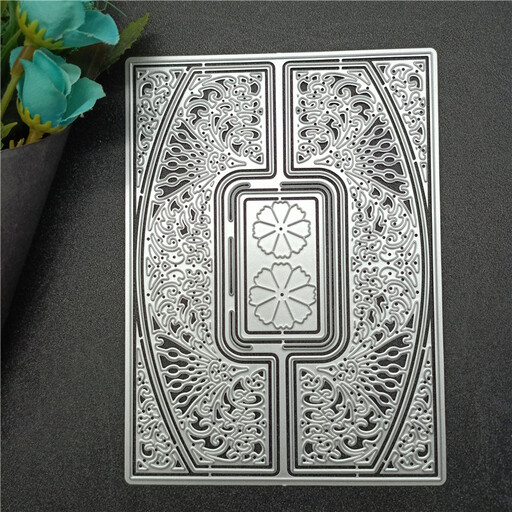
Why this product suits the profile: The flower-frame design is aimed at users who want to create decorative areas for cards or album pages and value a clearly defined pattern.
The stated flower-frame design makes the intended use clearer than a generic collection description with no specific motif details.
Flower pattern as a frame; specified for card making, paper decoration and scrapbook pages.
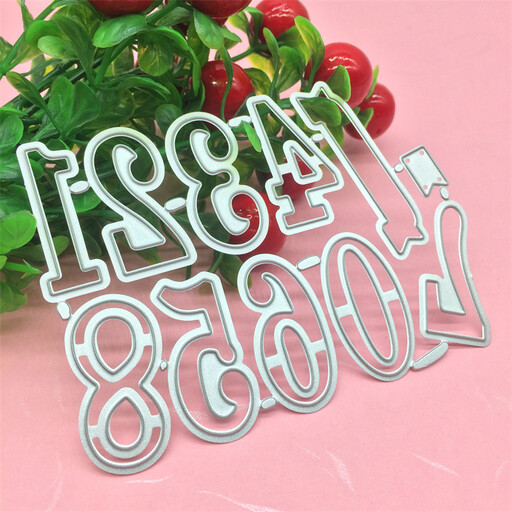
Why this product suits the profile: An alphabet set is ideal for personalised greetings cards, names, headings and labels in photo albums. The additional numbers mentioned further expand your creative options.
The stated quantity of 26 capital letters and 10 numbers makes the contents more specific. Before buying, check the character height and machine compatibility.
26 capital letters; plus 10 numbers according to the product description; suitable for personalised paper projects.
For seasonal cards, a candle design, lantern or wedding motif may also be suitable. Flower, leaf and butterfly designs, on the other hand, work well for recurring occasions and neutral photo album decorations. If you want to incorporate text, combine letter dies with frames or floral elements.
We have put together a complete, regularly updated list of products that fully meet these strict selection criteria and the safety regulations applicable in the EU.
It is not just the machine brand that matters, but whether the die is approved for use with regard to its height and format. Check the operating instructions and the information provided for the specific product. If you are unsure, a careful test cut is recommended.
It is not possible to give a fixed lifespan in general terms. It depends on the material thickness, frequency of use, pressure setting, cleaning and storage. Paper and card remnants should be removed after every use. Dies with very fine contours require particularly careful handling.
Some models are offered as cutting and embossing dies. Whether both functions are actually possible must be stated in the relevant product description and machine instructions. Embossing may require different plates, mats or settings from those used for cutting.