
Lieferung heute & morgen

Qualitätsgarantie

Willkommens-Angebote freischalten: KOSTENLOSE Lieferung | Bis zu 80 % RABATT | Kostenlose 30-Tage-JoyPlus-Testphase
App herunterladen
Whether you are creating a photo album, personalised greeting card or seasonal paper decoration, metal cutting dies for scrapbooking make it easy to reproduce designs with clean, crisp outlines. However, metal dies can vary considerably in terms of design size, material, compatibility and what is included. If you buy based solely on the picture or the number of pieces in a set, you may end up with templates that are not suitable for your die-cutting machine or the paper you want to use.
This buying guide explains what craft enthusiasts in Germany should look out for before buying and which options suit different DIY projects.
Not every cutting template will automatically fit every machine. The key factors are the die format, the maximum paper width and the plate system specified by the machine manufacturer. Very large designs may exceed the working area of smaller machines. Before buying, compare the product dimensions with those of your machine.
The term ‘embossing template’ can also be misleading: an embossing template creates a raised or recessed relief, while a cutting die cuts through some or all of the paper. According to the product description, some products are designed for both applications, but may require different plates or pressure settings for each.
A cutting-die set with lots of pieces may seem versatile at first glance. For card making, however, having suitable sizes is often more important than having a large number of pieces. For example, a set of alphabet dies is ideal for names and short messages, but does not replace frame dies or floral designs. So check the following:
Descriptions such as carbon steel or ‘metal’ tell you what the product is made of, but not on their own how well a design will work with your particular machine. The die thickness, fine internal lines and cutting-edge construction are also important. Especially intricate designs may require more pressure when used with very sturdy card. With thin paper, on the other hand, small details may tear more easily.
Carbon steel cutting dies are often offered for repeated cutting and embossing projects. However, the material description should always be considered alongside the intended use. Simple designs are usually sufficient for occasional card-making projects. If you use scrapbooking supplies regularly, look for a clearly stated metal type, clean contours and sturdy storage.
Rust-resistant properties or a protective coating should only be taken into account if they are explicitly mentioned in the product information. After use, dry, dust-free storage is recommended. Paper fibres and adhesive residue can affect fine details.
Choose the design according to your project:
For cards with several layers, leave enough space between the design and the edge of the paper. With complex shapes, it is also important to check whether the design is intended as one continuous shape or as an intricate cut-out pattern.
Different types of paper behave differently. Thin design paper is usually easier to cut, while photo card or several glued layers may require more pressure. With embossing templates, check whether the desired result is a recessed or raised pattern.
For consistent results, position the paper straight, use a clean cutting mat and make a test cut first. With detailed craft dies, do not force the paper out of the die. Gently bending the backing plate or carefully loosening the paper with a blunt tool can help protect the edges.
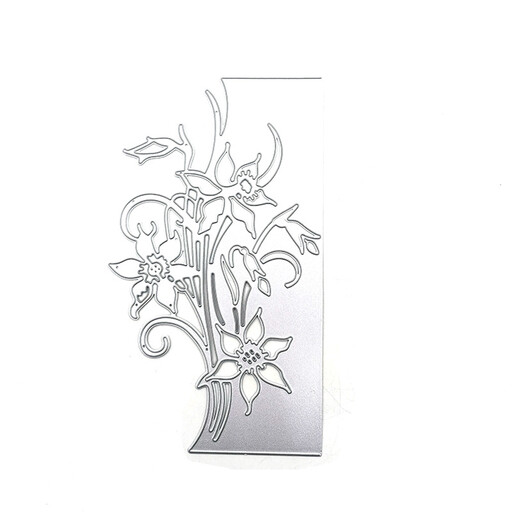
Why this product suits this profile: The rose design is intended for card making, DIY scrapbooking, paper crafts and lace embossing, offering an easy introduction to decorative designs.
The clearly specified rose design helps beginners avoid buying a set containing mostly unsuitable shapes.
Floral design; according to the product description, intended for cards, scrapbooking, paper crafts and embossing.
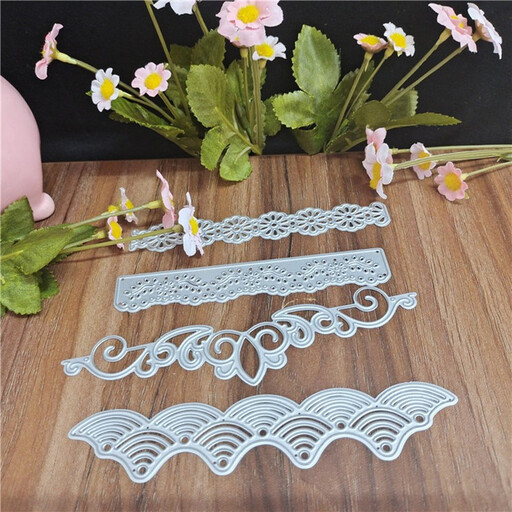
Why this product suits this profile: The explicitly stated carbon steel construction and four-piece contents make it easier to choose a suitable option for repeat paper projects.
The material and number of pieces are stated more clearly than in a general set description; machine compatibility still needs to be checked.
Carbon steel according to the product name; four dies for cutting and embossing.
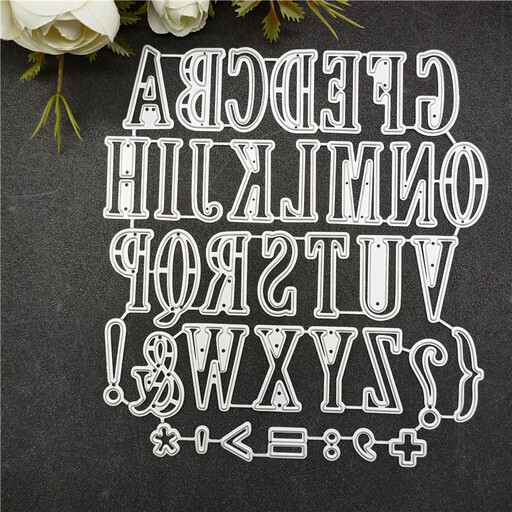
Why this product suits this profile: The alphabet with 26 capital letters is designed for users who regularly create names, titles or short words for albums and cards.
The contents are clearly stated as 26 capital letters, making it easy to check in advance whether the alphabet is suitable for your planned messages.
26 capital letters; according to the product name, intended for scrapbooking, card making, paper crafts and albums.
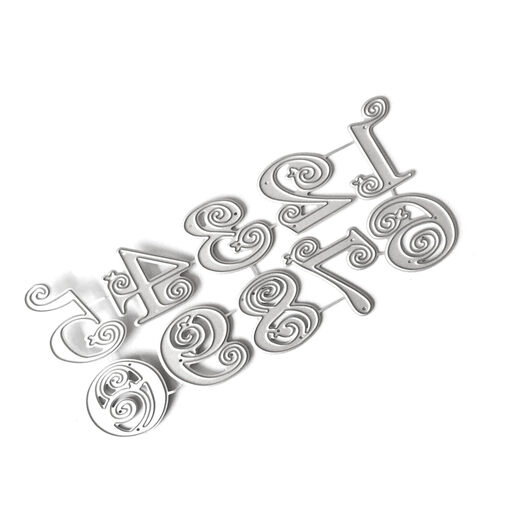
Why this product suits this profile: Number designs are ideal for birthday cards, anniversaries, dates in photo albums and personalised gift packaging.
The design type is clearly described as number dies. This reduces the risk of choosing a general design set for a specific occasion.
Carbon steel according to the product name; specifically offered for cards, scrapbooking, packaging and paper embellishments.
We have put together a complete, regularly updated list of products that fully meet these strict selection criteria and the safety regulations applicable in the EU.
After die-cutting, remove any paper and adhesive residue, particularly from narrow internal areas. A dry box or labelled organiser folder protects metal dies from moisture and prevents small shapes from getting lost. Alphabetical or numerical organisation is useful for frequently used letter and number dies.
When using the dies, it is advisable to make a test cut with the paper you intend to use. This allows you to adjust the pressure, plate combination and design position without damaging your actual card project.
You will generally need a compatible manual or electric die-cutting machine. Before buying, check the permitted die size, plate width and recommended material thicknesses for the machine. The product page should also be checked for any specific requirements when embossing or cutting.
Their service life depends on the material, cutting edge, paper thickness, pressure setting and care. Thin paper and suitable settings can help protect the die. Moisture, adhesive residue and excessively thick card can place more strain on the edges. Without specific information from the manufacturer, it is not possible to give a reliable general lifespan.
That depends on the individual die and die-cutting machine. Card, felt or several layers of paper often require more pressure than thin craft paper. Start with a test piece and follow the instructions from the machine and die manufacturers. With very intricate designs, thinner paper may produce cleaner contours.