
Lieferung heute & morgen

Qualitätsgarantie

Willkommens-Angebote freischalten: KOSTENLOSE Lieferung | Bis zu 80 % RABATT | Kostenlose 30-Tage-JoyPlus-Testphase
App herunterladen
Metal cutting dies for scrapbooking let you create decorative motifs, letters and frames for cards, photo albums and other paper crafts. However, products can vary considerably in motif size, material details, compatibility and what’s included. If you buy based on the product image alone, you could end up with a die that doesn’t fit your die-cutting machine or isn’t suitable for your planned project.
Not every die works with every manual or electric die-cutting machine. Important factors include the size of the die, the required cutting sandwich and the machine’s maximum working width. If these details are missing, check before buying whether the seller gives precise measurements and whether the die is designed for your machine.
Product images are often enlarged. A delicate border or frame may look substantial in the picture but measure only a few centimetres in reality. For card-making dies and photo album dies, the stated measurements are therefore more important than how large the design looks on screen.
A metal die may be designed for cutting, embossing or both. A cutting die alone won’t automatically create a raised effect. Listings should clearly explain terms such as metal embossing dies, embossing dies or ‘Embossing Template’. If the details are unclear, it’s worth checking the product description and what’s included before you buy.
The material details for metal cutting dies should be clear. Product names may include terms such as ‘Metal Cutting Dies’ or, for the 4-piece set, the specific material ‘Carbon Steel’. This doesn’t tell you the exact material thickness or how long the dies will last, but it gives you a useful starting point for comparison.
Also look for:
The right size depends on your project. Small symbols, lettering and frames are handy for greeting cards. For a 12-inch scrapbook layout, larger background designs or several dies that work together may be a better choice.
Frame dies with several nested sizes let you create borders of different widths. Before buying, check whether you can use the dies individually or whether they’re intended to be used as a fixed set. For alphabet dies, the character set, upper- and lower-case letters, and any numbers included are especially important.
Not all paper cuts equally well. Depending on the die, thin patterned paper, photo card and heavier craft card may need different pressure settings. Thin paper can be easier to release from very intricate dies, while card needs to be sturdy enough to hold its shape.
Useful scrapbooking accessories include:
Before starting a larger project, it’s a good idea to test the die with scrap paper. This will help you check that your machine applies enough pressure and that the design releases without damage.
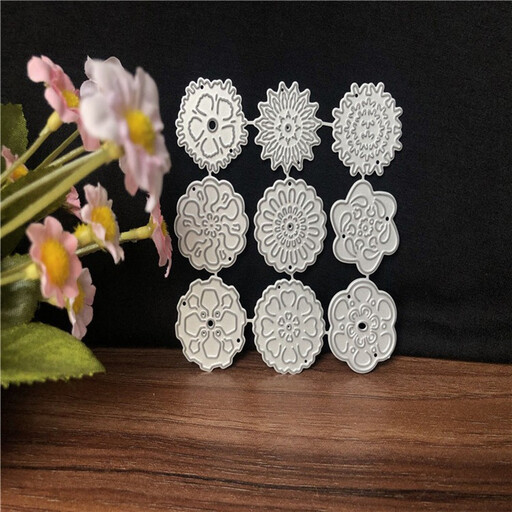
Why this product suits this profile: The product name mentions card making, background embossing and album decoration. This makes the range of designs a useful starting point for a variety of paper craft projects.
The product name explicitly mentions both cutting and embossing. Even so, check the measurements, machine compatibility and what’s actually included before buying.
The product combines background embossing, card design and album decoration.

Why this product suits this profile: The product name specifies a 4-piece set made from Carbon Steel. This makes it easier to assess the product, though you should still check the size and construction.
Carbon Steel is a more specific material description than simply calling the dies metal. Before ordering, check the actual product measurements and details of the embossing function.
The listing includes four dies as a set and specifies Carbon Steel as the material.

Why this product suits this profile: A set of letters and numbers is handy for personalising cards and photo albums, creating birthday projects and making DIY cards.
The specified character set makes it easier to see what’s included. You’ll still need to check the letter size, spacing and compatibility with your die-cutting machine.
The set includes 26 capital letters and 10 numbers for personalised paper crafts.
We’ve put together a complete, regularly updated list of products that meet these strict selection criteria and fully comply with the safety regulations in force in the EU.
For seasonal projects, Christmas and Valentine’s Day dies are a good choice. A wreath design can add a finishing touch to Christmas cards or gift tags, while hearts and lettering work well for Valentine’s Day cards. Floral patterns, frames and decorative lettering are great options for weddings. For birthday cards, candle, number or alphabet dies are handy.
If you often work with different themes, start with versatile frames, geometric shapes and letters. You can then add specific designs as needed, rather than buying several similar sets with limited uses.
You’ll generally need a compatible die-cutting or embossing machine. Suitability depends on the size of the die, the machine’s pressure mechanism and the manufacturer’s specifications. Before buying, compare the die’s measurements with the machine’s maximum working area.
There’s no single answer. Their lifespan depends on the material, cutting details, paper thickness, machine pressure and storage. Keeping dies dry, protecting them from bending and using suitable plates can help prevent unnecessary wear.
Only if the product description specifies both functions and your machine is suitable. A cutting die won’t automatically create a raised effect. If the listing uses terms such as embossing dies or ‘Embossing Template’, check the technical instructions for the process.