
Lieferung heute & morgen

Qualitätsgarantie

Willkommens-Angebote freischalten: KOSTENLOSE Lieferung | Bis zu 80 % RABATT | Kostenlose 30-Tage-JoyPlus-Testphase
App herunterladen
Metal cutting dies for scrapbooking are ideal for photo albums, greeting cards, gift decoration and many other paper projects. Choosing one may seem simple at first: pick a design, place your order and get started. In practice, however, unclear material details, unsuitable dimensions or misleading product descriptions can quickly lead to disappointing purchases.
This guide explains what crafters in the UK should look out for before buying. It is not just about the design, but also compatibility, intended use and the clear, verifiable information provided in the product description.
Terms such as “metal”, “cutting template” or “embossing template” do not always describe the same function. Some products are designed to cut paper, while others can also create an embossed effect. The term “Carbon Steel” is only useful when it is actually stated in the product information.
So check whether the product is described as a cutting die, embossing template or a combination of both. If details about material thickness, edges or compatibility are missing, do not assume any particular features.
A design may look suitable in the product image but turn out to be too large or too small for a particular card or photo album. This is especially common with letter dies, flower dies and leaf dies, where the actual dimensions can vary considerably.
Before buying, check:
If no dimensions are provided, it is best to contact the seller before planning to use the product for a specific project.
“Stamp”, “Die”, “Stencil” and “Template” are sometimes used alongside one another in international product names. A stamp transfers colour or a pattern. A metal cutting die cuts out a design or embosses it when used with a machine that supports this function.
For card-making dies and scrapbooking dies, it is therefore important to check the product images and what is included. If a set also contains clear stamps, these should not automatically be treated as equivalent to the metal dies.
When choosing metal cutting dies, look for an even-looking cutting edge, a stable base and contours that appear as precise as possible. For specific material information, only details explicitly stated by the seller should be treated as reliable. For example, the 4-piece set in this selection specifies carbon steel. Other products only refer to metal.
A smooth, clearly defined contour is particularly important for intricate cutting templates used in craft projects. Small cut-outs can be more difficult to remove from very thin or highly fibrous paper. For delicate designs, the quality of the paper and the correct pressure setting are just as important as the die itself.
Metal cutting dies are usually used with a manual cutting or embossing machine. The key considerations are the machine manufacturer’s specifications regarding maximum material thickness, permitted format and the use of cutting plates or embossing mats.
Before buying, check:
The product name alone is not a substitute for checking compatibility. This is particularly important with older machines or unusual formats, so compare the manufacturer’s specifications carefully.
Choose the design based on your intended project. Letter dies are useful for names, short greetings and headings. Flower and leaf dies are suitable for borders, collages and decorative cards. Tree, cross and seasonal designs are better suited to specific occasions.
Pay close attention to the exact quantity included. An alphabet set with 26 capital letters is not automatically a complete character set with numbers, punctuation marks or lower-case letters. The range also includes an alphabet set whose product name additionally mentions 10 numbers. These versions should not be confused with one another.

Why this product suits this profile: The 4-piece set offers a manageable selection for your first card-making and paper projects. The product name specifies carbon steel as the material.
The quantity is stated clearly, making it easier to compare what is included with your planned project before buying.
Four dies and a stated carbon steel construction. Machine compatibility and dimensions should be checked separately.
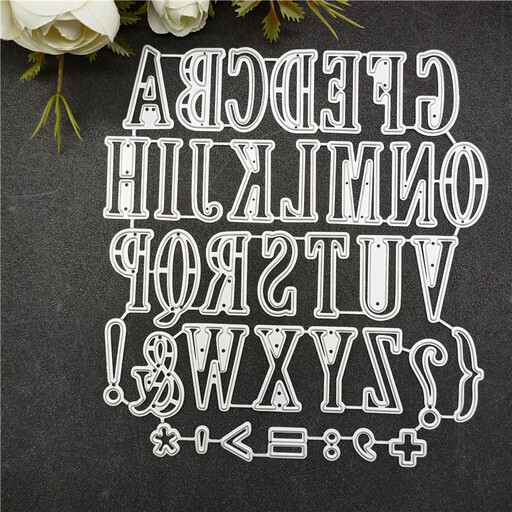
Why this product suits this profile: The set includes 26 capital letters, making it a practical choice for personalised cards, album pages and decorative words.
The number of letters is stated clearly. This helps avoid expecting additional characters that are not listed.
26 capital letters for repeated personalisation projects. Check the dimensions and machine compatibility before ordering.
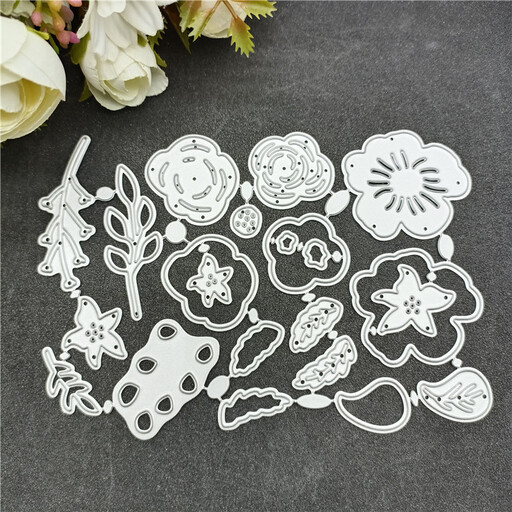
Why this product suits this profile: Flower and leaf designs are ideal for creating recurring floral elements on cards, album pages and paper decorations.
The design theme is clearly stated in the product name, making the choice more straightforward than with templates described only in general terms.
Flower and leaf elements in a thematically coordinated set. Check the detailed product information to confirm whether it can cut, emboss or do both.
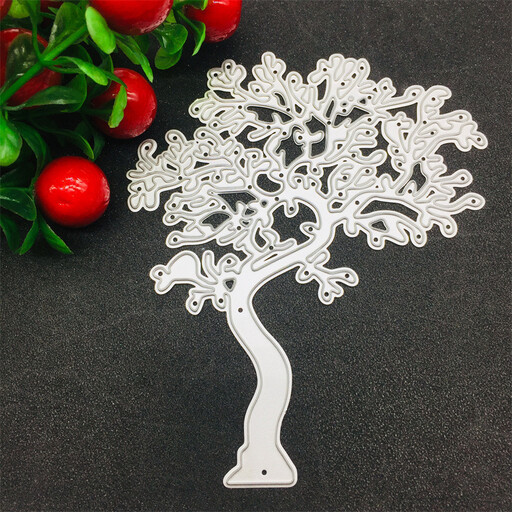
Why this product suits this profile: The tree design is intended for nature-themed paper projects, such as photo albums, seasonal cards or decorative collages.
The design is specifically described as a large tree. This makes it easier to assess whether it suits your theme before buying.
Tree design and carbon steel according to the product name. Check the exact dimensions to ensure they suit your desired card size.
We have put together a complete, regularly updated list of products that fully meet these strict selection criteria and the safety regulations applicable in the EU.
After cutting, remove any paper scraps carefully. Do not use sharp-edged objects, as these could damage the die or its surface. Storing metal parts in a dry place protects them from moisture. Storage boxes, labelled envelopes or flat organiser folders can help you keep letter dies and design shapes separate.
When using the dies, follow the combination of cutting plates and embossing mats recommended by the machine manufacturer. Excessive pressure can put strain on the paper, accessories or machine. Actual service life depends on factors including the material, frequency of use, paper thickness and correct application. A general durability estimate is therefore not possible.
You will generally need a compatible manual cutting or embossing machine. Check the working area, plate configuration and permitted material thickness in advance. Not every die is compatible with every machine.
That depends on the product and machine being used. Terms such as “Embossing” or “embossing template” may indicate this function, but they do not replace checking the specific contents and usage instructions.
It is not possible to give a reliable fixed service life. Longevity is affected by the material, cutting edges, type of paper, pressure setting and storage conditions. Remove paper scraps regularly and avoid overloading the machine.