
Lieferung heute & morgen

Qualitätsgarantie

Willkommens-Angebote freischalten: KOSTENLOSE Lieferung | Bis zu 80 % RABATT | Kostenlose 30-Tage-JoyPlus-Testphase
App herunterladen
Metal dies for scrapbooking allow you to create decorative cut-outs and embossed patterns for greetings cards, journals, photo albums and many other DIY projects. Choosing one may seem simple at first: pick a design, place your order and put it in your die-cutting machine. In practice, however, unclear material information, missing size details or incompatibility with your machine can quickly lead to disappointing purchases.
This buying guide explains what UK crafters should look out for before buying and which types of designs are suited to different applications.
Not every metal cutting die is suitable for the same purpose. Some products are designed primarily for cutting, while others are intended for embossing or combine both functions. The key is whether the product description explicitly mentions cutting, embossing or both processes.
You should also check the material specification. Some listings mention carbon steel, while others simply refer to metal. Carbon steel may indicate a sturdy construction, but it does not automatically provide specific information about thickness, hardness or coating.
Floral dies, frame dies and letter dies can appear larger in product images than they really are. The requirements for an A6 greetings card are different from those for a large scrapbook page.
Before buying, you should therefore check:
If this information is missing, it is difficult to plan how the die can be used.
Many metal dies are used with standard manual die-cutting and embossing machines. However, general compatibility is not guaranteed. Check your machine’s instructions and compare the required sandwich combination, maximum material thickness and permitted format.
With intricate dies for paper, additional precision or embossing-mat accessories may also be required. This is not a fault with the design; it depends on the type of machine and the result you want to achieve.
Look for a clear material specification such as carbon steel, or a precise description of the type of metal used. The following points are also important for practical selection:
A thin, highly intricate die can be more difficult to remove from very delicate paper fibres. With a complex design, you should therefore also consider the type of paper you intend to use.
Classic scrapbooking projects often use coloured paper, card, patterned paper or thin films. Check whether the supplier provides specific material recommendations. If no such information is available, test the die on a scrap piece first.
A clean cut depends not only on the die, but also on:
Embossed patterns require an additional distinction: an embossing template shapes the paper, but does not necessarily cut all the way through it. Cutting and embossing should therefore be clearly differentiated in the product description.
Choose the design according to how you intend to use it:
This helps you avoid buying a die purely because of its appearance when it is unsuitable for your format or preferred type of paper.
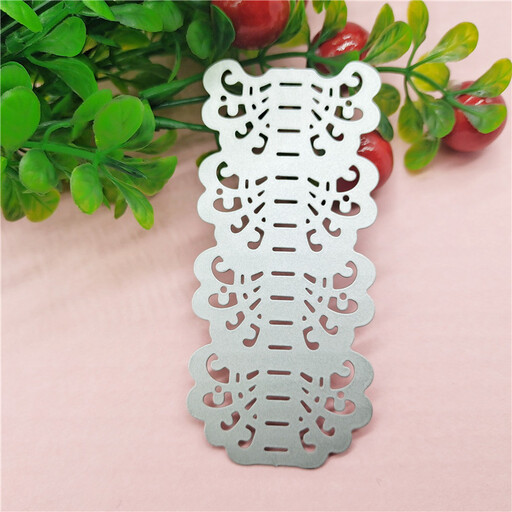
Why this product suits this profile: The lace design is intended for cards, photo album pages and decorative paper edges, making it a straightforward choice for getting started with scrapbooking accessories.
Its intended use for cards and photos makes the design easier to assess, rather than choosing it solely based on an attractive product image.
Lace design; according to the product name, intended for scrapbooking, cards and photo projects.
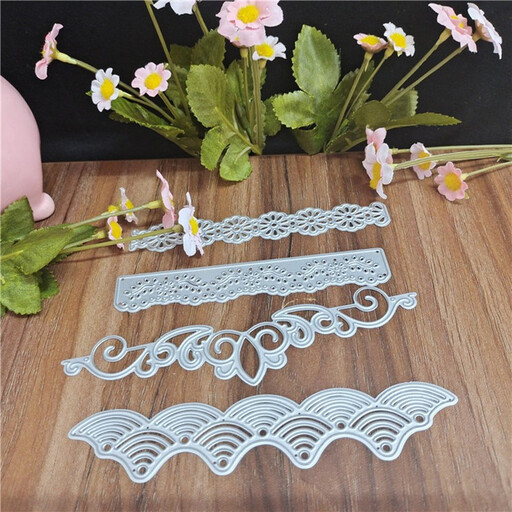
Why this product suits this profile: The set specifies carbon steel and includes four dies. This gives buyers several templates for paper and card projects in one selection.
The material is clearly specified. Machine compatibility and dimensions should nevertheless be checked before ordering.
Four individual pieces; carbon steel according to the product name; intended for paper and card design.
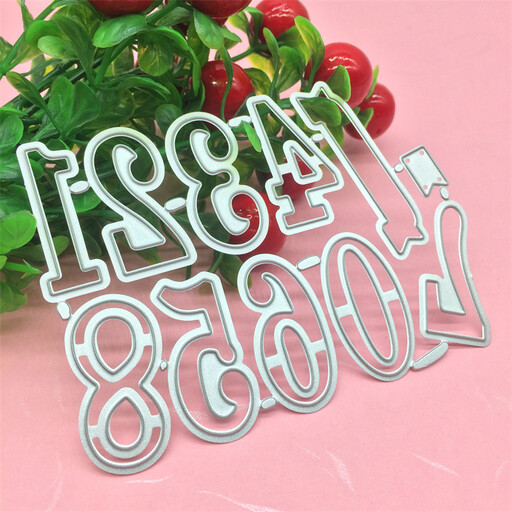
Why this product suits this profile: According to the product name, the set contains 26 capital letters and 10 numbers. It is aimed at users who regularly create names, labels or short texts.
The included characters are clearly specified. This lets you check before buying whether the capital letters and numbers match your projects.
Alphabet with 26 capital letters; plus 10 numbers according to the product description.
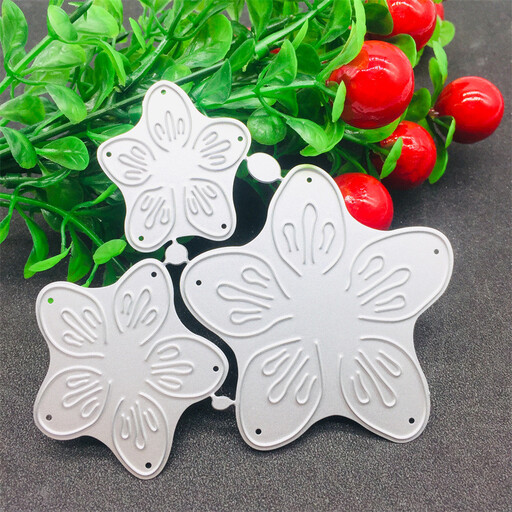
Why this product suits this profile: According to the product name, the floral design is intended for card making, scrapbooking, albums and paper decoration.
The stated range of applications covers several paper projects. Before buying, you should compare the actual design size with your card or album template.
Floral design; according to the product name, suitable for cards, albums and scrapbooking.
We have put together a complete, regularly updated list of products that fully meet these strict selection criteria and the safety regulations applicable in the EU.
To keep metal dies usable for as long as possible, store them in a dry place and remove any paper scraps after use. With very intricate designs, wax paper or a suitable thin release layer can make it easier to remove the paper. Use only the pressure combination specified for your machine and do not increase the pressure indiscriminately.
For consistent results, a quick test cut is recommended. This will show whether the paper is being cut all the way through and whether the embossing is too deep or too light. Damaged dies should not be used further, as sharp edges can damage paper, hands or machine components.
For beginners, clearly recognisable designs with a moderate level of detail are a sensible choice, such as flowers, simple frames or lace borders. Look for a clear product description, suitable dimensions and compatibility with your die-cutting machine.
This depends on the particular construction and the machine’s instructions. A template identified as a cutting die is not automatically a dedicated embossing stencil. Check whether the supplier mentions both applications and what accessories are required.
There is no single fixed lifespan that applies in every case. It depends on factors including the material, intricacy of the design, paper, pressure setting, storage and cleaning. Dry storage, a suitable pressure combination and avoiding excessive force can help maintain the die’s usability.