
Lieferung heute & morgen

Qualitätsgarantie

Willkommens-Angebote freischalten: KOSTENLOSE Lieferung | Bis zu 80 % RABATT | Kostenlose 30-Tage-JoyPlus-Testphase
App herunterladen
Garden tools, bicycles, and seasonal furniture require a secure, dry place to be protected from the elements and unauthorised access. A metal garden shed offers a durable, low-maintenance, and sturdy solution. Unlike wooden models, they are resistant to rot and pest infestations.
This guide will walk you through the key criteria for selecting the right metal tool shed. We'll introduce various models tailored to different needs and garden sizes, providing you with a solid basis for making an informed decision.
Choosing the right model depends on several factors. The following points will help you define your requirements and find the perfect solution.
The material is a crucial factor in determining longevity. Most high-quality models are made of galvanized steel. This zinc coating effectively protects the underlying metal from rust. An additional powder coating not only increases resistance to scratches and UV radiation but also provides an attractive finish.
Ensure the metal garden shed is waterproof. This is achieved through overlapping panels and a well-designed roof, such as a pent or apex roof. Such a design prevents rainwater from collecting and seeping inside. A weatherproof structure is essential for keeping tools and equipment dry.
Consider exactly what you plan to store. For a few hand tools and garden accessories, a small, compact tool shed may be sufficient. However, if you plan to store a lawnmower, bicycles, or bulky garden furniture, a larger metal tool shed with adequate floor space and height is necessary. Carefully measure the available space in your garden and plan for some extra room for easy access. Some models offer integrated shelving systems to help you make the most of vertical space and stay organised.
Ensuring the tool shed is lockable is a key aspect of protecting your property. Check if the doors have a provision for a padlock. Double doors make it easier to access and manoeuvre large items, while a pent roof efficiently manages water runoff and often allows for installation directly against a house wall. Vents are also beneficial as they promote air circulation and reduce condensation inside the shed.
Based on the criteria above, we have compiled a selection of models that stand out for their construction and functionality across various use cases.

Why it stands out: This compact model combines a robust build with a space-saving design, making it a practical solution for smaller gardens or patios.
Pros:
Who it's for: Ideal for garden owners who need a compact and secure storage solution for basic garden tools, pots, or other small items and have limited space.
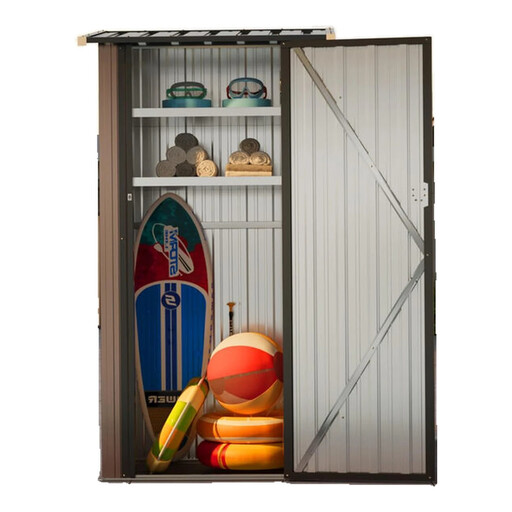
Why it stands out: This model maximises storage on a small footprint thanks to its vertical design and integrated shelves.
Pros:
Who it's for: Perfect for users who value organisation and need a vertical, space-saving solution for balconies, patios, or small garden areas. The shelves make it ideal for separately storing small items.

Why it stands out: With its generous floor space and double doors, this metal shed offers ample room for bulky equipment like lawnmowers, bicycles, or garden furniture sets.
Pros:
Who it's for: For homeowners and garden enthusiasts with significant storage needs who are looking for a sturdy and secure home for large garden equipment, bicycles, bins, or even a small garden workshop.
If the models featured don't quite meet your needs, or if you're looking for alternative organisation systems for indoors and outdoors, take a look at our Over the Door Storage category and other clever storage solutions.
A foundation isn't always mandatory, but a level and stable base is crucial for the shed's stability and longevity. Suitable bases include a concrete slab, paving stones, or a timber frame. This prevents the shed from warping over time, which can cause the doors to jam. Many models come with a floor frame that can be anchored to a prepared surface.
Assembly typically requires two people and can take several hours, depending on the size and model. Most kits include pre-assembled and numbered parts, along with detailed instructions. It's advisable to read the manual carefully before starting and to have the necessary tools ready. Wearing gloves during assembly is recommended to prevent injuries from sharp metal edges.
A major advantage of metal garden sheds is their low maintenance. Unlike wood, they don't need to be regularly painted or stained. An occasional wash with water and a mild detergent is enough to remove dirt. It's also a good idea to check and tighten the screw connections once a year if needed.