
Lieferung heute & morgen

Qualitätsgarantie

Willkommens-Angebote freischalten: KOSTENLOSE Lieferung | Bis zu 80 % RABATT | Kostenlose 30-Tage-JoyPlus-Testphase
App herunterladen
A metal oven dish is suitable for lasagne, gratins, casseroles and vegetable dishes, and some designs can also be used for cakes. Metal usually transfers heat directly to the food, and when used correctly, it is space-saving and relatively lightweight. However, oven dishes can vary considerably in their dimensions, coatings, cleaning requirements and ease of use.
A rectangular oven dish measuring 36 × 24 cm does not necessarily have an internal area of exactly the same size. The width of the rim, handles and depth all affect how much lasagne or casserole it can actually hold. For family meals, the capacity in litres is therefore just as important as the external dimensions.
A baking dish with a non-stick coating can make it easier to remove food and clean the dish. However, metal utensils, abrasive sponges and sudden changes in temperature can damage the coating. You should also check claims that a dish is “dishwasher-safe” carefully. Some product descriptions contain conflicting cleaning instructions. In these cases, hand-washing with a soft sponge is the more cautious option.
An aluminium baking dish is lightweight and conducts heat quickly. A coated metal dish can make it easier to remove food, but needs to be handled with care. Stainless steel is durable and often uncoated, but food may stick to it differently. The key things to check are the material, coating, temperature limit and care instructions provided by the manufacturer.
For individual portions or smaller households, around 2 to 3 litres is often enough. Families and anyone looking for an oven dish for casseroles and gratins will often benefit from a capacity of 4 litres or more. Depth also matters:
Also check whether the dish will fit across or lengthways in your oven. The oven’s internal dimensions, shelf height and any trays you use may limit your options.
These details are particularly useful when choosing a metal dish:
Look for clear information about oven suitability, the maximum temperature and whether the lid can be used in the oven. Metal dishes are generally not suitable for microwaves, unless the manufacturer explicitly states otherwise.
Buying a dishwasher-safe baking dish can reduce the time you spend cleaning up. For coated models, hand-washing is often a good idea if you want to keep the surface in good condition for as long as possible. Allow a hot dish to cool before washing it, and avoid pouring cold water over very hot metal. Soak burnt-on food first rather than scraping it off with hard utensils.
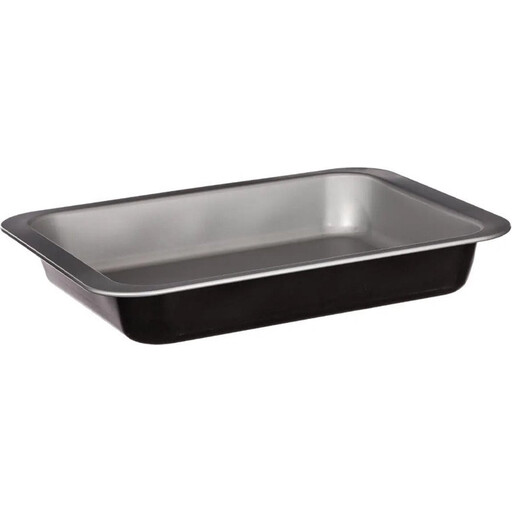
Why it suits this type of user: This metal dish has a stated capacity of 2.4 litres, making it suitable for smaller casseroles, potato dishes or modest household portions. The specifications list dimensions of 32 × 24 × 5 cm.
The stated capacity makes it easier to judge the dish by more than its external dimensions. As the cleaning instructions are inconsistent, hand-washing is recommended.
Metal construction, ILAG coating and a stated weight of 360 g.
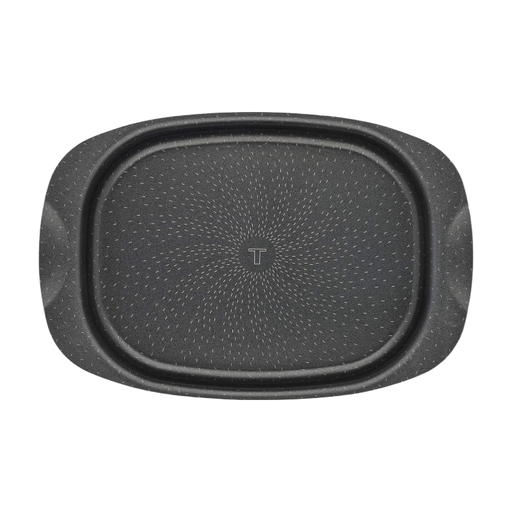
Why it suits this type of user: This rectangular aluminium dish has a stated capacity of 4.75 litres, with room for lasagne, pasta bakes and larger gratins. The included lid can be used for storage or transport.
The capacity, dimensions and what’s included are all clearly stated. Hand-washing is recommended to help the coating last longer.
4.75-litre capacity and a non-stick coating specified by the manufacturer.
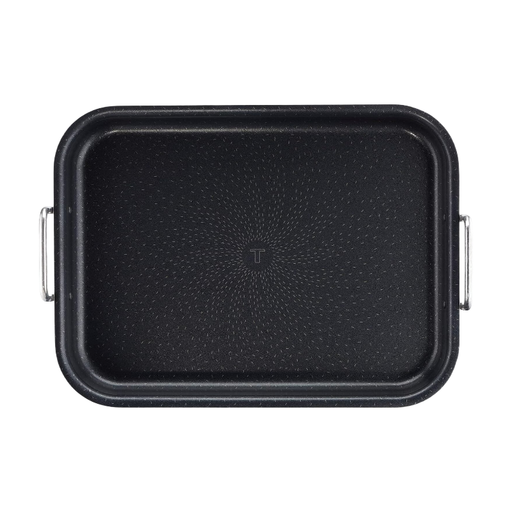
Why it suits this type of user: Measuring 37 × 27 × 4.5 cm, this dish has a capacity of around 4.5 litres, making it suitable for regular family-sized portions. The side handles make it easier to lift out of the oven while wearing oven gloves.
The handles, capacity and care instructions are listed separately. Keep the coating away from metal utensils and abrasive cleaners.
Recycled aluminium, ProBaking non-stick coating and stated suitability for the oven, freezer and dishwasher.
We’ve put together a complete, regularly updated list of products that meet these strict selection criteria and fully comply with the safety regulations applicable in the EU.
Rectangular dishes with a capacity of around 4 to 5 litres are often a good choice for several portions. However, the internal dimensions, depth of the layers and size of your oven are all important. For smaller households, a dish holding around 2 to 3 litres may be enough.
It depends on the material and coating. Uncoated stainless steel is often dishwasher-safe. Hand-washing can help protect the surface of coated metal or aluminium dishes. Always follow the care instructions for the specific product.
A clean, undamaged coating, a light greasing and suitable kitchen utensils can all help food release more easily. For uncoated dishes, baking paper or a thin layer of fat may be useful. Leave hot food to rest briefly before removing it from the dish.