
Lieferung heute & morgen

Qualitätsgarantie

Willkommens-Angebote freischalten: KOSTENLOSE Lieferung | Bis zu 80 % RABATT | Kostenlose 30-Tage-JoyPlus-Testphase
App herunterladen
A well-chosen metal plant stand can transform a balcony, terrace, or living space. It not only creates order but also showcases your plants aesthetically. However, the market is flooded with models of widely varying quality. Many buyers only discover after a few months that their new stand wobbles, rusts, or is unsuitable for their plants.
As your Joybuy Product Recommendation Officer, I'll help you identify the crucial features. This guide will show you how to avoid common purchasing pitfalls and find a durable, functional metal plant stand that meets your needs.
Before you make a decision, you should be aware of the three most common problems that occur with low-quality models. Knowing these will protect you from buyer's remorse.
To avoid the problems mentioned above, focus your selection on three core technical parameters. These are the primary determinants of your plant stand's durability and functionality.
The material is the foundation. However, for a plant stand for indoor and outdoor use, the type of coating is even more important.
A stable plant stand is distinguished by its thoughtful construction. Look for clean welds and precisely fitting screw connections. A crucial, often overlooked value is the load capacity per tier.
A reputable manufacturer will specify this value, usually in kilograms. A realistic figure for a stand of this type is around 5 kg per tier. This is sufficient for most standard flowerpots. Keep in mind that the weight increases after watering. Heavy pots should always be placed on the lower tiers to maintain stability.
Measure your available space carefully before you buy. A stand advertised as "space-saving" is only useful if it utilises the space efficiently. Pay attention not only to width and depth but especially to the height between the individual tiers. A clearance of at least 20–30 cm is recommended so that even medium-sized plants have enough room to grow upwards and receive sufficient light. A tall, narrow design is ideal for small balconies and living room corners.
Here is a selection of plant stands that, based on the criteria above, are suitable for various use cases.
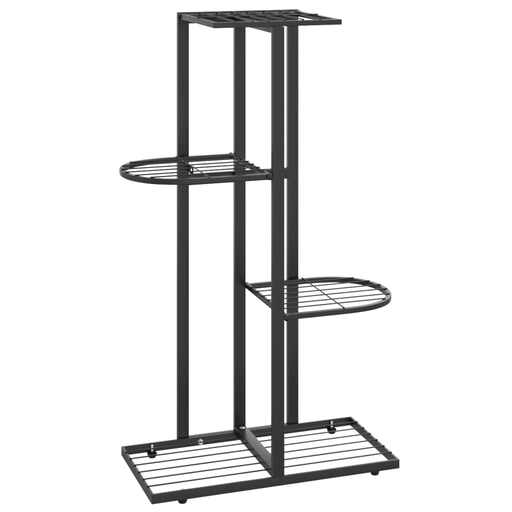
Why it's a match: With a footprint of only approx. 22 x 43 cm, this stand is ideal for niches or small balconies. It makes optimal use of vertical space to accommodate multiple plants without blocking valuable floor area.
The powder-coated steel construction offers reliable protection against the elements, bypassing the problem of rapid rusting. The specified load capacity of approx. 5 kg per tier is a realistic figure for standard potted plants.
Efficient vertical space utilisation on a minimal footprint. The classic design as a **black metal plant stand** blends discreetly into various environments.
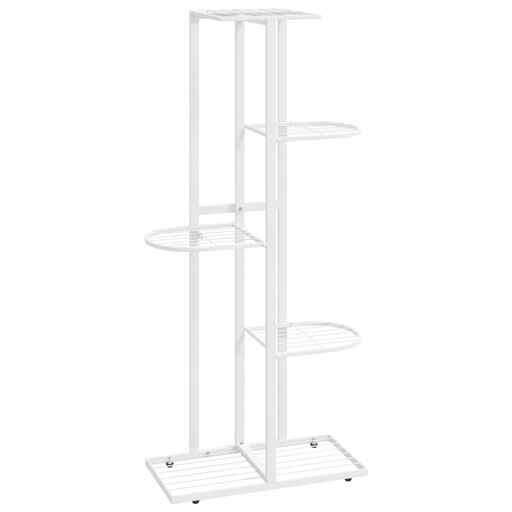
Why it's a match: With five tiers, this plant ladder offers more space for a growing collection of herbs, succulents, or flowering plants, without taking up significantly more floor space than the 4-tier model.
The stair-like design ensures good light distribution across all tiers and prevents plants from shading each other—a common problem with impractical, purely vertical stands.
Maximum number of plants on a minimal footprint. The bright **white plant stand** reflects light and integrates particularly well into modern and bright living concepts.
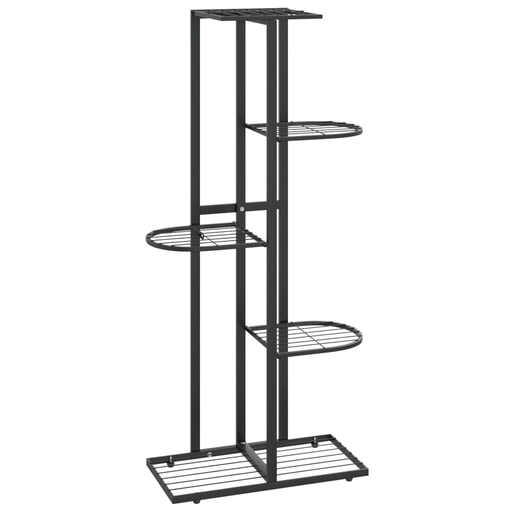
Why it's a match: This model combines the high capacity of five tiers with a robust, powder-coated finish designed specifically for permanent use on a balcony, terrace, or in the garden.
The powder coating provides significantly better and more durable protection against rust than a simple paint job. The sturdy construction ensures it remains stable on the balcony, even in windy conditions.
Focus on durability and weather resistance. The black colour is also resistant to splashes and soil, making it easier to maintain outdoors.
Explore our selection of products that meet our criteria for stability, durability, and functional design.
Clean the stand regularly with a soft, damp cloth to remove dirt and debris. For outdoor models, occasionally check the powder coating for scratches. If any damage occurs, it can be touched up with a suitable paint pen to restore the protective layer and prevent rust.
The load capacity varies by model. It is essential to check the manufacturer's specific details. A common and realistic figure for stands of this type is a load capacity of approx. 5 kg per tier. Remember that the weight of a plant increases significantly with damp soil. To maximise stability, heavy pots should always be placed on the lower tiers.
Yes, but precautions should be taken to avoid scratches. Apply felt pads to the feet of the stand. Many models already come with plastic protective caps, but an extra layer of protection is always a good idea on sensitive wooden floors.