
Lieferung heute & morgen

Qualitätsgarantie

Willkommens-Angebote freischalten: KOSTENLOSE Lieferung | Bis zu 80 % RABATT | Kostenlose 30-Tage-JoyPlus-Testphase
App herunterladen
A growing plant collection enriches any living space, but it also presents a challenge for many plant lovers: where do all the pots go when windowsill and floor space is limited? A metal plant stand is a functional yet stylish solution. It utilizes vertical space, transforming a disorganized cluster of pots into a structured, green display.
This article serves as your guide. We'll explain the key criteria to consider when making your selection and present a curated list of models designed for various needs and spaces.
Before you decide on a model, the following points will help you make an informed choice that suits your needs and your living space.
The intended location is crucial for your choice of material. An indoor plant stand is less exposed to the elements than an outdoor flower stand.
The safety of your plants is a top priority. Pay close attention to the manufacturer's specified maximum load capacity per tier. Heavy ceramic or terracotta pots require a sturdier support structure than lightweight plastic pots. Distribute the weight evenly across the tiered stand and ensure the frame is on a level surface to prevent tipping. A wider base generally provides greater stability.
Measure your available space carefully before choosing a metal shelf for plants. Tall, narrow models that utilize vertical space are especially space-saving. Also, consider the design. A minimalist plant shelf in black blends seamlessly into modern decor styles, while a model in white adds a bright and airy accent.
Here is a selection of models that are well-suited for different applications due to their specific features.
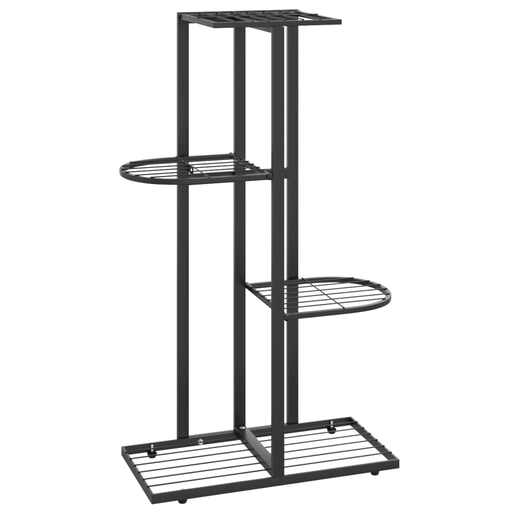
Why It Stands Out: This model is designed for maximum space efficiency. With four tiers on a very small footprint (approx. 22 x 43 cm), it offers a vertical solution for displaying multiple plants in a tight space.
Key Specifications:
Who It's For: Ideal for those with very limited space, such as on a small city balcony, in a narrow hallway, or in an unused corner of the living room. It's a practical solution for collectors of smaller plants like succulents, herbs, or small ferns.

Why It Stands Out: This freestanding flower shelf is distinguished by its wider, more robust construction. The three spacious, grid-like shelves provide ample space and stability even for larger pots.
Key Specifications:
Who It's For: Suitable for users who have more horizontal space and are looking for an impressive showcase for their medium to large plants. It works well on a larger patio, in a conservatory, or as a central decorative element in the living room.

Why It Stands Out: This model offers the same space-saving benefits as the black MINGHOU version but in a bright, white finish. The color can help brighten up dark corners and create a fresh, airy look.
Key Specifications:
Who It's For: Perfect for plant lovers who appreciate vertical functionality but prefer a lighter color palette for their decor. It's excellent for creating a visually light and uncluttered impression in smaller rooms or on shady balconies.
If the models featured here don't quite match what you're looking for, you can find more designs in our comprehensive category of plant accessories. Browse our selection to find the perfect addition for your home, for example in the gold flower section.
1. Are metal plant stands suitable for outdoor use? Yes, as long as the material is treated accordingly. Models made of powder-coated steel are specifically designed to withstand weather conditions like rain and moisture. Always look for notes like "suitable for outdoor use" or "weather-resistant" in the product description.
2. How much weight can a metal plant shelf hold? The load capacity varies greatly depending on the model and construction. It is usually specified by the manufacturer as the "maximum load capacity per tier" in kilograms (kg) or pounds (lb). For example, the featured MINGHOU models have a stated load capacity of approx. 5 kg per tier. It is important to check this specification and not exceed it to ensure stability.
3. How do I clean a metal plant stand? A soft, damp cloth is usually sufficient for cleaning. For more stubborn dirt, a mild detergent can be used. Avoid aggressive or abrasive cleaners and scratchy sponges, as they can damage the powder coating or paint.