
Lieferung heute & morgen

Qualitätsgarantie

Willkommens-Angebote freischalten: KOSTENLOSE Lieferung | Bis zu 80 % RABATT | Kostenlose 30-Tage-JoyPlus-Testphase
App herunterladen
A metal shelving unit can neatly store tools, supplies, shoes or plant pots. However, not every model will prove to be the right solution for everyday use. Poor purchases often happen because buyers only look at the stated total load capacity or a quick assembly time. What really matters are several technical details: dimensions, type of load, material and the option for secure fixing.
A figure such as 600 or 875 kg does not automatically apply to an individual shelf. What matters is the load capacity per level, the total load and the conditions under which these values apply. With many products, this refers to a static load: the weight must be evenly distributed while the unit stands on a level floor.
Heavy boxes should therefore go on the bottom shelves. Point loads, sudden impacts and unevenly distributed items can affect the actual stability.
A clip-together shelving unit with interlocking metal parts can often be assembled without additional tools. This saves time, but it does not replace the need to check all connections. For tall units or heavy loads, anti-tip protection is particularly important. If an anti-tip kit is supplied, it should be fixed to a suitable wall according to the instructions.
Even a wall-mounted wine rack needs a load-bearing wall, appropriate wall plugs and an even distribution of weight. Fixing it to a suitable wall or a sturdy wall-mounted stand is a safety-critical part of using it.
The external measurements don't tell you everything about the available storage space. Also check:
For a cellar shelf or a garage and workshop rack, adjustable shelves are often more practical than fixed levels.
Powder-coated steel or iron offers a durable surface for many indoor areas. A coating can protect the metal surface from everyday wear and tear, but it is not a licence for permanently damp environments. For cellars, garages and sheds, make sure there is adequate ventilation and avoid water pooling.
Galvanised steel is an interesting option for storage solutions where the surface will face heavier use. With a metal storage rack that has MDF shelves, bear in mind that the shelf panels can be more sensitive to moisture than the metal frame.
Look at the combination of:
A heavy-duty shelf with 120 kg per shelf is sufficient for many household and DIY applications. For very heavy tools, paint supplies or machinery, the load should be assessed not just by calculation, but also by the size and centre of gravity of the items.
A classic workshop rack needs different features from a kitchen shelf. For food storage, you need easily accessible levels and simple cleaning. A shoe rack should be narrow enough for a hallway or wardrobe. A plant stand must sit on a level surface and should only be used within the stated load limit.
A space-saving shelf makes use of height, but should not be so tall that frequently used items can only be reached with a step ladder.
The following selection matches specific models to different usage situations and verifiable product data.
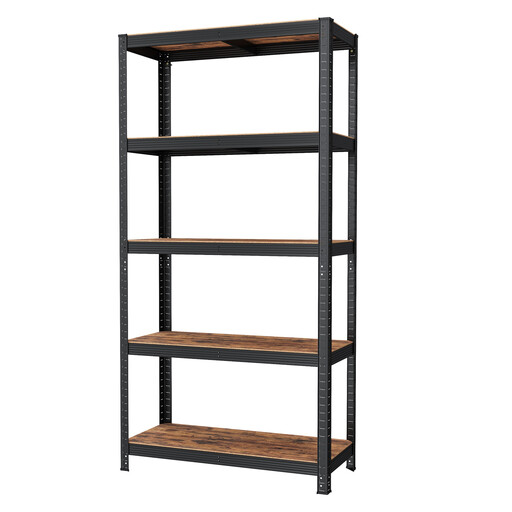
Why this product suits the profile: This model offers five levels at 30 × 75 × 150 cm and is suitable for cellars, storage rooms or smaller workshops. The construction can be split into two units.
The specifications clearly separate 130 kg per shelf from a total load of 650 kg. The supplied anti-tip kit highlights the need for wall fixing.
Adjustable shelves, screwless clip-together system and split construction.
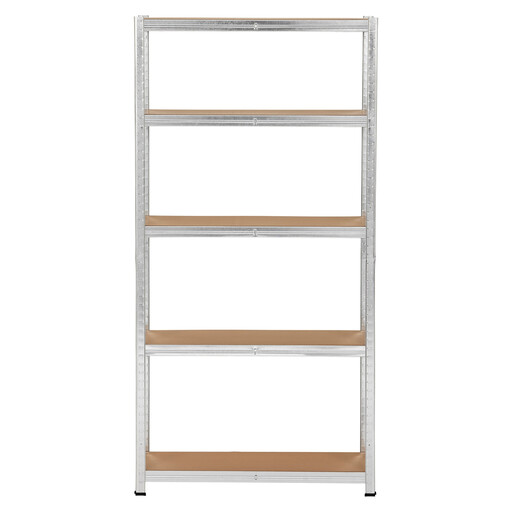
Why this product suits the profile: This galvanised steel shelf measures 180 × 90 × 40 cm and has five MDF shelves. It is of interest to users who compare technical load specifications and a robust metal surface.
The product data states a maximum load of 175 kg per shelf and 875 kg as the total load. This allows both values to be assessed separately.
Galvanised steel, five levels and clearly stated load values.
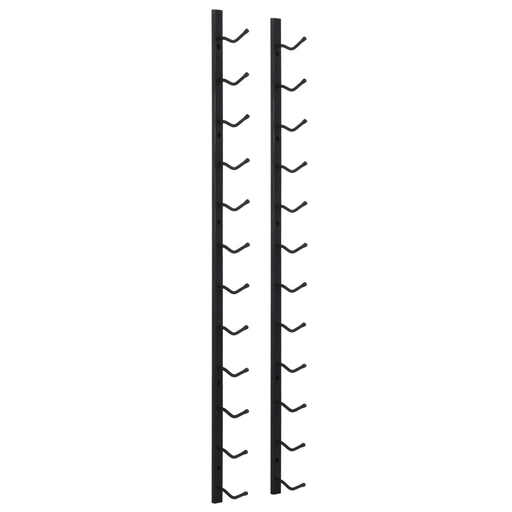
Why this product suits the profile: This slim wine rack made from powder-coated iron holds up to twelve standard wine bottles and makes use of wall space in the kitchen, dining room or bar area.
The maximum capacity is stated as twelve bottles. The rack must be securely fixed to the wall using suitable fixing materials.
Space-saving wall mounting and powder-coated iron; mounting accessories are included.
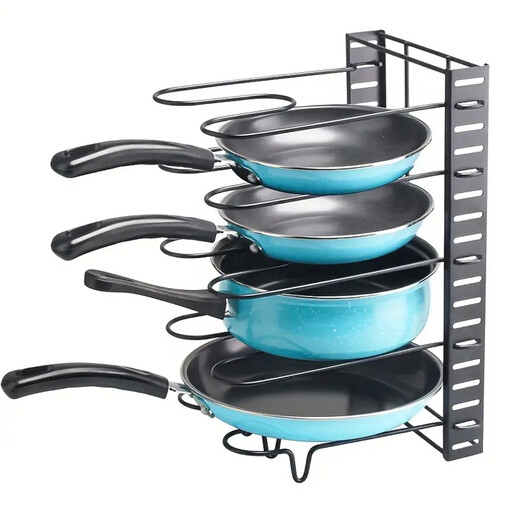
Why this product suits the profile: This iron rack can be configured vertically, on one side or horizontally, and is designed for pots, pans and lids on worktops or under cupboards.
The load limit of up to 9 lb per level is stated. The configuration can be adapted to the available space.
Eight adjustable levels, three setup options and tool-free assembly.
We have put together a complete, regularly updated list of products that fully meet these strict selection criteria and the safety regulations in force in the EU.
The service life depends on the material, surface finish, load and environment. A shelf should not be kept permanently damp and should only be used within the stated static load capacity. It is a good idea to check regularly for loose connections, rust spots and bent components.
Many clip-together shelves and interlocking systems are designed for tool-free assembly. However, you should still follow the instructions fully. Suitable wall plugs and tools may be needed for fixing a tall shelf or wine rack to the wall.
A classic metal shelf incurs no ongoing energy costs after purchase. Costs may only arise from accessories, wall anchors, spare parts or additional shelf panels. When choosing, you should therefore consider not just the purchase price, but also what is included in the delivery and the assembly requirements.