
Lieferung heute & morgen

Qualitätsgarantie

Willkommens-Angebote freischalten: KOSTENLOSE Lieferung | Bis zu 80 % RABATT | Kostenlose 30-Tage-JoyPlus-Testphase
App herunterladen
Fine frames, floral motifs and individual letters can be transferred precisely onto paper, card and similar craft materials using metal cutting dies for scrapbooking. However, an attractive product image does not automatically mean you have found the right option. Details such as machine compatibility, motif size and material thickness often determine whether a die can be used reliably in everyday crafting.
This buying guide is aimed at craft enthusiasts, card makers and scrapbooking fans in Germany who are looking for cutting dies for card making, photo albums, invitations or decorative paper projects.
Metal dies generally do not work on their own. They require a suitable die-cutting or embossing machine, along with the appropriate plates and, where necessary, an additional embossing mat. Product images often show only the motif, not the setup required.
Before buying, check the following:
A die can be technically well made and still not be compatible with your existing machine system.
A delicate motif can often appear larger in a product graphic than it really is. However, precise dimensions are essential for cards, album pages and packaging. A very large background motif may not fit on a standard card, while small letters can be difficult to read in a layout.
Pay attention to the stated dimensions of each shape and compare them with:
Not every embossing stencil is designed for the same task. Cutting dies create an outline by cutting through the material. Embossing dies, on the other hand, create a raised or recessed pattern without fully separating the paper. Some products are intended for both applications, while others are designed for just one.
The product description should therefore clearly state whether the item is a cutting die, an embossing stencil or a combined template.
Metal cutting dies may be described as being made from steel or carbon steel, among other materials. The material alone does not indicate how a particular motif will perform in every machine. The geometry of the cutting edge, the level of detail and how well it is matched to the paper are also important.
For regular DIY paper crafting, choose a die whose motif does not contain an unnecessary number of extremely fine connecting sections if you mainly plan to work with thick card. With delicate floral dies, thinner paper may be easier to remove from the die.
Your choice should suit the project. Common categories include:
Multi-piece sets in different sizes are ideal if you are planning several frame layers or nested outlines. Single motifs, on the other hand, are more straightforward when you only need one particular design element.
Not every material can be cut equally well with every die. Thin scrapbooking paper, photo card, coloured paper and heavier craft card differ in density and fibre structure. Always make a test cut before producing cards in larger quantities.
The following steps can also help you achieve clean results:
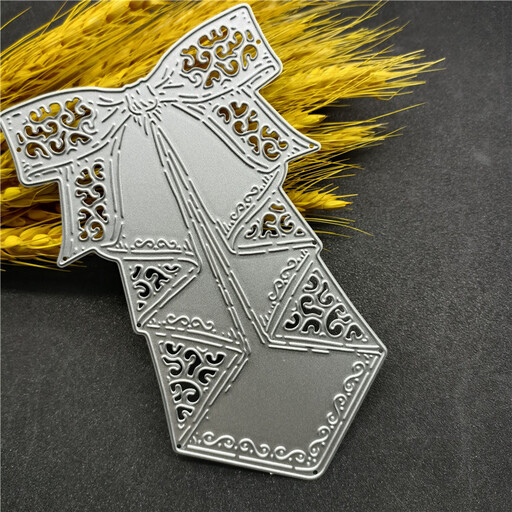
Why this product suits the profile: This motif is designed for general background decoration in scrapbooking and paper crafts. It allows beginners to find out which formats and materials work with their machine.
The product type is clearly described as a metal cutting die and stencil. You should still check the dimensions and machine compatibility before buying.
Metal construction; designed as a background motif for cards, albums and decorative paper crafts.
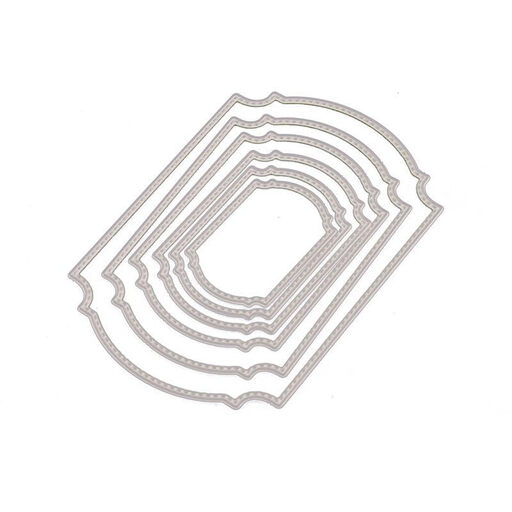
Why this product suits the profile: The set contains six rectangular frame dies in different, coordinated sizes that nest inside one another. They are suitable for card designs, photo mats and multi-layered album pages.
The different sizes reduce your reliance on a single frame dimension. Compare the exact measurements with your card format before placing an order.
Six-piece set; stitched or marked frame outline according to the product description.
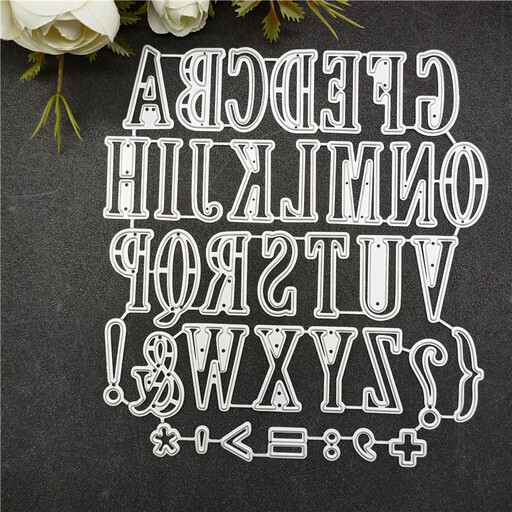
Why this product suits the profile: A complete set of 26 capital letters is designed for names, greetings, birthday cards, photo albums and personalised DIY projects.
The letters are clearly identified, making their intended use easy to understand before purchase. You will still need to check the font size and machine compatibility.
26 capital letters; specified for scrapbooking, card making and decorative paper crafts.
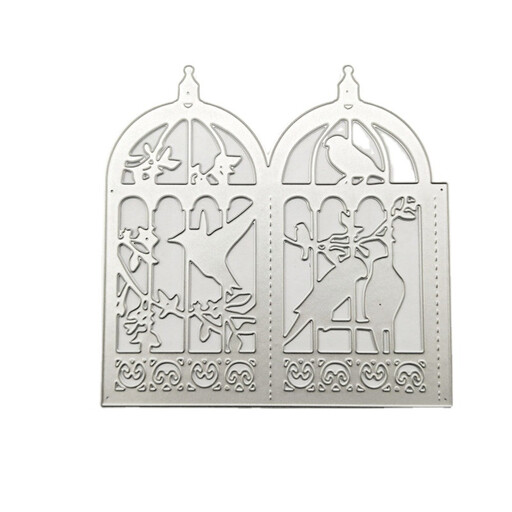
Why this product suits the profile: The product description indicates wedding motifs for scrapbook albums, paper cards and embossing applications.
The intended theme is clear in advance. For a larger card-making project, carry out a test cut and check the motif size beforehand.
Designed for wedding cards; intended for cutting and decorative embossing according to the product description.
After die-cutting, remove paper scraps with a soft brush or a suitable tool. Do not handle the cutting edge with hard objects. Storing the dies in a dry, protected place helps prevent dirt and possible corrosion. Actual service life depends on the material, pressure, frequency of use and storage conditions, so a blanket time estimate would not be meaningful.
If you are planning different projects, you can combine individual scrapbooking dies by theme: frames for the basic structure, floral motifs for accents, and letter and number dies for personal details. For more graphic shapes and stencils, you may also wish to explore the graphic curve stencil category.
We have put together a complete, regularly updated list of products that fully meet these strict selection criteria and the safety regulations applicable in the EU.
You will usually need a manual or electric die-cutting and embossing machine. The key factors are the plates, adapters and material thicknesses approved by the machine manufacturer. Before ordering, compare the product information with your existing system.
It is not possible to give a fixed service life. It is influenced by factors including cutting pressure, paper thickness, the intricacy of the motif, cleaning and storage. If cutting quality starts to deteriorate, first check the plate setup, paper and alignment.
That depends on the specific design. Some dies are explicitly described as cutting and embossing stencils. Others are intended solely for cutting. To create a clearly visible embossed pattern, you need a compatible machine and the correct plate setup.