
Lieferung heute & morgen

Qualitätsgarantie

Willkommens-Angebote freischalten: KOSTENLOSE Lieferung | Bis zu 80 % RABATT | Kostenlose 30-Tage-JoyPlus-Testphase
App herunterladen
As a Joybuy Product Recommendation Officer, I often see the disappointment creatives feel when their projects don't turn out as hoped. A common reason: the wrong tools. Especially with metallic calligraphy pens, marketing often promises more than the product delivers. A shimmering script on a dark invitation card or a glittering detail in a scrapbook—the vision is clear, but the result is often a pale, uneven stroke. Before you invest in new pens, you should know the typical pitfalls that lead to frustration and unnecessary expense.
The most common problems are:
Understanding the basic product features helps to avoid these problems and make an informed purchasing decision.
To avoid disappointment, you should check three core technical parameters. These determine whether a pen is suitable for your project or not.
The tip of the pen defines the type of lines you can draw. The choice depends directly on your project.
The impressive metallic effect is only achieved through high opacity. Pay attention to the ink type.
Not every metallic pen adheres equally well to every surface.
Based on these objective criteria, we have identified some products that are suitable for specific user profiles and their requirements.
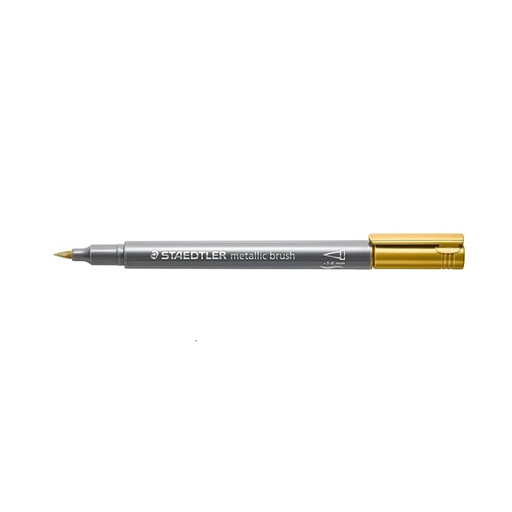
Why This Fits Their Persona: Ideal for creative users who want to create dynamic and expressive lettering in a handlettering style. The flexible tip mimics the feel of a brush, offering maximum creative freedom.
According to the manufacturer, no shaking or pumping is required, which ensures a consistent ink flow without blotches. The ink is formulated for high opacity on both light and dark paper.
The flexible brush tip allows for variable stroke widths from approx. 0.1 mm to 0.6 mm. Additionally, the ink is wipeable with a damp cloth on smooth surfaces like glass.
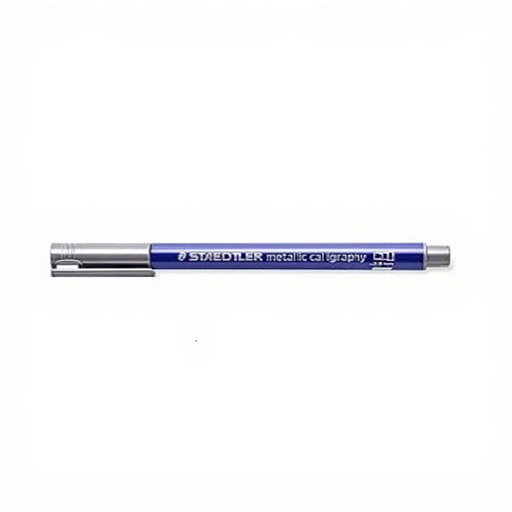
Why This Fits Their Persona: Perfect for users creating traditional calligraphy scripts for greeting cards, place cards, or scrapbooking. The special calligraphy tip ensures the typical, elegant character of the script.
This pen is ready to use immediately, bypassing the problem of pumping. The ink is designed for opaque writing on light and dark paper, delivering a clear, silver shimmer.
The chisel tip with a stroke width of approx. 2.8 mm allows for the disciplined and uniform lines required for classic fonts.
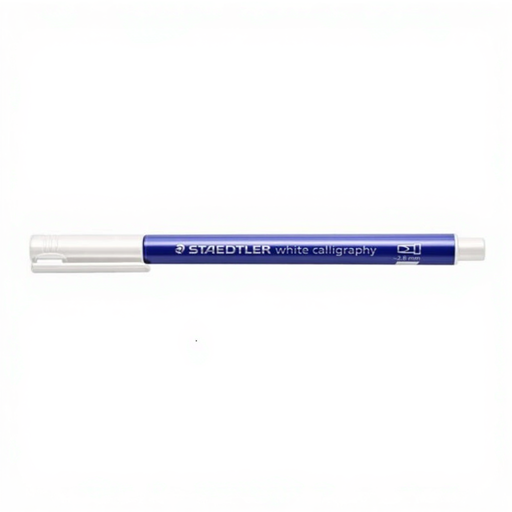
Why This Fits Their Persona: For DIY projects where a strong contrast on very dark surfaces like black cardstock or kraft paper is crucial. An opaque white pen is an indispensable tool in any creative's collection.
It solves the core problem of poor opacity. While many white pens appear greyish or transparent, the pigmented ink of this marker is, according to the manufacturer, specially formulated for a bright, clear white on dark backgrounds.
The high opacity of the ink ensures excellent visibility. The calligraphy tip (approx. 2.8 mm) also offers good control for lettering and decoration.
We have compiled a complete, real-time list of products that fully satisfy these strict selection criteria and UK safety regulations.
Most manufacturers, including STAEDTLER, recommend storing metallic markers horizontally. This prevents the heavy metallic pigments in the ink from settling at one end, which can lead to an uneven ink flow. It also protects the tip from drying out.
That depends on the model. Many older or simpler models require vigorous shaking to distribute the pigments and pumping the tip to start the ink flow. The STAEDTLER Metallic Markers featured here are designed to be ready for immediate use, according to the manufacturer, which simplifies handling and prevents smudging.
Usually not. Most water-based metallic pens optimized for paper and cardboard do not adhere permanently to smooth, non-porous surfaces like glass or mirrors. This makes them a good erasable marker for glass, as they can be used for temporary window decorations or labels and then removed with a damp cloth. For permanent marking on glass, special paint or permanent markers are required.