
Lieferung heute & morgen

Qualitätsgarantie

Willkommens-Angebote freischalten: KOSTENLOSE Lieferung | Bis zu 80 % RABATT | Kostenlose 30-Tage-JoyPlus-Testphase
App herunterladen
A Metallic Marker Gold should do more than simply look gold. For scrapbooking, bullet journalling, hand lettering, calligraphy or festive greeting cards, good opacity, an even ink flow and a nib suited to your chosen lettering style are what really matter. However, these details are not always clearly described, particularly with budget-friendly offers.
A strong metallic shimmer does not automatically mean that the ink will remain visible on black or dark-blue paper. Some gold markers look appealing on white paper but appear thin or uneven on dark card. If you are looking for a metallic marker for dark paper, look for descriptions such as ‘opaque’, ‘covering’ or ‘suitable for light and dark paper types’.
Many metallic pens need to be shaken and activated by pumping before first use. This process can be useful, but it takes time and carries the risk of too much ink being released. A water-based metallic pen with an immediate ink flow is more practical for spontaneous card making or quick notes. The product description should clearly state whether shaking and pumping are required.
A round nib is suitable for consistent lines and small details. For hand lettering and calligraphy, however, a flat calligraphy nib is often a better choice, as the line width can be varied through the angle and pressure applied. If you focus only on the colour description ‘Gold’, you may therefore buy a marker that is unsuitable for your intended writing style.
For greeting cards, invitations and scrapbooking, an opaque metallic ink is essential. The gold tone should be clearly visible on light paper, while it must not disappear into the fibres of black card. A steady, slow stroke is particularly recommended on textured card. Before starting an important project, test the marker on a leftover piece of the same material.
A gold pen for paper with a round plastic or synthetic nib usually produces a consistent line width of around 1 to 2 mm. This is practical for outlines, lettering and small decorative details. Depending on the model, a calligraphy nib can create lines of approximately 1 to 6 mm. This allows you to create fine upstrokes and broader downstrokes. The exact width depends on the angle, pressure and paper.
Water-based metallic colours are widely used for paper and card. On absorbent materials, they can adhere permanently, while on smooth surfaces such as glass or mirrors, they may be removable with a damp cloth, depending on the formulation. This is useful for seasonal window decorations. Information about water resistance, lightfastness and surfaces should not automatically be applied to every material.
Also pay attention to the care instructions: many metallic pigments need to remain evenly distributed throughout the ink. Horizontal storage can help with this. After use, the cap must click fully into place to prevent the nib from drying out. When children are using the product, follow the manufacturer’s relevant age and safety instructions.
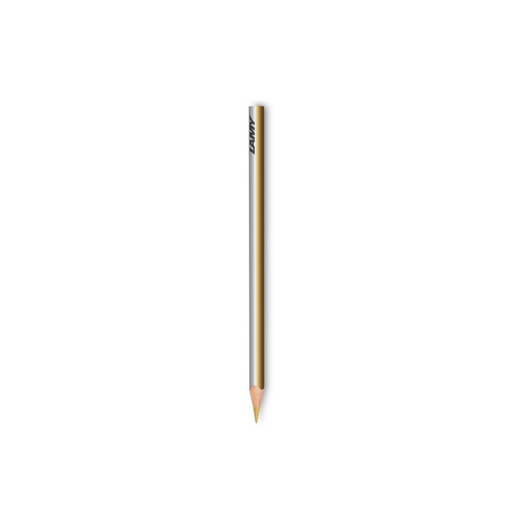
Why this product suits the profile: This single gold marker is suitable for users looking for a compact writing tool for paper, card and selected craft surfaces.
The product details mention an even ink flow and quick drying. However, the marker must be shaken and activated on scrap paper before use.
Gold-coloured metallic ink, a round metallic nib and suitability for paper, card and wood according to the product description.
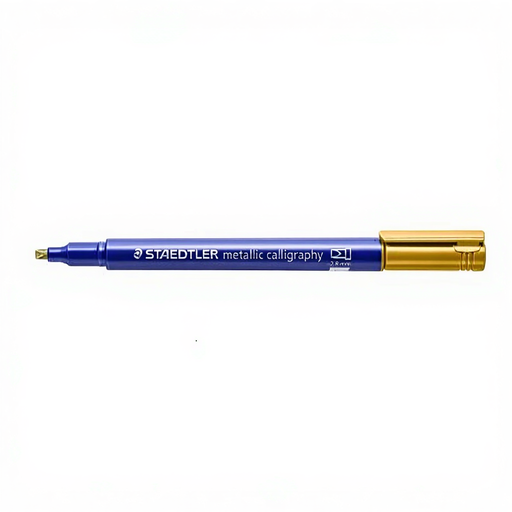
Why this product suits the profile: The calligraphy nib is designed for hand lettering, decorative headings and festive lettering on light or dark paper.
According to the product description, the marker is ready to use without shaking or pumping. Its suitability for light and dark paper, as well as card, is explicitly stated.
Water-based metallic ink, a calligraphy nib and a stated variable line width of approximately 1 to 6 mm, depending on the angle and pressure.
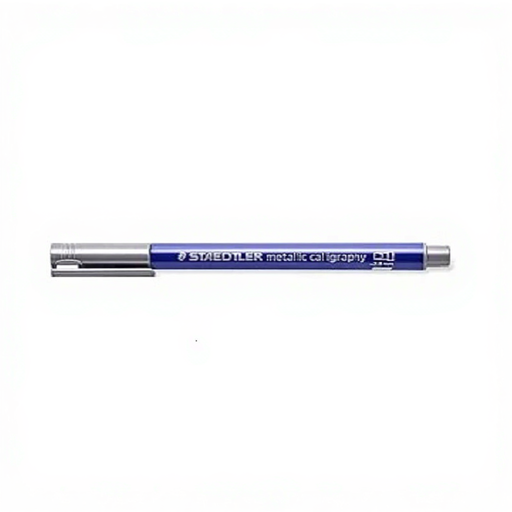
Why this product suits the profile: This model is an alternative for users who want to add contrasting metallic accents to dark paper or cards alongside gold.
The product description specifies opaque ink for light and dark paper, as well as no need for shaking or pumping.
Calligraphy nib with a stated line size of approximately 2.8 mm, suitable for scrapbooking and greeting cards.
For an even result, keep the paper as flat as possible. With a Calligraphy Marker Gold, guide the broad side of the nib in a controlled manner; there is no need to apply heavy pressure. On absorbent paper, a single, smooth movement can keep the outline cleaner than repeatedly going over it.
Before lettering invitations or photographs, test the marker on a similar type of paper. Drying times depend on the amount of ink, the paper surface and the room climate. Smooth surfaces such as glass can often be cleaned with a damp, soft cloth when suitable ink is used. On wood, textiles or other porous materials, the colour may remain permanently. Always test it first in an inconspicuous area.
If you craft regularly, store the marker horizontally and replace the cap immediately after use. Heat, direct sunlight and temperatures above those specified by the manufacturer can affect the ink flow and metallic effect.
We have put together a complete, regularly updated list of products that fully meet these strict selection criteria and the safety regulations applicable in the EU.
It depends on the model. According to the product description, the STAEDTLER Metallic Calligraphy Marker Gold does not need to be shaken or pumped. The LAMY plus 250 Gold, on the other hand, should be shaken and activated on scrap paper before use. Check the manufacturer’s instructions before using it for the first time.
There is no fixed lifespan that applies in every case. It depends on the line width, writing pressure, paper texture and frequency of use. Keeping the cap firmly closed, storing the marker horizontally and avoiding heat can help keep it in working order.
Some water-based metallic markers can adhere to smooth surfaces such as glass or mirrors and can be removed with a damp cloth. This does not automatically apply to every model or surface. If the colour may be permanent or difficult to remove, test it first on a small, inconspicuous area.