
Lieferung heute & morgen

Qualitätsgarantie

Willkommens-Angebote freischalten: KOSTENLOSE Lieferung | Bis zu 80 % RABATT | Kostenlose 30-Tage-JoyPlus-Testphase
App herunterladen
Finding a reliable metallic marker can be a challenge. Many creatives and DIY enthusiasts know the struggle: the ink doesn't provide good coverage on dark surfaces, the shimmer is disappointing, or the nib isn't right for the project you have in mind. Whether you're doing intricate hand lettering, elegant calligraphy on invitation cards, or creating festive decorations, the quality of the pen determines the success of your artwork.
This article serves as your practical guide. Instead of overwhelming you with marketing promises, we focus on objective criteria and present a selection of pens suited for specific applications. My name is Joy, and as your Joybuy Product Recommendation Officer, I'm here to help you make an informed decision.
Before you choose a product, there are a few key features to consider. These three points will help you identify the right pen for your project.
The marker's nib is the main factor determining the type of lines you can create.
The most important quality of a metallic marker is its opacity, especially on non-white surfaces. High-quality pens for black paper contain a high concentration of metallic pigments in the ink, ensuring a vibrant, opaque finish.
Also, pay attention to the pen's adhesion properties. Many water-based metallic inks are permanent on porous surfaces like paper, cardboard, and wood. However, on smooth, non-porous surfaces like glass, mirrors, or porcelain, they can often be removed with a damp cloth. These erasable glass markers are perfect for seasonal decorations.
Some metallic markers require vigorous shaking and repeated pumping of the nib to activate the ink flow before first use. More modern models, like the STAEDTLER Metallic Markers, are often ready to use right out of the box. This not only saves time but also prevents accidental ink spills from over-pumping. For an uninterrupted creative process, a pen that requires no activation is a convenient choice.
Based on the criteria above, we've put together a selection of pens for various creative projects.
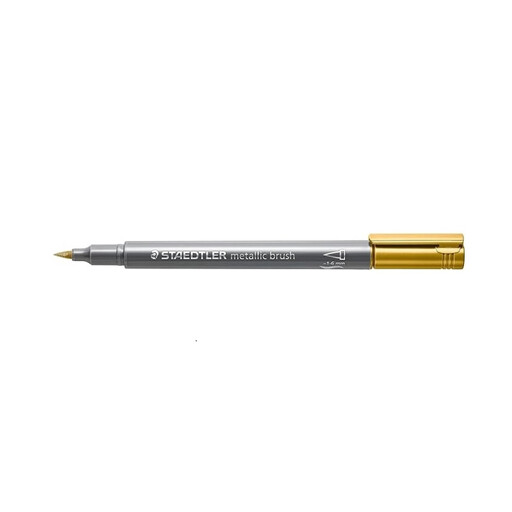
Why It Stands Out: This gold marker is distinguished by its highly flexible polyester fibre brush tip. It combines the expressive freedom of a brush with the ease of use of a pen, allowing for line widths from approximately 0.1 mm to 0.6 mm.
Pros:
Who Is This Product For? This set is a great choice for hand lettering artists, scrapbooking fans, and anyone looking for pens for greeting cards to create variable, sweeping lines.

Why It Stands Out: This marker was developed specifically for calligraphy. Its special calligraphy nib allows for different line widths (approx. 1 mm to 6 mm) depending on the angle it's held, making it perfect for elegant, classic script.
Pros:
Who Is This Product For? Ideal for users dedicated to calligraphy or those who want to adorn invitations, certificates, and place cards with a classic, sophisticated script.

Why It Stands Out: This silver marker is a reliable tool for everyday creative tasks. Its durable round tip, with a line width of 1-2 mm, delivers a consistent line and is suitable for a wide variety of applications.
Pros:
Who Is This Product For? This marker is a practical choice for anyone who needs a straightforward decorative pen for craft projects, labeling, or embellishing gifts and cards.
The selection presented here covers common applications. However, if you are looking for other colors, different nib types, or pens for special materials, it's worth taking a look at our broader assortment.
Discover a wider variety in our Signature Marker Pen category.
Adhesion depends on the ink and the surface. On porous materials like paper, cardboard, unvarnished wood, and clay, most metallic markers are permanent. On smooth, non-porous surfaces like glass, metal, plastic, or coated porcelain, many water-based inks are not permanent and can be wiped off. It is recommended to test the pen in an inconspicuous area before final application.
To ensure ink quality and the longevity of the nib, metallic markers should ideally be stored horizontally. When stored vertically, the heavy metallic pigments can settle at the bottom, or the tip can dry out. Also, make sure the cap is sealed tightly after each use.
Many metallic markers, especially water-based ones, are non-toxic. However, they are generally intended for decorative and artistic purposes, not as toys. The caps can pose a choking hazard for small children. Always follow the manufacturer's safety instructions on the packaging and supervise young children during use.