
Lieferung heute & morgen

Qualitätsgarantie

Willkommens-Angebote freischalten: KOSTENLOSE Lieferung | Bis zu 80 % RABATT | Kostenlose 30-Tage-JoyPlus-Testphase
App herunterladen
A metallic marker can add decorative accents to black card, greetings cards or wood. However, when choosing one, it is not just the shiny colour shown on the packaging that matters. Depending on the ink, nib and surface, the result can vary considerably. This guide explains what creative adults, crafters, teachers and scrapbooking enthusiasts should look for before buying metallic pens or acrylic markers.
Many colours look sufficiently vivid on light paper. On black or dark blue card, however, you can see whether the pigmentation is genuinely suitable for dark surfaces. A transparent glitter effect can quickly look faint. For pens for dark paper, specifications such as “opaque”, “high opacity” or “pigmented” are therefore more relevant than simply the colour name.
A marker designed for paper does not necessarily adhere permanently to glass, wood or ceramic. Water-based metallic ink may be wipeable on smooth surfaces, while it may soak in more deeply on absorbent wood. If you are looking for markers for glass, wood and ceramic, check the materials listed by the manufacturer and test the adhesion on an inconspicuous area first.
A round nib measuring around 1 to 2 mm is suitable for outlines, lettering and smaller motifs. For elegant lettering, a calligraphy nib with a variable line width may be a better choice. For covering larger areas or applying base coats, an acrylic marker with a medium round nib is more practical. You should also follow the instructions for closing and storing the marker, as dried-out nibs are often caused by caps that have not been closed completely.
Acrylic markers usually contain water-based, pigmented colour. According to the product specifications, these waterproof acrylic pens may be intended for a range of materials, including paper, wood, glass, ceramic, plastic or stone. “Waterproof” should not be taken to mean guaranteed dishwasher or outdoor resistance. Temperature, friction and cleaning products can affect durability.
For cards and scrapbooking, metallic pens with quick-drying ink are often sufficient. For permanently decorated items, you should consider whether an additional sealant is needed, depending on the material and the specific project.
Gold markers and silver markers are often used on dark paper because their colour pigments create contrast. A white metallic marker can be suitable for highlights, borders or lettering on black card. Colours such as violet, blue, green or antique pink are better suited to adding colourful accents.
Look out for the following specifications:
A round synthetic nib measuring approximately 1 to 2 mm is versatile for writing, outlining and craft projects. A calligraphy nib creates different lines depending on the angle and pressure applied, making it suitable for decorative lettering. Dual-tip markers combine a fine nib for details with a round nib for broader lines.
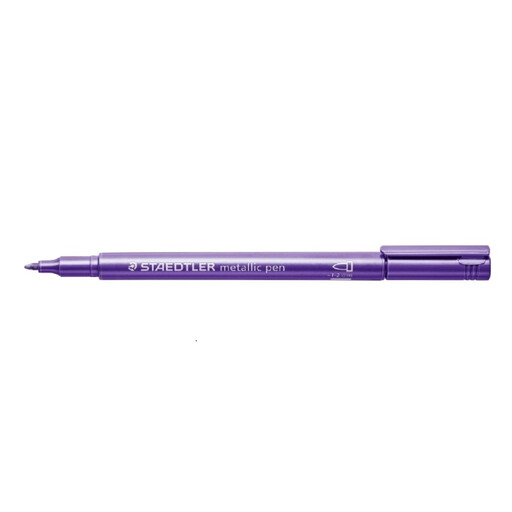
Why this product suits this profile: This individual pen is ideal for anyone who wants to start with a single metallic colour for cards, lettering or small craft projects.
The specified round nib, measuring approximately 1 to 2 mm, makes the pen’s application easy to assess, rather than leaving you to choose an unsuitable specialist nib for simple line work.
Metallic violet, a round synthetic nib and quick-drying, smudge-resistant ink according to the product description.
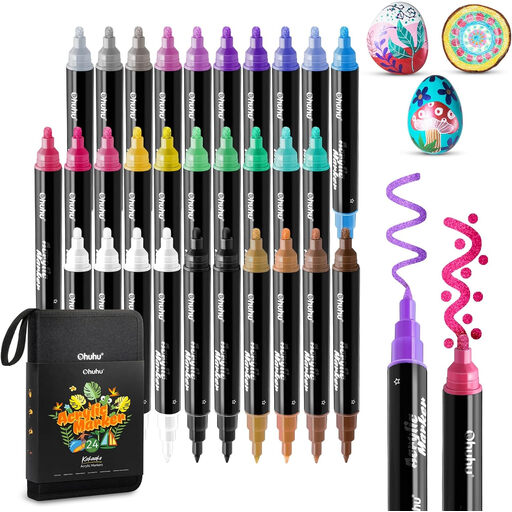
Why this product suits this profile: This set is designed for users who want to combine several surfaces and shades in a more extensive DIY or art project.
The specifications list 30 pens, two nib types and replacement nibs. This allows you to assess the available line widths and colours clearly before buying.
24 metallic colours plus white and black, fine and medium round nibs, and waterproof and lightfast properties according to the product specifications.
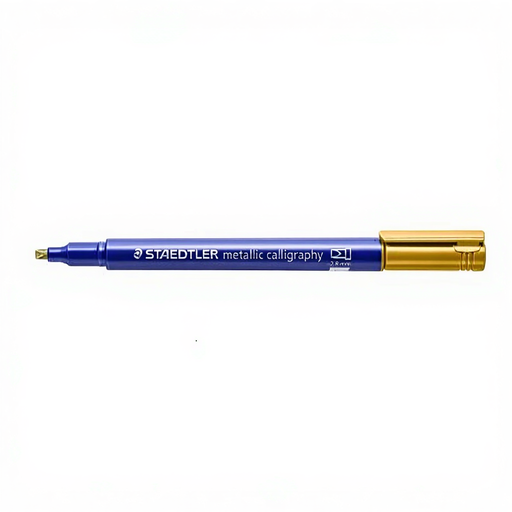
Why this product suits this profile: The calligraphy nib is designed for decorative lettering, invitations, greetings cards and scrapbooking projects.
The nib is specifically designed to create variable line widths. According to the product description, there is also no need to shake or pump the pen before use.
Gold-coloured metallic ink, a calligraphy nib and, according to the product specifications, suitability for use on light and dark paper as well as card.
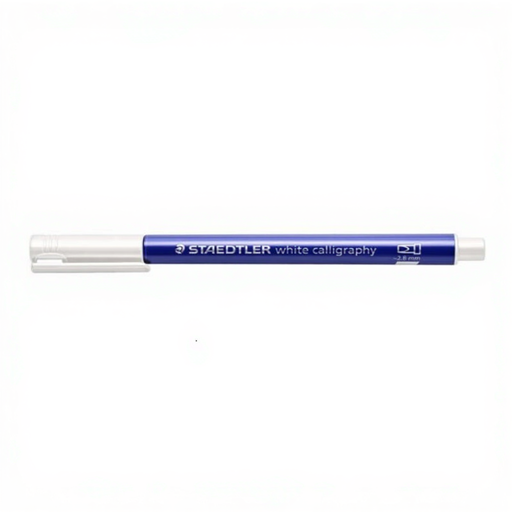
Why this product suits this profile: This white metallic marker is ideal for lettering and ornaments on black, dark blue or coloured card.
The specified line width of approximately 2.8 mm makes it easier to assess for decorative lettering than a fine detail pen.
White, water-based pigmented metallic ink and a flat calligraphy nib with an approximate line width of 2.8 mm.
We have put together a complete, regularly updated list of products that fully meet these strict selection criteria and the safety regulations applicable in the EU.
Before using the marker for the first time, read the instructions provided by the relevant manufacturer. Depending on the type of ink, a metallic marker is either ready to use straight away or needs to be activated by shaking and gently pressing the nib. According to the product description, the Ohuhu set should be shaken before use, followed by pumping the nib. The STAEDTLER calligraphy markers are supplied ready to use, according to the product specifications.
For the most even colour application possible:
For dark paper, products that explicitly state high opacity or pigmented metallic ink are a sensible choice. Gold markers, silver markers and white metallic markers generally create more noticeable contrast than transparent glitter inks. The effect also depends on the texture and absorbency of the paper.
Its lifespan depends on how often it is used, the line width, storage conditions and whether the cap is closed properly. Frequent writing with a broad nib uses more ink. Keeping the cap firmly closed and storing the marker in the recommended position can help prevent it from drying out. With dual-tip sets, replaceable nibs can help extend their useful life.
This depends on the specific product and surface. According to the product specifications, an acrylic marker may be intended for glass, wood or ceramic. However, this does not automatically mean that it will be permanently resistant to water, cleaning products or abrasion. Before starting larger projects, testing it on an inconspicuous area is recommended.