
Lieferung heute & morgen

Qualitätsgarantie

Willkommens-Angebote freischalten: KOSTENLOSE Lieferung | Bis zu 80 % RABATT | Kostenlose 30-Tage-JoyPlus-Testphase
App herunterladen
By: Joybuy Product Recommendation Officer
Whether you're designing greeting cards, keeping a bullet journal, or practising artistic calligraphy, the right pens can transform a project from ordinary to extraordinary. Metallic pens, in particular, offer the ability to add shimmering accents that stand out on both light and dark paper. But the selection is vast, and quality differences are often not apparent at first glance.
This guide is designed to help you find the right pens for your project. We'll highlight the key features you should look for and present a selection of products suited for various applications.
Before you decide on a product, a few considerations can make the selection process easier. The most important criteria are the pen type, opacity, and the shape of the tip.
The choice between a marker and a gel pen primarily depends on the desired line width and the intended use.
One of the most common reasons to use metallic pens is their impressive effect on dark surfaces. The ability to write opaquely on black or coloured cardstock is a crucial quality indicator.
Look for pens with highly pigmented water-based or pigment-based ink. These inks sit on top of the paper's surface instead of soaking in, ensuring high opacity and vibrant colours. Products explicitly advertised as pens for black paper are usually optimised for this purpose.
The pen's tip largely determines the character of your linework.
Based on these criteria, we have compiled a selection of metallic pens that are well-suited for a variety of creative projects.
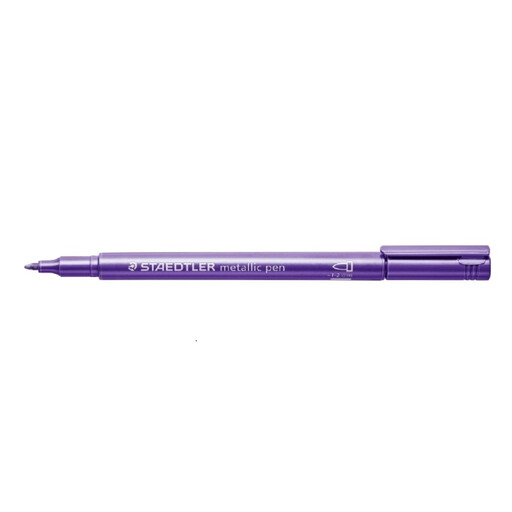
Why It Stands Out This marker from STAEDTLER provides a smooth ink flow for a clean, metallic shimmer effect. The round synthetic tip is durable and versatile.
Pros:
Who It's For: Ideal for crafters and creatives looking for a reliable pen for decorative lettering, card making, and embellishing gifts.

Why It Stands Out This pen was specially developed for elegant lettering art. Its calligraphy tip allows for variable line widths, and the high-opacity ink works exceptionally well on both light and dark paper.
Pros:
Who It's For: Perfect for hand lettering enthusiasts and anyone looking to add a sophisticated, calligraphic touch to invitations, place cards, or certificates. A classic example of calligraphy pens.
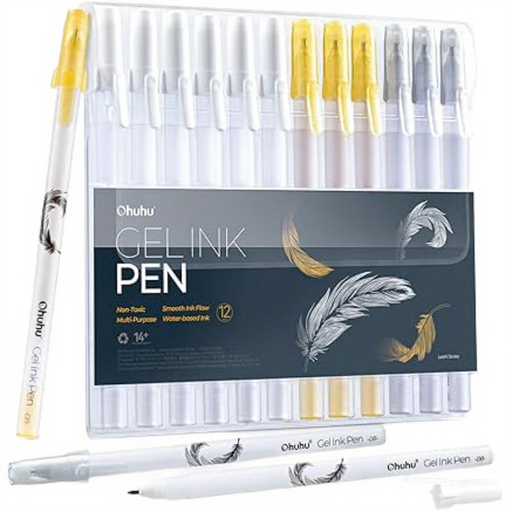
Why They Stand Out This set from Ohuhu is a practical solution for anyone needing fine, opaque lines on dark surfaces. It includes 12 pens in the three most essential accent colours: gold, silver, and white.
Pros:
Who They're For: An excellent choice for illustrators, journaling fans, and artists who want to add fine highlights, accents, and details to their work on dark or coloured paper. Anyone looking to buy gold and silver gel pens and also needing opaque white will find this to be the perfect package.
The world of writing instruments is diverse, offering the right tool for every purpose. If the products featured here don't quite meet your needs, or if you're looking for pens for professional office use, it's worth exploring other models.
? Discover our curated selection of stylish corporate pens
1. Which pens are best for black paper? For black paper, pens with high-opacity, pigmented ink are the best choice. Gel pens (especially in white, gold, and silver) and metallic markers are designed for this. The pigments sit on top of the dark surface and shine, rather than being absorbed by the paper.
2. What is the difference between metallic markers and gel pens? The main difference lies in the tip and the ink flow. Metallic markers usually have a fibre tip (like a felt-tip pen) and are suitable for broader, bolder lines. Gel pens use a fine metal ballpoint tip, which allows for a very precise and fine ink application for details and writing.
3. How should I store metallic pens correctly to extend their lifespan? Most manufacturers recommend storing metallic pens horizontally. This prevents the heavy metallic pigments in the ink from settling at one end of the pen, which could lead to uneven ink flow. Additionally, the cap should always be tightly sealed to prevent the tip from drying out.