
Lieferung heute & morgen

Qualitätsgarantie

Willkommens-Angebote freischalten: KOSTENLOSE Lieferung | Bis zu 80 % RABATT | Kostenlose 30-Tage-JoyPlus-Testphase
App herunterladen
As your Joybuy Product Recommendation Officer, I see it as my mission to filter market information and provide you with objective, practical advice. Today, we're diving into micellar water—a product often marketed as a hassle-free solution for daily facial cleansing, but one whose selection comes with a few pitfalls.
Many products promise a quick and gentle cleanse, but not all deliver on what their advertising suggests. Here are two common marketing traps that can lead to unsuitable purchases.
To ensure your micellar water cares for your skin rather than stressing it, you should check three core parameters.
A good formula for gentle cleansing is defined as much by what it contains as by what it doesn't.
The skin's surface has a slightly acidic pH of around 5.5. This "acid mantle" is crucial for a healthy skin barrier. A cleansing product with a similar, skin-balanced pH will disrupt this barrier less, thus preventing dryness and sensitivity. Products that explicitly state their pH value offer valuable guidance.
The primary job of micellar water is facial cleansing. However, if you also want to use it as your main makeup remover, especially for waterproof products, you should look for specialised formulas. Some micellar waters are designed as bi-phase solutions with an added oil component, which dissolves oil-based cosmetics more effectively without requiring harsh rubbing.
Based on the criteria above, we have identified several products suitable for different user profiles and their specific requirements.
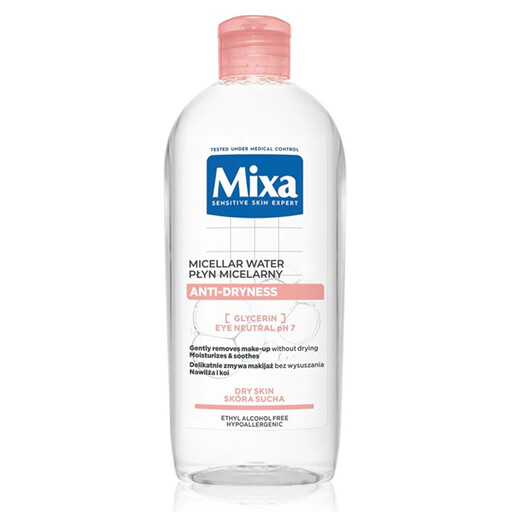
Why it fits this profile: Ideal for users seeking a reliable, daily cleansing solution specifically tailored to the needs of dry and sensitive skin, without leaving it feeling tight.
This product counters the misleading "sensitive" label with facts: it is alcohol-free and has a skin-neutral pH of 5.5, which is proven to protect the skin barrier.
Contains Panthenol to soothe the skin and Glycerin to bind moisture. The hypoallergenic formula has been dermatologically tested on sensitive skin.
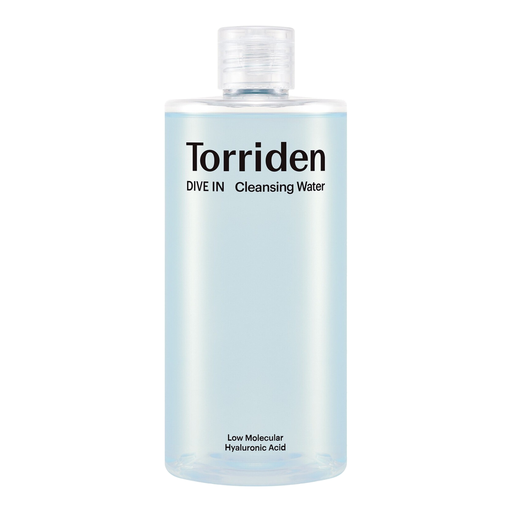
Why it fits this profile: Perfect for anyone whose skin feels tight or dehydrated after cleansing. This cleansing water clearly focuses on deeply hydrating the skin right from the first step of your routine.
It debunks the myth that an effective cleanse must be drying. Instead of stripping the skin of its natural oils, it actively replenishes moisture levels.
The 8D Hyaluronic Acid Complex, with molecules of varying sizes, delivers moisture to different layers of the skin. The formula is fragrance-free and has a skin-friendly pH.
We have compiled a complete, up-to-date list of products that fully meet these strict selection criteria and German safety regulations.
1. Do you really not have to rinse off micellar water? Although many products are designed as "no-rinse" formulas, the recommendation depends on your skin type. For sensitive, oily, or acne-prone skin, it is often advisable to rinse your face with plain water after use. This removes any potential surfactant residue and minimises the risk of irritation or clogged pores.
2. Can micellar water remove waterproof makeup? Standard micellar water can struggle with very stubborn, waterproof makeup. For this purpose, there are special bi-phase cleansers that combine an oil phase with a water phase to effectively dissolve even oil-based cosmetics. Alternatively, as part of a double cleansing routine, you can first use a cleansing oil or balm, followed by micellar water.
3. What is the difference between micellar water and a facial toner? The main function of micellar water is facial cleansing and removing makeup. It uses micelle technology to bind dirt and oil particles. A facial toner, on the other hand, is applied after cleansing. Its job is to balance the skin's pH, remove any last traces of cleanser, and prepare the skin for subsequent skincare (serums, creams). Therefore, they serve different purposes in a skincare routine.