
Lieferung heute & morgen

Qualitätsgarantie

Willkommens-Angebote freischalten: KOSTENLOSE Lieferung | Bis zu 80 % RABATT | Kostenlose 30-Tage-JoyPlus-Testphase
App herunterladen
The search for effective cleaning cloths can often raise more questions than answers. Streaks on windows, lint on furniture, and a cabinet full of cloths that don't live up to their promises. This guide aims to provide objective orientation. We will highlight the essential features of microfiber cloths and present a selection of products suited for various applications based on their specifications.
To make an informed decision, a few technical aspects are relevant. These criteria will help you objectively evaluate the properties of microfiber cloths.
The cleaning performance of a microfiber cloth is largely determined by its material blend. A combination of polyester and polyamide is common.
A common ratio is 80% polyester to 20% polyamide. This blend offers a well-rounded balance for most cleaning tasks. The weave is also crucial: short-pile cloths are well-suited for glass surfaces to achieve streak-free cleaning, while long-pile, plush versions are ideal as a polishing cloth or for dusting.
GSM stands for "Grams per Square Meter" and describes the density and thickness of the cloth.
A higher GSM generally means greater absorbency and durability, as the cloth has more fibers per unit area.
A microfiber cloth set is often the most economical and practical solution. Look for sets with different colors. This enables a hygienic cleaning system where you can color-code cloths by application area—for example, red for the bathroom, green for the kitchen, and blue for glass surfaces. Standard sizes are often between 30x30 cm and 40x40 cm, which is sufficient for most cleaning jobs in the home and for the car. Cloths designed to be washable and reusable also help reduce waste.
Here is a selection of products that are suited for different needs due to their specific properties.
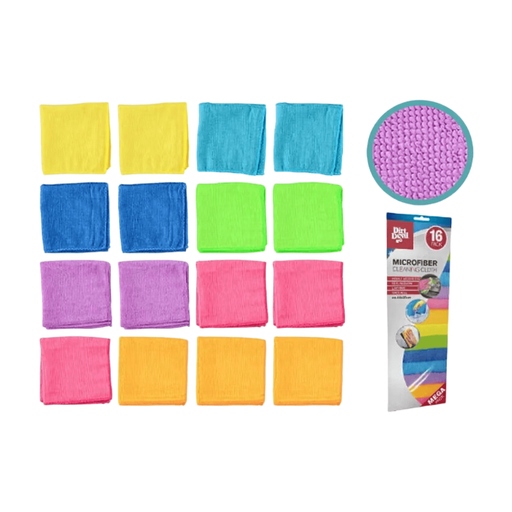
Why it stands out: With 16 cloths, this set provides a comprehensive supply for the entire household. The material blend of 80% polyester and 20% polyamide is a proven standard for effective dirt and dust removal. The cloths can be used with or without cleaning agents.
Benefits:
Who it's for: Ideal for households looking for a cost-effective starter kit or a comprehensive addition to their existing range of cleaning cloths. The large quantity ensures a clean cloth is always on hand.

Why it stands out: Vileda is an established brand in the cleaning sector. This set focuses on a clear color-coding system for hygienic separation. The cloths also consist of the 80% polyester / 20% polyamide blend and are designed for wet and dry cleaning on hard surfaces.
Benefits:
Who it's for: For users who value an organized and hygienic cleaning system. The clear color separation helps prevent cross-contamination between the kitchen, bathroom, and other living areas.
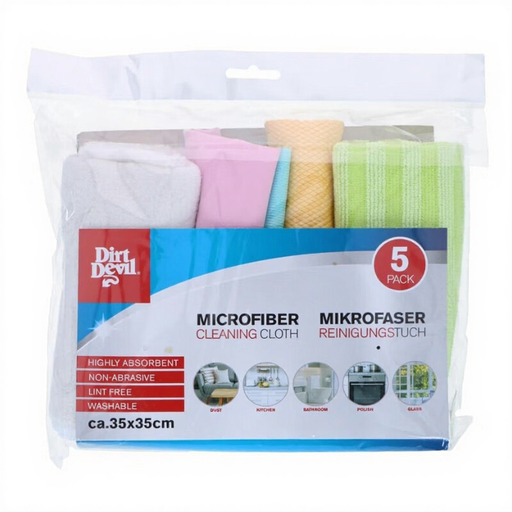
Why it stands out: This set stands out for its high absorbency. According to the manufacturer, each cloth can absorb six times its own weight in liquid. With a size of 35x35 cm, the cloths are slightly larger than standard, making it easier to clean larger areas.
Benefits:
Who it's for: Especially suitable for tasks where high water absorption is required, such as drying shower walls, wiping up spills in the kitchen, or car care.
The products presented cover common use cases. However, if you are looking for more specialized formats, such as larger cloths for floor cleaning or extra-thick cloths for professional car polishing, other alternatives are available.
Discover a wider selection of products in our Microfiber Towel category to find the right cloth for your specific needs.
1. How do you wash microfiber cloths correctly? Microfiber cloths should be washed separately or with lint-free textiles. Use a regular detergent, but be sure to avoid fabric softener, as it clogs the fine fibers and reduces absorbency. A wash temperature of 40°C to 60°C is usually sufficient. Air-dry the cloths or tumble dry on a low heat setting.
2. Why are my microfiber cloths leaving streaks? Streaking can have several causes. A common reason is a cloth that is already saturated with dirt. Residue from fabric softener in the washing machine can also impair performance. Another cause can be the excessive use of cleaning agents. Often, simply dampening the cloth with plain water is enough to achieve a streak-free result.
3. Can you use microfiber cloths on all surfaces? Microfiber cloths are safe for most surfaces in the home and on vehicles. However, caution is advised on very sensitive, high-gloss plastic surfaces or special coatings. When in doubt, it is advisable to test the cloth in an inconspicuous area or to consult the surface manufacturer's care instructions.