If you can hear reflections or background noise in your small booth, it’s worth trying a consistent, close speaking position and a directional dynamic microphone. The microphone alone, however, won’t eliminate the room sound. In a quiet, acoustically controlled booth, a directional condenser microphone may suit more nuanced speech. For simultaneous dialogue, the number of microphones and suitable inputs, as well as the requirements of the specific connection setup, are also key.
Which setup is right for you?
Speakers in a reverberant booth
If you mainly record roles one at a time and can hear reflections or background noise, keeping the microphone close and in a consistent position, then making a test recording in your usual spot, can help you choose. Musikhaus Korn highlights the room, distance and number of speakers as relevant factors; Shure describes the SM7B as a microphone for radio and studio applications.
Speakers in a quiet booth
If you can record quieter passages and changes in emphasis while keeping the room, direction and distance under control, a directional condenser microphone may be an option. Musikhaus Korn and LEWITT both treat the room and microphone position as important aspects of speech recording.
Teams recording dialogue scenes
If you’re speaking at the same time and want to position, set levels for and edit voices separately later, your microphones and separate inputs need to suit your setup. Musikhaus Korn lists the number of speakers and the desired recording setup as factors to consider.
What should you look for when buying?
First decide whether you want to record individual roles or simultaneous dialogue. Then check how quiet the room is, your speaking position and the complete signal chain for the specific model.
| Buying criterion |
What to check before buying |
Who should pay particular attention? |
| Room sound and background noise |
Check the polar pattern, mount and actual speaking distance; test it where you’ll record, with the usual background noise. |
If I can hear reflections or distant noises in my small booth, I want to have better control over the balance of voice and room sound by keeping close to the microphone and maintaining a consistent position. Consumers whose main concern is room sound are likely to account for around 36%. |
| Vocal nuance |
Record quiet and loud passages in your own room; compare the direction, distance and pop filter over several takes. |
If I want quiet passages and changes in emphasis to remain clear, I look for a recording setup that suits my needs and allows me to keep the distance as consistent as possible. Consumers who prioritise vocal expression are likely to account for around 29%. |
| Simultaneous dialogue |
Decide how many microphones and separate inputs you’ll need at the same time; test speaker positions and sound bleed together. |
If several roles are speaking at once, I want to be able to set levels and positions to suit the later edit. Consumers whose main concern is being able to record dialogue on separate tracks are likely to account for around 21%. |
| A straightforward recording setup |
Check the connection, required interface, power supply and what’s included using the full model name. |
If I want to record a single voice on my existing computer as simply as possible, the connection needs to suit my device. Consumers who prioritise getting started easily are likely to account for around 14%. |
Common buying mistakes
-
Confusing a cardioid polar pattern with soundproofing
A directional microphone won’t automatically eliminate reflections. Its direction and close placement affect how much voice and room sound it picks up.
Speak in the actual room, adjust your position and listen back to a test recording before choosing a model.
-
Buying an XLR model without checking your recording setup
According to Audio-Technica, the AT2020 is supplied without an XLR cable. For the NT1 5th Generation, RØDE specifies 48 V phantom power for XLR use; for voice-over with the SM7B, Shure recommends at least 60 dB of preamp gain.
Check the full model name, what’s included and the microphone’s requirements against your existing interface or preamp.
Depending on your existing setup, you may need to buy an interface, cable or preamp with sufficient gain.
-
Choosing a USB microphone for one person without checking if it suits dialogue
If several people are speaking at the same time and you want to edit their voices separately, your recording setup needs to support this.
Before buying, decide how many people will speak at once and whether each voice needs its own track; check which microphones and inputs you’ll need.
-
Assuming similarly named Wave:3 generations are the same
Elgato lists different technical specifications for the Wave:3 MK.1 and MK.2. A name that doesn’t clearly identify the generation isn’t enough to tell which version you’re looking at.
Check the generation and full product name on the specific product listing.
Key brands at a glance
Shure
The dynamic XLR SM7B speech microphone is an example from the manufacturer for close-miked speech recording in radio and studio settings.
- According to Shure, the SM7B has a cardioid polar pattern, a swivel mount and a windscreen.
- For voice-over with the SM7B, Shure recommends at least 60 dB of preamp gain. Check this requirement for the specific model and signal chain; it doesn’t apply to all dynamic microphones as a rule.
RØDE
According to the manufacturer, the NT1 5th Generation has USB and XLR outputs for different recording setups.
- RØDE lists a pop filter, shock mount, USB cable and XLR cable as included.
- According to RØDE, this model requires 48 V phantom power for XLR use. A manufacturer’s self-noise specification doesn’t prove that a booth is free from noise.
Audio-Technica
The AT2020 is a cardioid XLR condenser microphone for use with an existing XLR recording setup.
- Audio-Technica Deutschland describes the AT2020 as a directional microphone.
- According to the German product page, the XLR cable is sold separately. Take care not to confuse this version with AT2020 models that have different connections.
LEWITT
According to the manufacturer, the LCT 440 PURE is a cardioid XLR condenser microphone for vocals.
- LEWITT lists a shock mount and magnetic pop filter as included.
- For XLR use, the instructions require an interface or preamp with 48 V phantom power. The manufacturer’s descriptions of the sound aren’t an independent assessment.
Elgato
Wave:3 is a USB microphone range designed for use at a computer by one person.
- Its USB connection may suit a single voice recording at a computer.
- Elgato lists different technical specifications for the Wave:3 MK.1 and MK.2. Check the generation before comparing versions.
Joybuy products
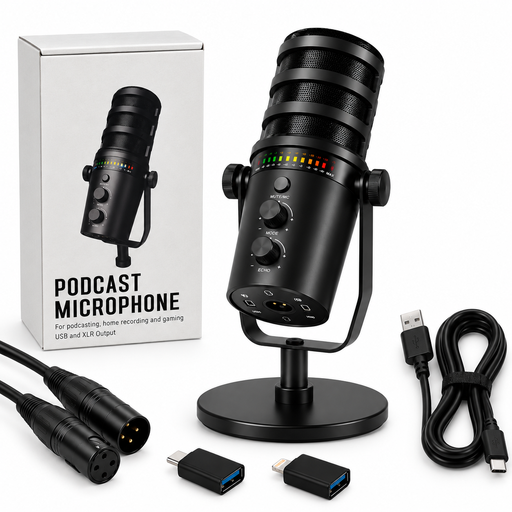
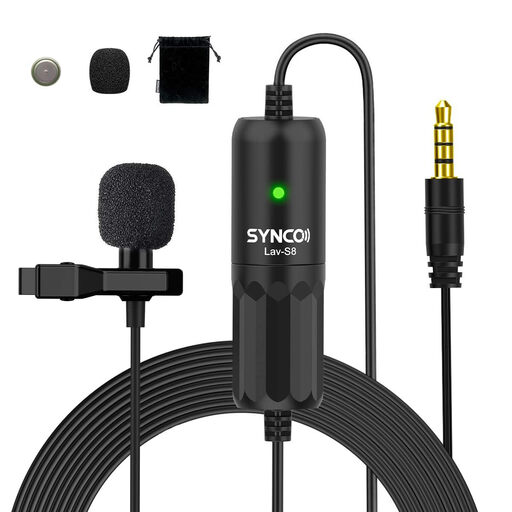
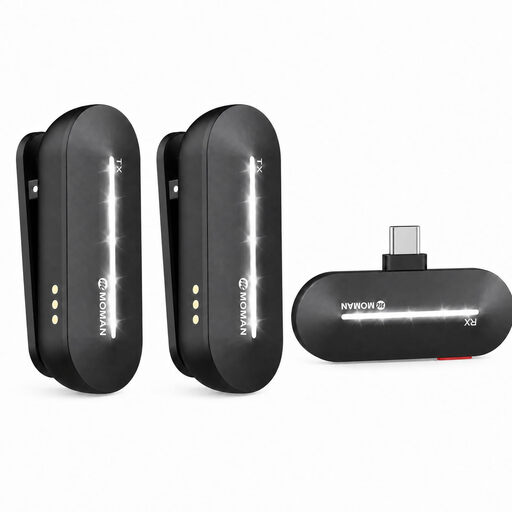
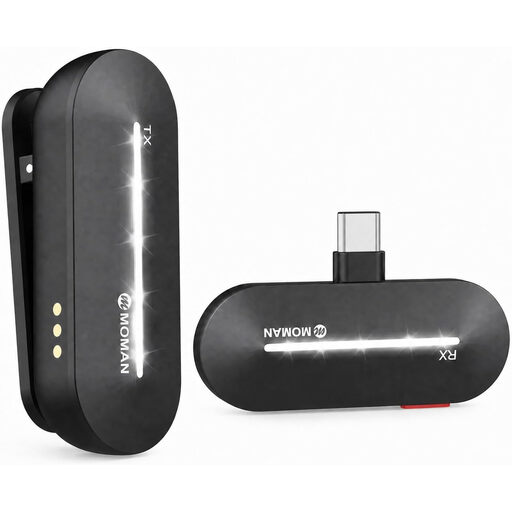
The selection includes a USB/XLR microphone set, as well as lavalier models for USB-C and 3.5 mm recording setups. In particular, check that the connection and pickup pattern suit your booth and the number of speakers.
 No image available
USB/XLR microphone set with RGB lighting and desktop stand
Could suit a fixed recording position if you want to use a USB or XLR setup.
According to the product details, an XLR cable isn’t included. RGB lighting and function buttons are only active in USB mode.
View at Joybuy
 No image available
SYNCO S8 lavalier microphone for smartphone, PC, laptop and camera
Could be an option for recording a single voice with a lavalier microphone and clip.
The listed connection is 3.5 mm. Before buying, check that it’s compatible with your specific recording device.
If you can hear room sound, make a test recording to see whether the pickup pattern suits your speaking position.
View at Joybuy
 No image available
Moman M1CXT, USB-C, 2TX+1RX
The version with two transmitters may suit recording two people at the same time.
Check that the USB-C receiver is compatible with your device and that the recording setup allows for the track separation you need.
View at Joybuy
 No image available
Moman M1CT, USB-C, 1TX+1RX
The version with one transmitter may suit recording a single voice on a compatible mobile device.
Before buying, check that the USB-C receiver works with your specific device and that the pickup pattern suits your booth.
View at Joybuy
Frequently asked questions
How should I set up the microphone for a voice test?
Point the intended front of the microphone towards your voice and keep the distance as consistent as possible throughout a scene. For vocals with the LCT 440 PURE, LEWITT recommends a distance of around 15–30 cm and a pop filter. This is a recommendation for that model, not a universal distance. According to RØDE, a gold dot marks the front of the NT1 5th Generation.
Do I need extra equipment for an XLR microphone?
To record on a computer, you’ll need a suitable XLR signal chain with an interface or equivalent equipment. Check the requirements for your model: the NT1 5th Generation requires 48 V phantom power for XLR use; for voice-over with the SM7B, Shure recommends at least 60 dB of preamp gain.
What should I do if the product develops a fault after purchase?
According to information from the European Union, if you buy as a consumer from a business seller, you’re entitled to a minimum legal guarantee of two years from the date you receive the goods. The seller is responsible. An additional manufacturer’s warranty doesn’t replace these rights. Different terms apply to commercial studio purchases.
Can I simply record other people’s voices in Germany?
Making an unauthorised audio recording of another person’s private spoken words may be a criminal offence under § 201 StGB. For your specific production, check that you’re authorised to make the recording. Separately, check the rights required for any later use or publication.


