Choose a microphone based on whose voice you want to record clearly. A body-worn microphone is suitable for a teacher who moves around, while several speakers need appropriately positioned microphones. A portable recorder lets you record without a computer running; a USB microphone is better suited to a fixed speaking position. None of these microphone types can, on its own, eliminate echo in a community hall.
Who are the different recording options suitable for?
Teachers who move around
If you move around while teaching and mainly want to record your own explanations, a body-worn microphone moves with you. It won’t automatically pick up contributions from people further away just as clearly. Nuremberg Institute of Technology describes this limitation for lapel microphones; RØDE distinguishes between Single and Dual sets for the Wireless ME.
Discussion group leaders
If you want to make responses from several seats clear, the speakers’ positions and a sound check in the hall are key. A microphone with a wide pickup pattern won’t automatically separate distant voices from the room sound. Nuremberg Institute of Technology and Shure highlight this; CHERRY describes the UM 6.0 ADVANCED as having switchable pickup patterns.
Event organisers without a recording laptop
If you want to record the session independently in the hall and transfer the files later, a portable recorder is one option. Zoom and Tascam list built-in microphones for their respective recorders; plan where to position it and how to provide storage and power before the session.
What should you consider when choosing?
Body-worn wireless or lapel microphone
Suitable if: you move around and mainly want to record your own voice.
Bear in mind: you may need an additional microphone position for responses from further away; check the set version, connection and power supply.
Portable recorder with built-in microphones
Suitable if: you want to record without a laptop running and can position the recorder close to the speakers.
Bear in mind: in a reverberant hall, the recorder’s position will affect how clearly voices come through.
USB microphone at a fixed speaking position
Suitable if: you mainly speak at a lectern or table and record using a compatible computer.
Bear in mind: a microphone designed for one nearby speaker may miss questions from the hall; a wider pickup pattern will also capture more of the room sound.
| What you need |
What to check before buying |
Who it matters most to |
| Clear recording of a teacher on the move |
Check how it attaches, the number of transmitters, the connection to the recording device and how it sounds during your usual movements. |
If I walk around the hall while explaining something, I want my voice recorded clearly even as I change position. That’s why around 36 % of consumers prioritise a teacher who moves around. |
| Contributions from several seats |
Check the relevant seats, possible microphone positions and a test recording made from those seats. |
If I want to understand responses from different rows, I need a recording setup that suits the speakers’ actual positions. Around 29 % of consumers focus primarily on contributions from several seats. |
| Recording without a computer running |
Prepare the storage medium, available power supply, playback monitoring and a secure place to set up the recorder. |
If I don’t want a laptop running at the recording position, I want to record the session directly with a recorder. Around 21 % of consumers prioritise this standalone recording option. |
| Fixed speaking position |
Check the computer connection, space for the microphone or stand, headphone monitoring and the distance from the speaker. |
If I speak from a fixed position, I want to be able to connect and position the microphone to suit my computer. Around 14 % of consumers focus particularly on recording from a fixed speaking position. |
Which assumptions should I avoid?
-
One microphone will record the teacher and every row equally well
A body-worn microphone prioritises the voice of the person wearing it. With a microphone placed further away, reverberation can drown out speech.
Before buying, decide which contributions you want to record and test the planned microphone positions in the hall.
Depending on the type of discussion, you may need additional microphone positions, suitable connections and time to set everything up.
-
A wide pickup pattern or 32-bit float will eliminate echo
Neither the pickup pattern nor the recording format changes the room acoustics. Shure explains that a microphone cannot effectively separate direct speech from unwanted reverberation.
Before choosing a microphone type, compare a test recording made from the microphone positions you can actually use.
-
You only need to plan for the recorder itself
You also need to make sure the recording setup and preparations in the hall are suitable.
Check what’s included in the specific listing and make a test recording before the session, then save it.
Depending on the device and setup, you may need a storage medium, a power supply or a suitable place to position the recorder.
Which brands can help guide your choice?
RØDE
The Wireless ME is a wireless microphone system for one or two body-worn speaking positions.
- According to RØDE, one transmitter sends the voice to a receiver with USB-C and 3.5 mm outputs.
- The Single and Dual sets contain different numbers of transmitters, so they won’t automatically cover contributions from a group further away.
Zoom
The H1essential is a portable recorder with built-in X/Y microphones and a standalone recording option.
- Zoom lists 32-bit float recording and USB microphone operation.
- Positioning it in the hall remains important for speech clarity; prepare the storage medium and power supply.
Tascam
The DR-05XP is a portable stereo recorder for recording without a laptop.
- Tascam lists built-in microphones, a 32-bit float mode and USB-C audio interface operation.
- Built-in omnidirectional microphones won’t automatically make a distant recording position suitable in a reverberant hall.
CHERRY
The UM 6.0 ADVANCED is a USB microphone for a fixed speaking position or a small group seated nearby.
- According to CHERRY, its cardioid and omnidirectional pickup patterns are switchable, and it has a headphone socket.
- The omnidirectional pickup pattern captures sound from several directions, but won’t separate distant voices from the room sound.
Audio-Technica
The ATR2100x-USB is a directional handheld and desktop microphone with USB and XLR connections, designed for one nearby speaker.
- Audio-Technica lists a cardioid pickup pattern designed to reduce sound from the sides and rear, as well as a headphone socket.
- A single, nearby speaking position can be limiting if several people in the hall need to speak.
Microphones at Joybuy
This selection includes USB microphones for a fixed speaking position, as well as lapel and wireless microphones for a teacher on the move.
 No image available
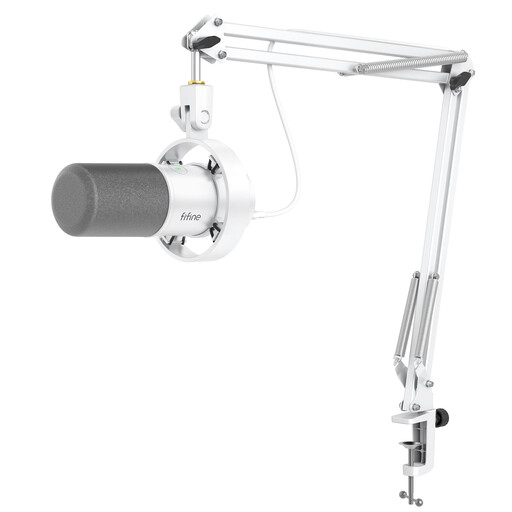
FIFINE K688CTW dynamic microphone with boom arm, white
For one speaker positioned close to the microphone at a fixed recording position.
- USB and XLR connections
- Unidirectional pickup pattern
- Headphone socket and mute function
- The title lists a boom arm; according to the description, an XLR cable is not included.
View at Joybuy
 No image available
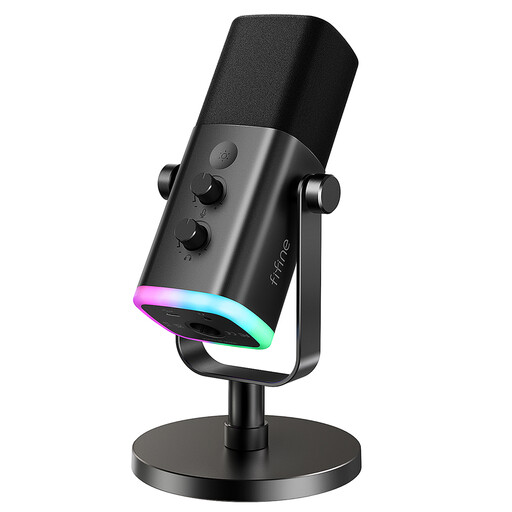
FIFINE AM8 dynamic USB/XLR microphone
For voice recordings from a fixed position, with a USB connection to a computer.
- USB and XLR connections
- Cardioid pickup pattern
- Headphone socket and mute function
- The product name lists a desktop stand; according to the description, an XLR cable is not included.
View at Joybuy
 No image available
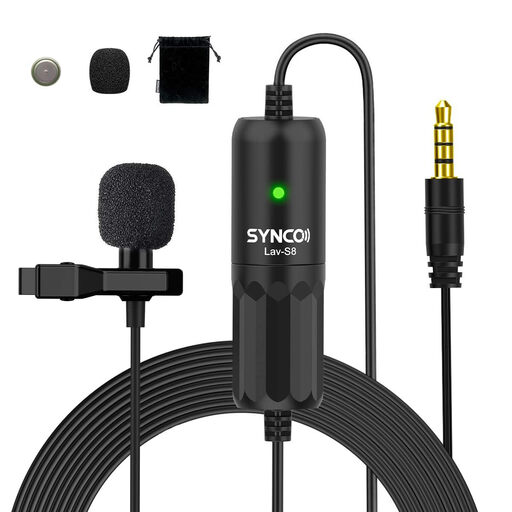
SYNCO S8 lavalier microphone
For a teacher who needs the microphone to move with them while teaching; you may need an additional position to capture contributions from further away.
- 3.5 mm connection according to the description
- Compatible with mobile phones and computers according to the description
- The description lists a clip for attaching it to clothing.
View at Joybuy
 No image available
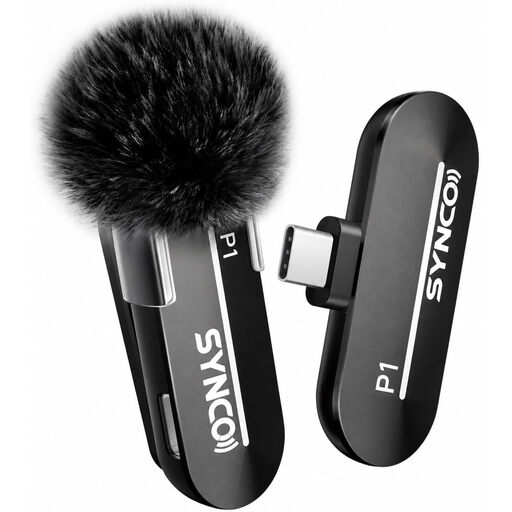
SYNCO P1XT wireless USB-C lavalier microphone
For a teacher on the move using a compatible USB-C recording device; it won’t automatically pick up voices from further away in the hall.
- The description lists wireless transmission.
- Up to 150 m transmission range and up to six hours’ operating time according to the description.
- According to the description, OTG must be enabled on Android devices.
View at Joybuy
 No image available
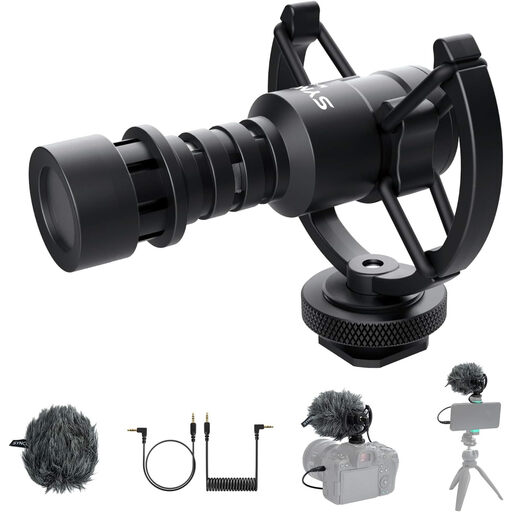
SYNCO M1S directional external microphone
For recording with a compatible camera or mobile device when you want to focus on one speaking position.
- Cardioid pickup pattern according to the product name
- The description lists 3.5 mm TRS and TRRS cables.
- The description lists a shock mount with a 1/4-inch thread and plug-in power from the device.
View at Joybuy
Frequently asked questions
Will one microphone at the lectern be enough for questions from the hall?
Not simply because of its design. Make a test recording from the seats you plan to use; a body-worn microphone for the teacher may need an additional position to pick up responses from further away.
What technical preparations should I make before the session?
Check the connection and recording setup, position the microphone where people will actually speak and listen back to a saved test recording. If you’re using the Zoom H1essential, you’ll also need to prepare a suitable storage medium.
Can I record participants’ voices without asking?
No, not as a blanket rule: under § 201 StGB, recording another person’s non-public spoken words without authorisation is prohibited. Whether this applies to a particular comment during a lesson, and what authorisation is required, depends on the circumstances. If voices can be identified, you must also check that there is an appropriate legal basis for processing them under the GDPR, where it applies. Consent is one possible legal basis, but it isn’t the only one.
Will a 32-bit float recorder make speech clear in a reverberant community hall?
No. Zoom and Tascam list 32-bit float as a recording feature on their respective recorders; according to Shure, a microphone cannot effectively separate direct speech from unwanted reverberation. So, pay particular attention to the distance from and position relative to the speaker.
What if a microphone I’ve bought is faulty?
If a product is faulty, your statutory consumer rights are initially against the seller; a voluntary manufacturer’s guarantee is separate. According to the consumer advice centre, online consumer purchases are generally also covered by a 14-day right to cancel. The exact conditions depend on the purchase.


