What to look for when choosing
First, decide whether you’ll record solo, straight to your computer, or with guests later on. Then check the microphone position, connection and monitoring features to make sure they suit your recording space.
| Consideration |
What to check before buying |
Who it matters most to |
| Room sound and distance |
Polar pattern and how close you can position the microphone; make a test recording in your usual spot, with the background noise you’d normally hear. |
If I’m recording in one set place, I want my voice to come through clearly despite echo or fan noise. Around 36% of consumers say room sound is their biggest concern when buying. |
| Easy computer setup |
A compatible USB connection and operating system; check whether a cable and suitable stand are included. |
If I want to record on my computer without a separate interface, a straightforward connection matters more than a setup I can expand later. Around 29% of consumers prioritise an easy setup. |
| Monitoring and level control |
Headphone socket and monitor volume; check whether there’s a mix control if you need one. |
If I switch between quiet memories and more emphatic passages, I want to monitor my voice as I record. Around 21% of consumers put level control first. |
| Conversations with guests |
The number of microphone inputs you need, compatible connections and headphone outputs for the conversation you have planned. |
If someone else joins me, I want to be able to record and monitor both voices as needed. Around 14% of consumers prioritise separate guest voices. |
Joybuy products for voice recording
The products below cover USB voice recording on a computer, as well as a two-microphone set for conversations.
 No image available
FIFINE AM8 USB/XLR dynamic microphone
For solo recording on a computer, if you want to use the USB connection while keeping the option of XLR open.
The microphone is dynamic and unidirectional. It also has a headphone socket, mute function and desktop stand. An XLR cable isn’t included, and a microphone arm isn’t listed in the described package.
View at Joybuy
 No image available
FIFINE K688CT podcast microphone kit, USB/XLR
The microphone arm could suit a dedicated recording spot if you’d like to adjust the position at your desk.
The dynamic microphone offers USB and XLR. Mute, headphone socket and gain control are specified for USB use; an XLR cable isn’t included.
View at Joybuy
 No image available
USB condenser microphone with Type-C adapter, 7-piece set
A possible option for recording voice on a PC if you’re looking for a USB condenser microphone with a headphone socket.
The product name also mentions a mute button and Type-C adapter. Before buying, check that the connections are compatible with your recording device.
View at Joybuy
 No image available
Yinkaer G10-P17-P17 podcast set with two microphones
This set is worth considering if you’re looking for a conversation setup with two microphones and an audio mixer.
It includes two 3.5 mm condenser microphones with desktop stands and is listed for use with a computer or phone. If you want to edit the voices separately, check whether the mixer supports this.
View at Joybuy
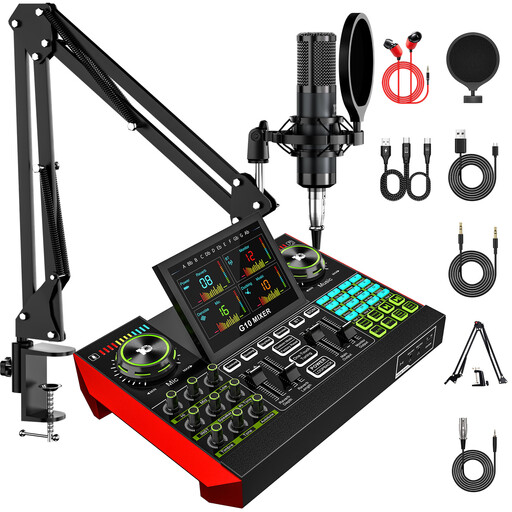 No image available
Yinkaer G10-P15-XB podcast microphone set
The microphone arm and audio mixer could be useful for a dedicated computer recording setup.
The set includes a 3.5 mm condenser microphone and is listed for use with a computer or mobile device. Check that the connections and controls suit the type of recording you have planned.
View at Joybuy
Frequently asked questions
Do I need an audio interface for solo recording?
You don’t need a separate audio interface to connect a compatible microphone directly via USB. To use an XLR connection with your computer, you’ll need a suitable interface signal path. Choose based on the connection you actually plan to use.
What can help with echo or audible fan noise?
Position the microphone so you can speak towards it from the intended direction and at a practical distance, then listen back to a test recording made in your actual recording spot. Shure notes that a microphone can’t improve room acoustics by itself.
What should I consider if I might record conversations with guests later?
Check how many microphone inputs and headphone outputs you’ll need, and whether the interface is compatible with your chosen microphones. If an XLR condenser microphone needs phantom power, it must be available at the appropriate input.
What extra equipment might I need for an XLR setup?
Depending on the microphone and the equipment you already have, you may need an XLR cable, a suitable interface and a compatible mount. If you’re using a condenser microphone, also check whether that particular model needs phantom power.
What are my rights when buying online if I change my mind or the product is faulty?
For a qualifying distance sale, the standard 14-day cancellation period for goods starts when they’re delivered; statutory exceptions and conditions apply. The statutory two-year legal guarantee relates to your contract with the seller and is separate from any additional manufacturer’s warranty.


