Who these microphones may suit

Quiet solo readers

If you tend to read quietly, you’ll want to listen back to pauses and emphasised words rather than judge the level only after a whole reading. Audio-Technica and Sennheiser list direct audio monitoring among the features of their relevant USB models.

Readers in noisy rooms

If you notice a fan, traffic or reverberation during a rehearsal, try speaking at a close, consistent distance from the microphone. RØDE notes that too much distance can make a recording sound more distant and reverberant.

Readers with a simple PC setup

If you want to get started on your computer and monitor your voice directly, a USB microphone with a headphone output can simplify your setup. Check the connections and controls on the specific model.

What to consider when choosing

Directional USB condenser microphone

A good fit if: you read alone at a computer in a fairly quiet room and want to get started without a separate interface. Audio-Technica and Sennheiser list a cardioid polar pattern and headphone output for the respective models.

The trade-off: USB makes connecting the microphone simpler, but it won’t eliminate room reverberation or the importance of distance and positioning.

Dynamic microphone for close-miking

A good fit if: a fan, traffic or room ambience is distracting during your rehearsal and you can stay consistently close to the microphone as you read. RØDE lists dynamic microphones as a possible choice for noisier environments.

The trade-off: a close position may limit your gestures and view of the text; it won’t automatically reduce background noise. For voice-over with the SM7B, Shure recommends at least 60 dB of preamp gain.

USB/XLR condenser microphone

A good fit if: you want to record directly to your computer to start with, but may also want to use an audio interface later. RØDE lists USB-C and XLR as connection options for the NT1 5th Generation.

The trade-off: according to RØDE, the NT1 5th Generation’s 4 dBA self-noise figure refers to the microphone, not noise in the room.

What you need What to check before buying Who this matters most to
Recording quiet verses clearly Check the speaking direction, level control and monitoring; test quiet and emphasised lines in your recording space. If I’m reading verses quietly, I want to monitor pauses and emphasised words directly; around 36% of consumers prioritise clarity in quiet passages.
Taking room noise and reverberation into account Check the polar pattern and whether the mount is practical; test the microphone with your usual sources of room noise. If I can hear a fan or traffic, I want to judge how clearly my voice comes through in the room; around 29% of consumers put room noise among their main concerns.
Connection and audio monitoring Check the device connection, cable, headphone output and, for XLR, the compatible interface. If you want to start on a computer and monitor your reading directly, you need a suitable, straightforward signal path; around 21% of consumers focus mainly on connection and monitoring.
Controlling emphasis and plosives Check whether a pop filter and mount are included; listen back to quiet and emphasised passages while maintaining a consistent position. If I want to control hard plosive sounds and emphasised words, I’ll check the sound during a full rehearsal; around 14% of consumers put this first.

Avoiding common buying mistakes

  • Assuming low self-noise means a quiet recording room

    According to RØDE, the NT1 5th Generation’s 4 dBA figure refers to the microphone. Distance and background noise still affect how your recording sounds.

    Listen to a test recording from your intended position before relying on a single specification.

  • Choosing an XLR microphone without the right signal path

    For voice-over with the SM7B, Shure recommends at least 60 dB of preamp gain.

    Check this requirement for the specific model and compare it with the equipment you already have.

    Depending on your existing setup, you may also need a suitable interface or preamp.

  • Assuming close-miking automatically reduces background noise

    A close position can make your voice more prominent relative to background noise, but it can also make breathing and mouth sounds or an emphasised bass sound more noticeable.

    Try a position you can maintain while reading, using a pop filter and emphasised verses. Compare microphones in the same room conditions.

Key microphone brands to consider

Audio-Technica

The AT2020USB-X is a directional USB condenser microphone that connects directly to a computer.

  • Audio-Technica lists USB-C, a headphone output and a mix control for this model.
  • A shock mount is listed as an optional accessory; the features don’t tell you how the microphone will sound in your room.

Sennheiser

The Profile USB is aimed at readers who want to adjust gain, monitoring and positioning directly on a USB desktop microphone.

  • Sennheiser lists a cardioid condenser capsule, gain, mix and volume controls, and a headphone output.
  • These features don’t indicate that the microphone automatically reduces room reverberation.

Shure

According to Shure, the MV7+ offers USB-C and XLR; the SM7B is an XLR model for which you should consider whether you have a suitable preamp.

  • Shure describes Auto-Level and digital noise processing on the MV7+ as manufacturer features.
  • For voice-over with the SM7B, Shure recommends at least 60 dB of preamp gain; this doesn’t mean the same applies to other models.

RØDE

According to the manufacturer, the NT1 5th Generation offers USB-C and XLR for different signal paths.

  • RØDE gives this model a self-noise figure of 4 dBA and lists a pop filter and shock mount as included accessories.
  • The self-noise figure doesn’t describe noise in the room and, on its own, can’t predict how a quiet reading will sound there.

Microphones and recording systems at Joybuy

The selection includes dynamic USB/XLR microphones for close-up voice recording, as well as a wireless system for recording on the move.
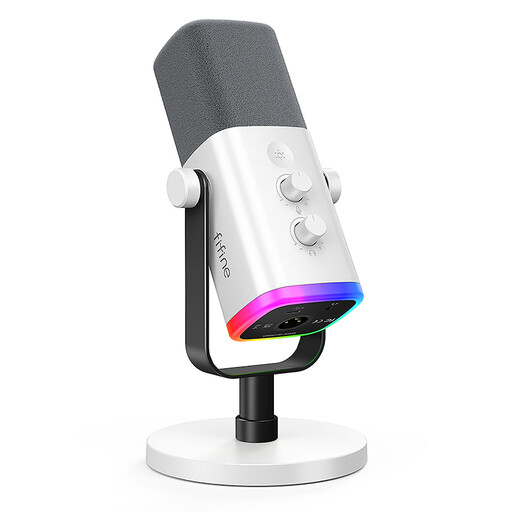
FIFINE AM8 White USB/XLR microphone

FIFINE AM8 White USB/XLR microphone

A dynamic microphone for close-up voice recording, with controls available directly on your PC.

The description lists a unidirectional pickup pattern, gain control and headphone monitoring. The gain and function buttons are available only in USB mode.

A USB cable and desktop stand are included; a microphone arm and XLR cable are not included.

View at Joybuy
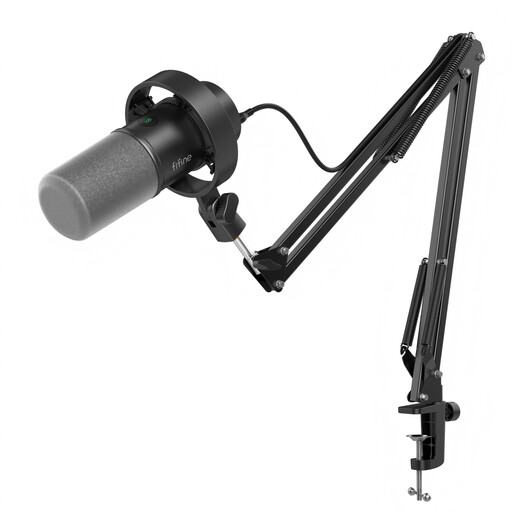
FIFINE K688CT USB/XLR microphone kit

FIFINE K688CT USB/XLR microphone kit

A dynamic microphone for close-up voice recording, if you want to control the level and sound directly on your PC.

The description lists a unidirectional pickup pattern and recommends a distance of 2 to 6 inches for a stronger input level. The microphone controls work only via USB.

A microphone arm and USB cable are included. The desk clamp is designed for desks less than 2 inches thick; an XLR cable is not included.

View at Joybuy
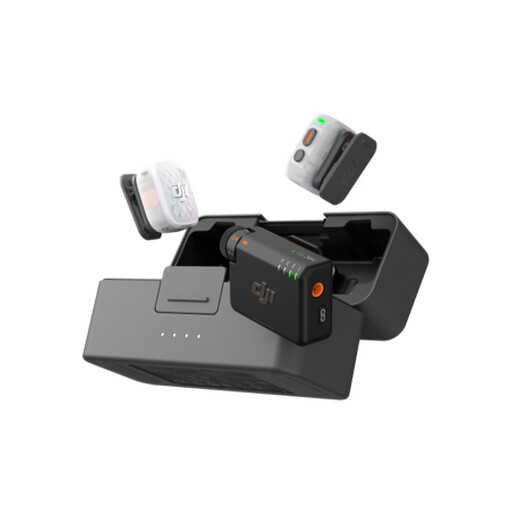
DJI Mic Mini 2S with 2 transmitters, 1 receiver and charging case

DJI Mic Mini 2S (2 TX + 1 RX + Charging Case)

A wireless system for recording on the move; according to the description, the transmitters can be attached with a clip or magnet.

The description lists internal 32-bit float recording and two levels of AI noise cancellation as features. PCs are listed as compatible devices.

View at Joybuy

Frequently asked questions

How should I position a microphone for a quiet poetry reading?

Point the active side of the microphone towards you and test the distance and angle with quiet and emphasised verses in the space where you’ll actually record. RØDE notes that too much distance can make your voice sound more distant and reverberant; this doesn’t provide a one-size-fits-all distance for every model.

Do I need to connect a USB microphone to an audio interface?

A separate interface isn’t essential for the intended direct USB connection. Sennheiser describes the Profile USB as a USB-C microphone; RØDE lists USB-C as an alternative to XLR for the NT1 5th Generation. Still, check the connection on your recording device and what’s included with the specific model.

What additional equipment should I check before buying?

Check the signal path and what’s included against the equipment you already have. For voice-over with the SM7B, Shure recommends at least 60 dB of preamp gain; for the NT1 5th Generation, RØDE lists a cable, shock mount and pop filter as included accessories. Whether you also need a stand, interface or headphones depends on your setup.

Can I record someone else during a private poetry reading?

Not without authorisation: Section 201(1) of the German Criminal Code (StGB) covers, among other things, the unauthorised recording of another person’s non-public spoken words, as well as the use or sharing of such a recording as specified there. Make sure you have permission before recording; this provision does not generally prohibit recording your own voice. The official source is the German Federal Ministry of Justice and Federal Office of Justice’s Laws on the Internet service.

Can I publish a recording of myself reciting someone else’s poem online?

This depends, among other things, on whether the text is still protected and whether permission or an exception applies. The German Patent and Trade Mark Office lists poems as works that can generally be protected by copyright, and making a work available to the public online as a right of exploitation. Check the status of the specific text and how you plan to use it before publishing your recording.