
Lieferung heute & morgen

Qualitätsgarantie

Willkommens-Angebote freischalten: KOSTENLOSE Lieferung | Bis zu 80 % RABATT | Kostenlose 30-Tage-JoyPlus-Testphase
App herunterladen
A good science kit can spark a child's curiosity and ignite a passion for science and technology. But the selection is vast, and not every experiment set delivers on its promises. As a Joybuy Product Recommendation Officer, I see every day which products bring joy and which ones end up gathering dust in a corner. This guide will help you avoid common purchasing pitfalls and find a science kit for kids that truly inspires.
Before you choose a product, you should be aware of the typical weaknesses that often lead to disappointment.
To make an informed decision, focus on three objective criteria. These will help you assess the quality and educational value of a kit.
Don't just check the age rating on the box; examine the design of the instructions. For younger children (ages 6–8), manuals with plenty of pictures and minimal text are ideal. The experiments should be achievable in a few clear steps. For older children (ages 9+), the instructions can be more detailed and provide background knowledge. A good STEM toy challenges a child without overwhelming them.
Safety is non-negotiable. Look for the CE marking, which confirms that the product meets EU safety standards. Especially with a chemistry set or kits where something edible is made (e.g., a DIY slime kit), the ingredients must be clearly declared and non-toxic. Warnings like "Not suitable for children under 3 years due to small parts that can be swallowed" must be taken seriously.
Choose a theme that reflects your child's interests. Are they fascinated by biology, chemistry, physics, or geology? A crystal-growing kit appeals to different inclinations than a kit for raising prehistoric creatures. Check whether the set allows for multiple trials or variations of an experiment. Kits that encourage open-ended experimentation or whose results (e.g., home-grown crystals, homemade soap) can be used afterwards offer significantly higher long-term value and make an ideal gift for curious kids.
Here are some recommendations tailored to different interests and age groups that meet the quality criteria mentioned above.
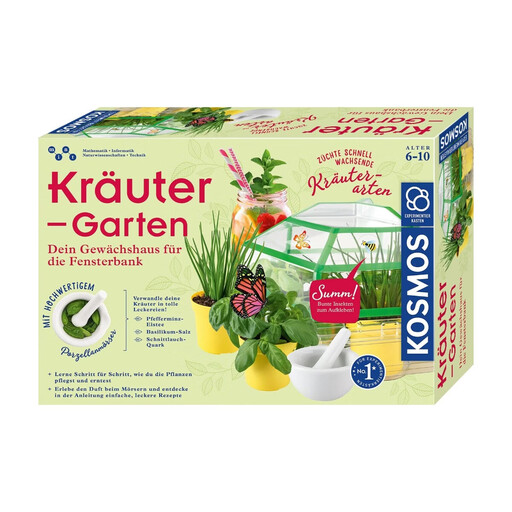
Why this kit is a great fit: It playfully introduces children aged 6 and up to biological processes. Sowing, caring for, and harvesting their own herbs is a tangible, long-term project that promotes patience and a sense of responsibility.
This kit escapes the "one-and-done" trap by offering a continuous process that unfolds over weeks. The harvested herbs can also be used in the kitchen, extending its value beyond the experiment itself.
Includes a high-quality porcelain mortar. This directly connects the biological experiment with a practical, sensory experience in the kitchen.
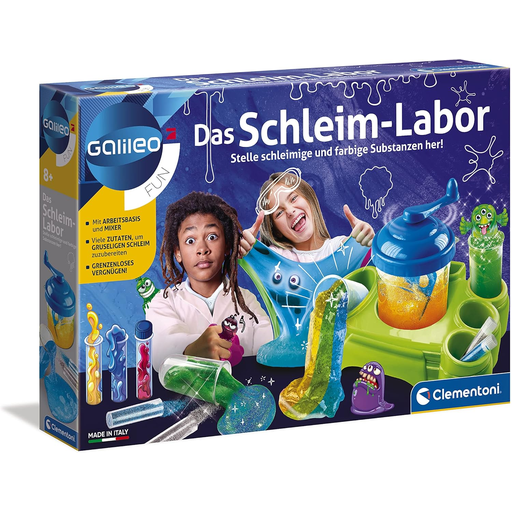
Why this kit is a great fit: It taps into the popular DIY slime trend and packages it as a structured, scientific experiment. Children learn basic chemical principles in a fun way.
The included workstation with a hand mixer ensures controlled and clean experiments. This counteracts the pitfall of low-quality materials, which often leads to unsatisfying results and a mess in many DIY kits.
The kit is designed as a complete laboratory. It includes all the necessary instruments and a dedicated workspace, which provides the feeling of doing real scientific work.
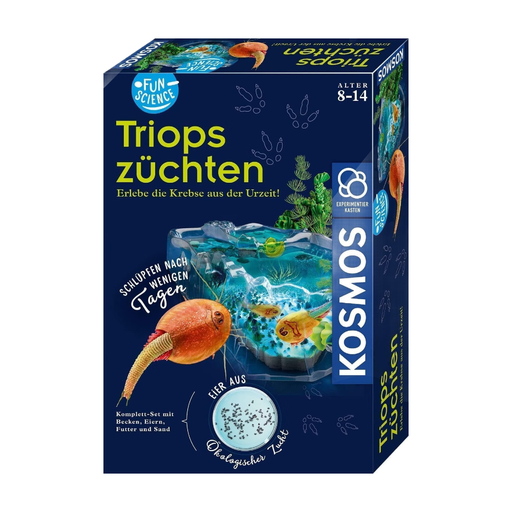
Why this kit is a great fit: This set is ideal for children who are interested in biology and enjoy observation. Raising living creatures is an impressive way to teach them about life cycles and ecosystems.
It offers a dynamic experience that develops over days and weeks. Instead of a one-off effect, children get to observe the hatching, growth, and behaviour of the Triops, which maximises the replay value and the learning curve.
The kit is beginner-friendly and includes everything needed to get started, including eggs, food, and a breeding tank. The illustrated instructions explain each step clearly.
We have compiled a complete, up-to-date list of products that fully meet these strict selection criteria and European safety regulations.
Generally, there are simple kits available for children from around age 6. However, more important than age are the child's individual interests and ability to concentrate. The right kit is one that matches the child's curiosity and has instructions they can understand (with a little help). Start with thematically simple kits and gradually increase the complexity.
The most important rule is adult supervision. Read the instructions and safety warnings together before you begin. Set up a dedicated workspace that is easy to clean. Ensure that the substances included in the kit do not get into the mouth or eyes, and make sure hands are washed after experimenting.
Science kits sold in Germany and the EU are subject to strict safety regulations (e.g., the EN 71 Toy Safety Directive). The included chemicals are generally safe for their intended use and are present in low concentrations. Nevertheless, they are chemical substances and should not be used without supervision. Strict adherence to the instructions and adult supervision are essential to ensure safe handling.