Occasional bakers
If you need butter to be soft but still hold its shape for a recipe, bear in mind that it can heat unevenly and partially melt in a microwave. Land O’Lakes and King Arthur Baking explain why this matters for baking.


If you’re buying a microwave solely to soften butter for baking, it’s usually not the most obvious solution: Land O’Lakes advises against it, as the butter can remain cool on the outside while already melting inside. If you’ll also be heating other food during your kitchen renovation, a freestanding solo microwave is a better fit for basic needs. A grill or convection function is worthwhile mainly if you’ll genuinely use it later and have enough space.
If you need butter to be soft but still hold its shape for a recipe, bear in mind that it can heat unevenly and partially melt in a microwave. Land O’Lakes and King Arthur Baking explain why this matters for baking.
If you need a temporary freestanding way to reheat or defrost food, consider both the space available and how you’ll use the microwave afterwards.
If you’d also like to grill or bake with the appliance after the renovation, you could consider a combination microwave, provided you have the space and expect to use those functions.
Best if: You’re considering an appliance only for butter for baking and don’t want to prepare any other food in it.
Trade-off: Cutting the butter into small pieces or flattening it takes a little preparation, but doesn’t require extra space for an appliance.
Best if: You mainly want to reheat or defrost food during the renovation, then keep using a straightforward appliance afterwards.
Trade-off: Low power settings don’t prove that butter for baking will soften evenly.
Best if: You’d also like to grill or bake using convection and plan to keep using the appliance for this after the renovation.
Trade-off: A grill or convection function won’t prevent butter from partially melting in the microwave.
The figures refer to consumers considering a microwave for baking and everyday cooking during a kitchen renovation. Each person is counted against their main reason for buying.
| Priority | What to check when buying | Who it matters most to |
|---|---|---|
| Butter consistency | Whether the recipe calls for softened or melted butter; if you’ll use the microwave for other things, check for low power settings and short, easy-to-monitor time intervals. | If I need butter to be soft but still hold its shape for a cake mixture, I want to avoid partially melting it. Around 36 % of consumers say butter consistency is their main concern. |
| Space and positioning | External dimensions, door clearance and the required clearances for the specific model. | During the renovation, the appliance needs to fit on an available surface and in its eventual location too. Around 29 % of consumers say space is their main concern. |
| Additional functions | What you plan to cook later and whether the specific model has a grill or convection function. | If I also want to grill or bake after the renovation, these functions matter more than a dedicated butter programme. Around 21 % of consumers say additional functions are their main concern. |
| Ease of use | Check how easy the specific appliance is to operate and clean; consider warranty terms separately from your statutory rights. | If you only plan to use the appliance occasionally and want to keep things simple, it’s worth considering both ease of use and after-sales service. Around 14 % of consumers say ease of use and service are their main concerns. |
Bauknecht lists a butter-softening programme for the MW 304 M. Land O’Lakes still warns generally that food can heat unevenly in a microwave. The programme doesn’t guarantee a particular result for every baking recipe.
First check whether your recipe calls for softened or melted butter. If butter is your only reason for buying a microwave, consider methods that don’t involve one.
A larger cavity doesn’t necessarily mean the appliance has a small external footprint. You’ll also need to allow for the clearance requirements at your chosen location.
Measure the available space and door clearance, then check the required clearances in the manual for your chosen model.
Suitable cookware depends on the operating mode and the instructions for use. The Verbraucherzentrale (German consumer advice centre) notes that high-fat foods can become hotter than expected; the German Federal Institute for Risk Assessment advises against using melamine tableware to heat food in a microwave.
Only use a container approved for the relevant mode and intended conditions, and follow the instructions.
Freestanding solo microwaves for reheating and defrosting.
Solo microwaves with inverter technology, including the NN-SD38 with seven power settings and a 29 l capacity.
Freestanding combination microwaves for those who want more than just reheating.
Models with grill and convection functions for a wider range of cooking.
Models with a flat glass base instead of a turntable, including the MG 20 Ecostyle Ceramic with grill.
The appliances below include solo and combination microwaves for reheating and defrosting, as well as models with a grill or convection function for other uses.
 No image available
For households looking to use a grill and convection function as well as a microwave.
 No image available
For reheating and defrosting if you’re looking for a freestanding solo appliance.
19 l, 700 W and six power settings.
 No image available
For reheating and defrosting with a solo microwave that has several power settings.
20 l, 700 W, six power settings and a 30-minute timer.
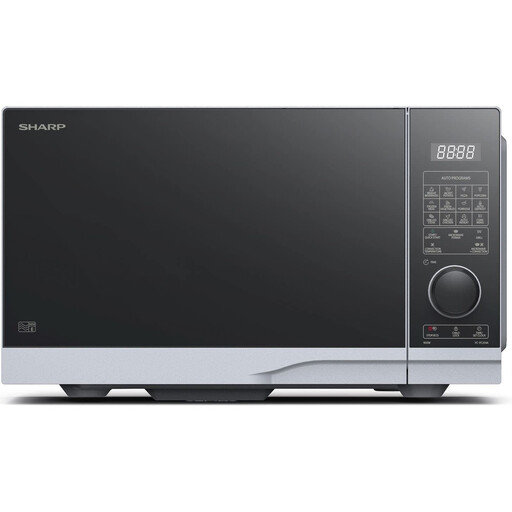 No image available
For households planning to use a grill and convection function as well as the microwave.
25 l, with grill and convection, silver-coloured.
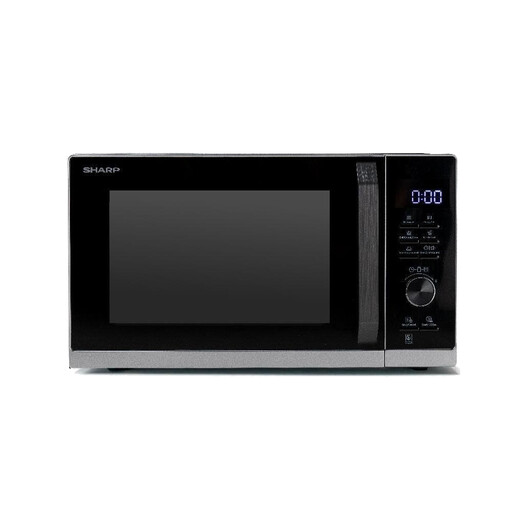 No image available
For everyday cooking if you’re planning to grill and use convection as well as reheat food.
27 l, 900 W microwave power, 1,000 W grill power and 2,100 W convection power.
It’s not a reliable method for butter used in baking. Land O’Lakes advises against it because the butter can heat unevenly and melt inside; King Arthur Baking explains that butter that’s too warm can affect the texture of the mixture when creamed with sugar. Cutting it into small pieces or flattening it are alternatives.
Only if the container’s instructions say it’s suitable for microwave use under the conditions you intend. The Verbraucherzentrale (German consumer advice centre) warns that high-fat foods can develop unexpectedly hot spots; the German Federal Institute for Risk Assessment advises against using melamine tableware to heat food in a microwave.
Compare the specific appliance’s external dimensions with the space you’ve chosen, and follow the manual’s guidance on ventilation and connection. Required clearances vary by model.
Not for that alone. A grill and convection function are useful mainly if you want to use them for other dishes too; a butter programme doesn’t prove that butter will reliably stay soft and hold its shape for every baking recipe.